


This article is dedicated to Beginner-Friendly Crypto Platforms With Low Risk. I will be looking at platforms that make it easy and safe to get started in the crypto world.
These platforms have simple, easy-to-use designs that make entering the world of crypto easy, and have safe and low security measures.
This guide will show the best options available if you wish to trade, invest, and explore the world of crypto.
This is meant to be done safely and to show you how to begin your journey with confidence.
Key Points & Beginner-Friendly Crypto Platforms with Low Risk
- Coinbase: Beginner-friendly platform with intuitive design, easy trading options, and strong security measures.
- Kraken: Highly secure exchange offering cold storage and a convenient ‘Instant Buy’ feature for users.
- Gemini: Focuses on regulation and security, making it a safe choice for crypto beginners.
- Crypto.com: Provides a user-friendly mobile app, simplifying crypto trading and management for everyday users.
- Binance (Lite Mode): Offers a simplified interface, making trading easier for beginners and casual investors.
- Robinhood: Simple, streamlined interface allowing users to buy crypto alongside stocks effortlessly.
- CoinSwitch: Aggregator-style platform with a simple interface, enabling easy access to multiple crypto exchanges.
- Bitget: Features a “Simple” view plus educational resources, supporting beginner traders in learning crypto basics.
- Uphold: Direct buying options with a user-friendly platform, simplifying crypto purchases for everyday investors.
- Mudrex: Provides curated, low-risk, pre-built crypto portfolios, ideal for cautious and beginner investors.
10 Beginner-Friendly Crypto Platforms with Low Risk
1. Coinbase
Based in the U.S., Coinbase is listed on the NASDAQ and is recognised for its ease of use and regulatory compliance. Coinbase is available in over 100 countries and supports 340+ cryptocurrency assets.
Unlike most competitors, the platform features dual trading interfaces: a simple one for buying and selling, and an advanced one for detailed market studies and trading, making it suitable for all experience levels.
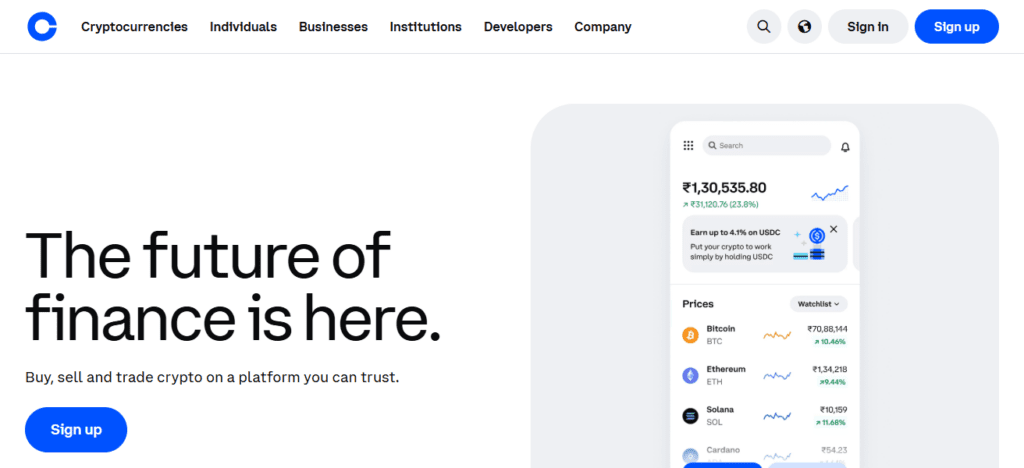
Although its trading fees are generally higher (0.40% – 0.60% for low volume trades) than many competitors, the platform’s strong focus on supporting fiat, margin trading, and educational offerings provides an all-encompassing solution for the crypto trader.
| Pros | Cons |
|---|---|
| Extremely beginner-friendly interface, ideal for first-time investors. | Higher trading fees (0.40%-0.60% for low-volume trades) than competitors. |
| NASDAQ-listed and fully regulated, offering high trust and compliance. | Limited advanced trading tools compared to Kraken or Binance Pro. |
| Supports over 340 cryptocurrencies and fiat on/off ramps. | Less attractive for high-frequency traders due to fee structure. |
| Educational resources and tutorials integrated into the platform. | Margin trading options are limited to certain jurisdictions. |
| Strong fiat support and stable customer service. | Slower withdrawal times compared to some global exchanges. |
2. Kraken
Founded in 2011, Kraken is known for its strong security model and long track record, offering margin and staking on more complicated platforms and holding about 95 % of customer funds in cold storage.
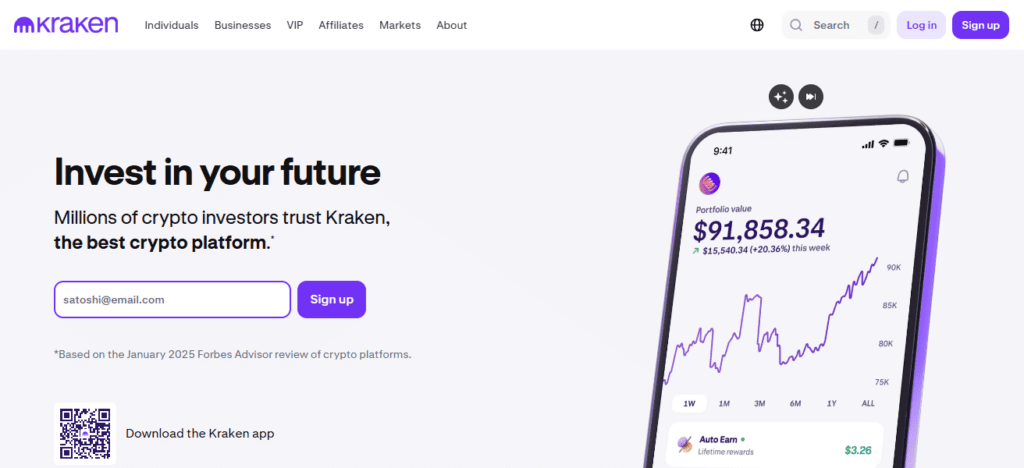
They offer staking and margin trading, unlike many other platforms, and they have low maker/taker pricing (roughly 0.16 % maker on Kraken Pro). They have over 190 different countries and offer a variety of cryptocurrencies
This is why some traders prefer them over Coinbase for more advanced order types and better liquidity. They also offer more compliance with regulations and better security than competitors.
| Pros | Cons |
|---|---|
| Strong security: 95% of funds in cold storage. | Interface may be intimidating for beginners. |
| Low maker/taker fees (0.16%-0.26%), competitive for active traders. | Some advanced features not available in all countries. |
| Margin trading and staking options available. | Customer support can be slower during high-volume periods. |
| Supports over 190 countries and a wide coin selection. | Mobile app less intuitive than Coinbase or Crypto.com. |
| Long-standing reputation with institutional-grade security. | Limited promotional offers compared to Crypto.com or CoinSwitch. |
3. Gemini
Gemini is a U.S. exchange co-founded by the Winklevoss twins, emphasising trust in regulation and compliance with custodial oversight.
Gemini is known for its “ActiveTrader” platform that boasts advanced charting capabilities, as well as crypto credit cards and yield-earning opportunities.
While Gemini is NYDFS-regulated, its base interface fees may be higher than those of many of its competitors, making it a less cost-efficient choice for casual traders.
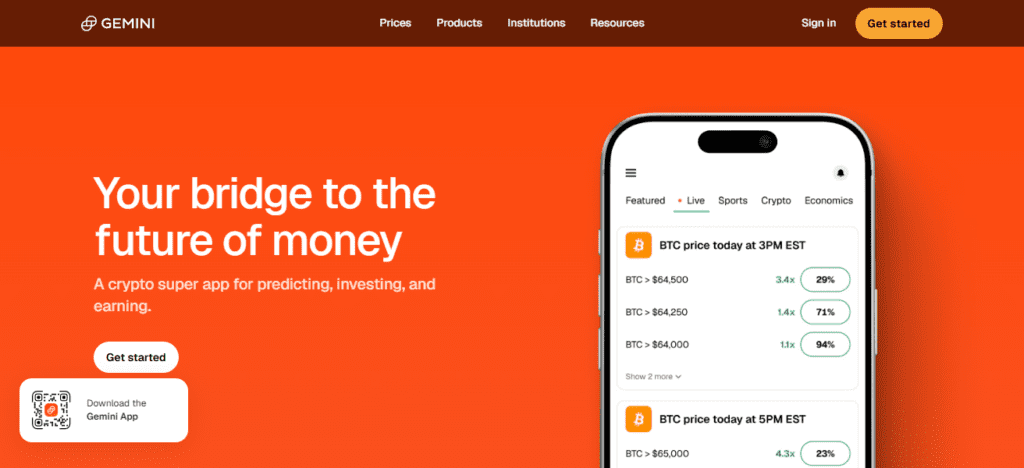
However, their emphasis on multiple levels of security audits, SOC 2 Type II certifications, and insurance on select assets is attractive for those concerned about safety.
Gemini is best for users who prioritise compliance and custodial oversight over the lowest possible fees.
| Pros | Cons |
|---|---|
| Strong regulatory compliance (NYDFS-regulated). | Higher fees for casual traders compared to Coinbase. |
| ActiveTrader platform with advanced charting and order types. | Smaller international presence than Binance or Crypto.com. |
| Insurance coverage for digital assets and regular security audits. | Limited cryptocurrency selection compared to Binance. |
| Crypto credit cards and yield products offered. | Less suitable for high-volume derivatives traders. |
| Focus on institutional-level security and compliance. | Fewer promotional incentives than consumer-focused apps. |
4. Crypto.com
Crypto.com is an exchange based in Singapore that provides an online system for buying and selling cryptocurrencies, with over 100 million users, and is one of the largest
Exchanges with support for trading 400+ cryptocurrencies, debit cards, NFTs, and DeFi products. Its mobile-first design adds to the broad financial products that make it stand out from its competitors.

Despite Crypto.com suffering a major hack in 2022, the system continued its US expansion and added institutional derivatives.
The global marketing pushes, including sports sponsorships and partnerships with Mastercard, are part of a strategy that combines consumer finance with accessible digital assets at scale.
| Pros | Cons |
|---|---|
| Supports 400+ cryptocurrencies and multiple financial products. | Experienced a hack in 2022, raising security concerns. |
| Mobile-first design with user-friendly app experience. | Fees on certain transactions can be higher than Robinhood. |
| Offers crypto debit cards, NFTs, and DeFi products. | Complex platform may confuse beginners. |
| Aggressive global marketing and partnerships increase accessibility. | Customer support quality can vary regionally. |
| Institutional derivatives and advanced trading options available. | Regulatory clarity differs by country, creating potential barriers. |
5. Binance (Lite Mode)
Binance in Lite Mode is designed for absolute beginners. Lumi allows users to buy and sell quickly, while also providing easy payment options and real-time price tracking.
Lite Mode also has fewer features than Binance Pro, which includes multiple advanced charting tools, futures trading, and order books.
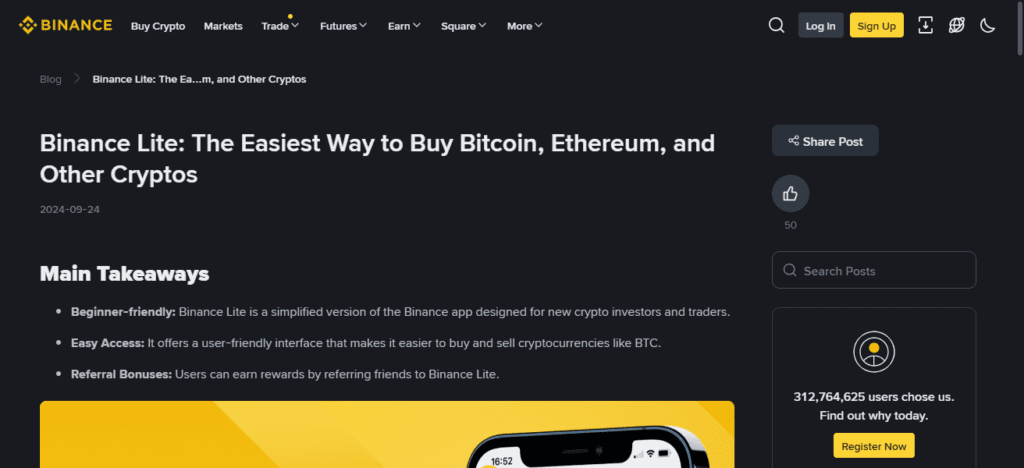
Advanced traders, however, prefer access to those tools for deep liquidity and derivatives. In this Lite Mode creates a less overwhelming intro to cryptocurrency trading than other options.
Full service exchanges focus on advanced trading options, but Lite Mode is designed to help traders get in to the ecosystem.
| Pros | Cons |
|---|---|
| Simplified interface ideal for beginners and casual traders. | Lacks full access to advanced trading tools and order types. |
| Real-time prices and easy payment options. | Limited analytical tools compared to Binance Pro or Kraken. |
| Gateway to the world’s largest crypto exchange ecosystem. | May require transition to Pro mode as trading experience grows. |
| Supports a wide range of cryptocurrencies via Binance infrastructure. | Does not offer full derivatives and futures functionality. |
| Mobile-friendly for on-the-go trading. | Limited educational resources in Lite Mode compared to competitors. |
6. Robinhood
Robinhood has introduced commission-free trading for cryptocurrencies, and these features are appealing to customers used to commission-free trading for stocks and ETFs.
Due to instant deposits and no trading fees, Robinhood is the most cost-effective option for new customers who want to buy Bitcoin and Ethereum.
Until recently, Robinhood did not allow customers to withdraw their crypto to external wallets, which is a limitation when compared to other exchanges that allow customers to control their private keys.

Lower features offered by Robinhood, along with the company’s mobile-first and simple-to-use design, provide an appealing option for customers.
Other exchanges, however, offer a broader selection of cryptocurrencies and features for trading.
| Pros | Cons |
|---|---|
| Commission-free crypto trading with instant deposits. | Limited crypto selection (~15–40 coins). |
| Extremely cost-effective for beginners or casual traders. | Previously did not allow external wallet withdrawals. |
| Mobile-first design with simple, intuitive interface. | Lacks advanced trading features such as staking or futures. |
| Integrates crypto trading with stocks and ETFs in one app. | Lower liquidity for less popular coins. |
| Quick onboarding with U.S. banking integration. | Less suitable for high-frequency or professional traders. |
7. CoinSwitch
CoinSwitch’s India-Headquarted crypto service provider, initially launched as an exchange aggregator, allows customers to compare prices and route trades to the most favourable price points.
Supports 400+ coins, focuses on simple INR deposits/withdrawals, and rapid, secure (ISO / IEC) certifications and onboarding tailored to the Indian market. Its CoinSwitch Pro provides advanced and deep-order book trading.

Unlike most typical exchanges with rigid trading rules, CoinSwitch streamlines trading and provides best rate execution incentives like referrals. This is especially attractive to novice investors in India’s crypto market.
| Pros | Cons |
|---|---|
| Aggregates rates across multiple exchanges for best prices. | Limited direct fiat deposit options outside India. |
| Supports 400+ coins and CoinSwitch Pro for advanced trading. | Beginner users may be confused by aggregated rates concept. |
| Fast onboarding and strong security certifications. | Fees may vary depending on routed exchange rates. |
| Referral programs and incentives for users. | Limited global brand recognition compared to Binance or Coinbase. |
| Simplified investing for Indian users with INR support. | Not ideal for high-leverage derivative trading. |
8. Bitget
Bitget is one of the world’s leading exchanges. They provide exceptional low-fee spot and derivatives trading, copy trading, and have a multi-chain wallet.
They have low maker/taker fees (as low as ~0.08 % with native token rebates), and therefore attract active traders.
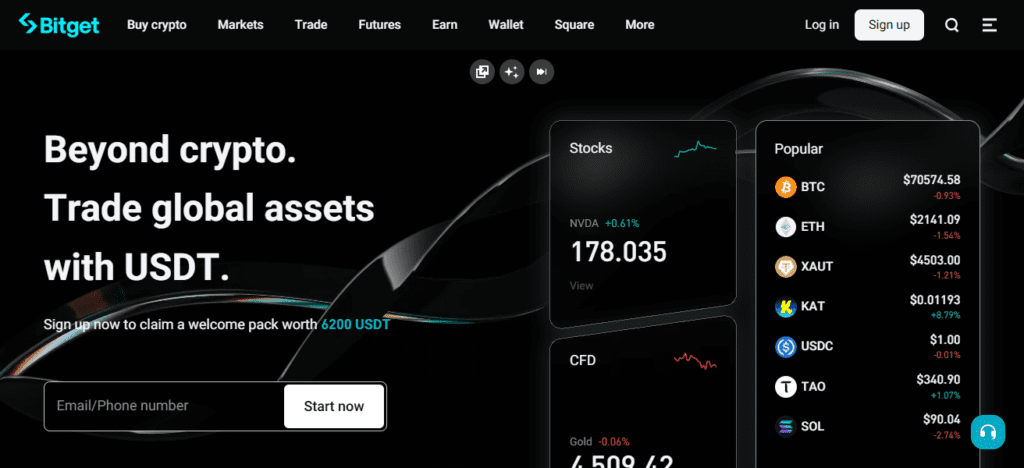
They provide a lot of educational content to the community, which is a sharp contrast to many other exchanges. Even with some regulatory warnings in some regions, it remains a good option for traders.
| Pros | Cons |
|---|---|
| Low maker/taker fees (as low as 0.08%) with token rebates. | Regulatory warnings in some regions. |
| Offers copy trading for social trading experience. | Interface may be overwhelming for beginners. |
| Supports spot and derivatives trading across multiple coins. | Limited fiat on/off ramps in certain countries. |
| Multi-chain wallet supports diversified assets. | Customer support can be slow during high volatility. |
| Active community engagement and educational content. | Less recognized in U.S. retail market compared to Coinbase. |
9. Uphold
Uphold facilitates trading across a range of asset classes. These include bitcoin/cryptocurrencies, traditional currencies, precious metals, stocks/ETFs, etc.
Facilitating trading across various asset classes is a point of differentiation for Uphold as compared to its competitors in the crypto space like Coinbase and Kraken.
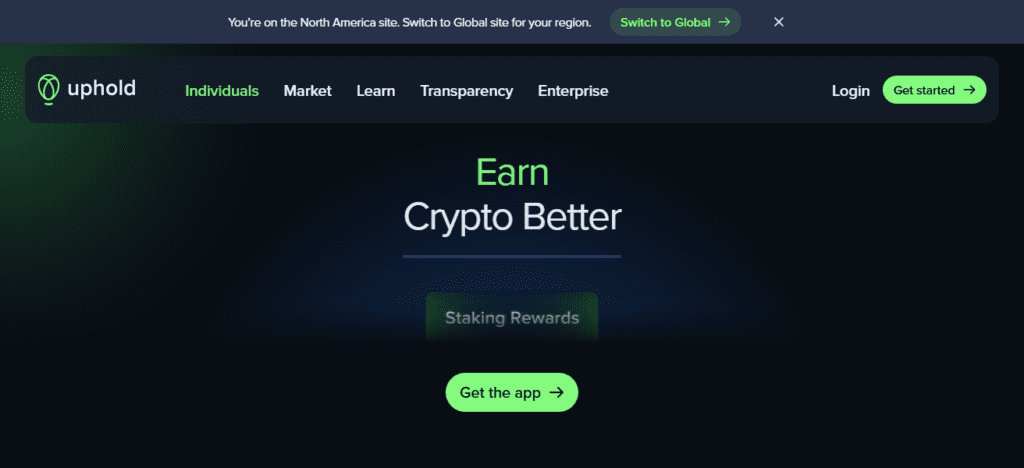
Users who want to manage a wider range of assets rather than just crypto find value in Uphold.
Uphold charges a spread as a cost; however, due to cross-asset flexibility, the spread can be greater than the fee charged on a crypto exchange.
| Pros | Cons |
|---|---|
| Multi-asset platform including crypto, fiat, stocks, and metals. | Spreads can be higher than dedicated crypto exchanges. |
| “Anything-to-anything” conversions simplify portfolio management. | Less competitive for crypto-only traders seeking low fees. |
| Supports instant transfers between asset classes. | Limited advanced trading charting tools. |
| Flexible portfolio diversification under one account. | May not appeal to users seeking institutional-grade security. |
| Simplifies cross-asset investing for casual traders. | Not ideal for high-frequency or margin trading. |
10. Mudrex
Mudrex is focused on the Indian cryptocurrency investment industry. They allow customers to manage their portfolios by using features called “Coin Sets,” which are grouped by blue-chip, DeFi, or NFT themes.
They offer both low trading fees (~ 0.12 % spot, 0.03 % futures with VIP tiers) along with easy UPI deposits and expert portfolio rebalancing.
In contrast to their competitors, Mudrex attempts to simplify and streamline diversification and the process of investing systematically.
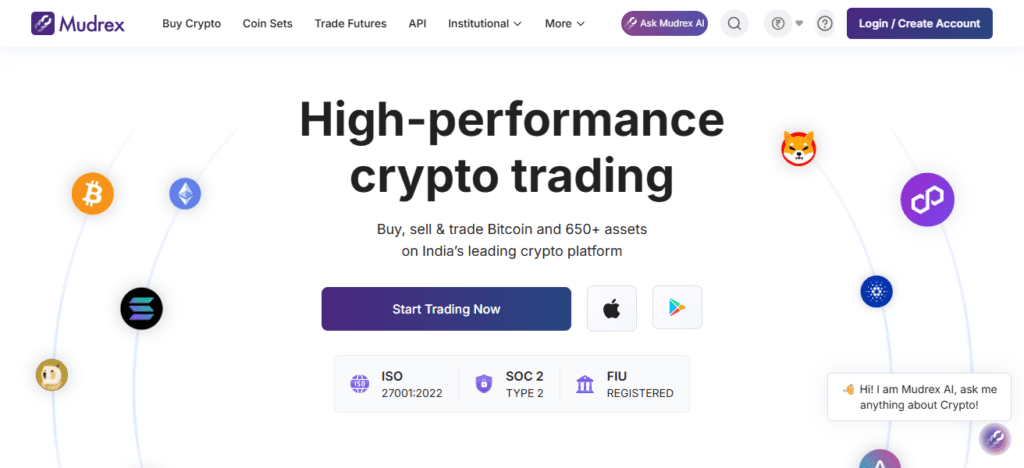
While other companies only offer order books and charts, Mudrex has developed diversified and systematic investing. Mudrex is in compliance with regulations in both India and Europe.
Because of this, long-standing investors and investors who don’t want to manage individual assets manually will find this service a good fit to invest in.
| Pros | Cons |
|---|---|
| Curated “Coin Sets” for beginner-friendly diversified investing. | Limited direct trading options compared to full exchanges. |
| Expert-rebalanced portfolios for systematic investing. | Mostly focused on Indian and European markets. |
| Low trading fees (0.12% spot, 0.03% futures). | Less suitable for advanced active traders. |
| Supports UPI deposits and easy onboarding. | Limited selection of exotic coins. |
| Regulatory compliance with insurance backing. | Relies heavily on automated strategies, less control for DIY traders. |
How We Choose Beginner-Friendly Crypto Platforms With Low Risk
Beginner-Friendly Design – Simple navigation and buy/sell buttons to assist beginners (virgin wallets like Coinbase and Binance Lite).
Safety & Security – Platforms are highly regulated and insured and store assets in cold storage (Kraken and Gemini).
Free Trading – Trading for no fee or no commission (Robinhood and Binance Lite).
Local Currency Withdrawal – Platforms allow deposit and withdrawal in local fiat (CoinSwitch and Uphold).
Diversity of Assets – Platforms, crypto options allow for diversification but are not overwhelming (Crypto.com and Mudrex).
Learning Resources – Platforms that provide no-cost access to resources (tutorials, walkthroughs, demo accounts, etc.) (Coinbase and Mudrex).
Mobile Trading – Platforms with a fully functional app to allow trading at any time and place.
Child-Friendly Options – Programs with a Kickers mode to allow simplified options, and/or pre-built portfolios and/or staking (Binance Lite and Mudrex).
Reputation and Transparency – Established and strong public trust.
Safe Trading Options – Options in a safe environment with a regulated environment and limited exposure to non-risk trading.
Cocnlsuion
To conclude, new investors should use beginner-friendly low-risk crypto platforms that prioritise security, ease of use, and regulatory compliance.
Consider the use of Coinbase, Kraken, Gemini, and Binance Lite as they offer low fees, fiat currency support, and educational resources alongside an intuitive platform design.
Educative tools alongside an intuitive design would allow investors to build their confidence while investing in crypto.
FAQ
Yes, most (Coinbase, Kraken, Gemini) are regulated, use cold storage, and have strong security protocols.
Absolutely. Most beginner platforms allow purchases as low as $1–$10.
Yes, Coinbase, Crypto.com, Uphold, and CoinSwitch support bank transfers, cards, and other fiat options.
Fees vary: Robinhood and Binance Lite are very low, while Coinbase and Gemini are slightly higher.