
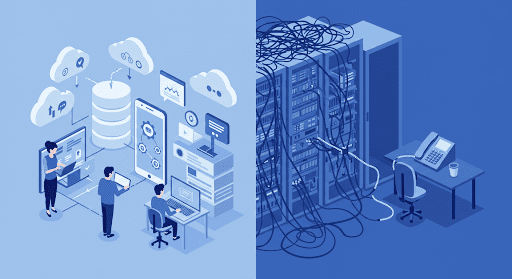

This article outlines the Best On-Premise Sovereign Cloud Servers for High-Security Financial Firms. The need for suitable sovereign cloud infrastructure is growing as cloud servers for finance become more aware of compliance and security concerns.
These servers offer a greater level of data control and regulatory compliance, coupled with enterprise security and the flexibility to manage banking, investment, and financial operations in secure environments.
Key Points & Best On-Premise Sovereign Cloud Servers for High-Security Financial Firms
| On-Premise Sovereign Cloud Server | Explanation |
|---|---|
| Dell APEX Private Cloud | Delivers sovereign control, compliance, security, and scalable infrastructure. |
| HPE GreenLake Private Cloud | Provides secure on-premise operations with flexible cloud-like management. |
| IBM Cloud Satellite | Extends cloud services on-premise while maintaining strict data sovereignty. |
| Oracle Cloud@Customer | Brings Oracle cloud capabilities inside highly regulated financial environments. |
| Microsoft Azure Stack Hub | Enables hybrid cloud deployment with local data residency controls. |
| Nutanix Cloud Platform | Simplifies private cloud management while ensuring security and compliance. |
| VMware Cloud Foundation | Offers unified infrastructure, automation, and advanced financial data protection. |
| Lenovo TruScale Private Cloud | Provides scalable sovereign cloud resources with enterprise-grade security. |
| Fujitsu Private Cloud Solutions | Supports financial institutions requiring localized, highly secure cloud operations. |
| Cisco Hybrid Cloud Platform | Combines networking, security, and sovereign cloud infrastructure seamlessly. |
10 Best On-Premise Sovereign Cloud Servers for High-Security Financial Firms
1. Dell APEX Private Cloud
Dell APEX Private Cloud provides financial firms with the greatest level of control over the sensitive financial and transactional data of their clients.
The combination of cloud flexibility and on-prem infrastructure meets banks’ and firms’ data residency needs. The automated lifecycle management features simplify daily operations.
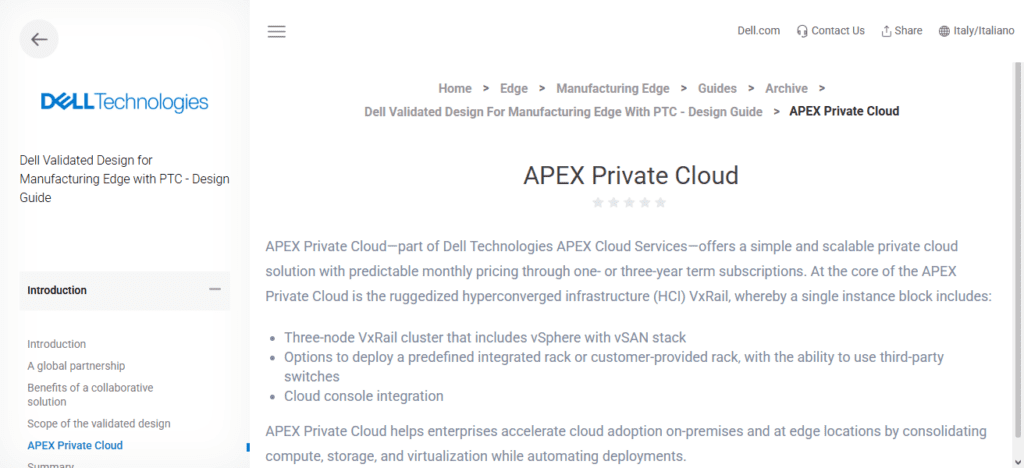
The consumption-based model employed by Dell provides firms with the ability to control resources and expand the infrastructure within the boundaries of regulatory and data sovereignty.
| Pros | Cons |
|---|---|
| Strong data sovereignty for regulated financial institutions worldwide | Premium pricing compared with traditional private infrastructure deployments |
| Consumption-based model improves budget flexibility and forecasting | Advanced features may require experienced cloud administration teams |
| Automated lifecycle management reduces operational overhead significantly | Vendor ecosystem dependency can limit infrastructure customization options |
| Built-in security controls support compliance-focused environments effectively | Initial deployment planning can be complex for large enterprises |
| Scalable architecture supports growing transaction workloads efficiently | Ongoing subscription costs may increase with resource expansion |
2. HPE GreenLake Private Cloud
HPE GreenLake Private Cloud provides the capability to experience the cloud, but within the confines of an organization’s data center.
The ability to control all financial data and resources on HPE GreenLake Private Cloud provides the highest level of security to financial firms.
Additionally, GreenLake provides financial firms with the ability to predict the costs and control the operations and governance of the platform.
The recent improvements to HPE GreenLake related to AI operations and workload optimization are a welcome upgrade to operational efficiency within the framework of regulatory compliance and reduced operational downtimes.
| Pros | Cons |
|---|---|
| Cloud-like experience while maintaining complete on-premise control | Service costs can exceed traditional ownership over time |
| AI-driven monitoring improves performance and resource utilization | Requires careful capacity planning for optimal cost efficiency |
| Flexible pay-per-use model reduces upfront capital expenditure | Advanced integrations may require specialized implementation expertise |
| Strong governance and compliance capabilities for finance sector | Limited flexibility compared with fully customized private environments |
| Rapid scalability supports changing business requirements effectively | Dependence on HPE ecosystem for maximum platform benefits |
3. IBM Cloud Satellite
With IBM Cloud Satellite, financial institutions can now control the sovereignty of sensitive data while allowing the deployment of cloud services in any location.
This is particularly useful for organizations that have operations in multiple regions with different regulatory frameworks.
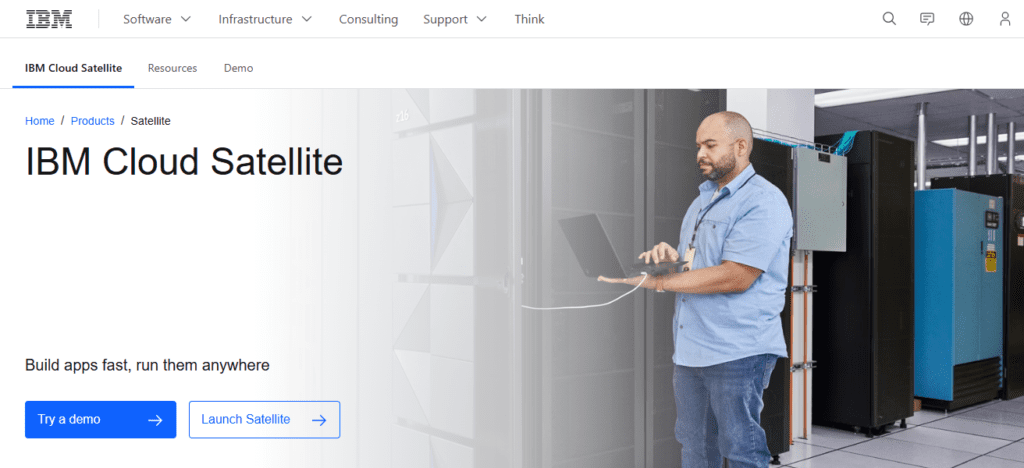
Balancing the need to establish security policies, maintain management control, and keep system integrations intact is where IBM Cloud Satellite excels.
IBM’s investment in confidential computing and zero-trust security frameworks adds extra layers of security for sensitive banking applications, thus making it even more attractive for organizations with a priority on data protection and business continuity.
| Pros | Cons |
|---|---|
| Supports multi-location deployments with unified management controls | Configuration complexity may challenge smaller IT departments |
| Strong confidential computing enhances sensitive data protection capabilities | Enterprise-grade pricing may exceed smaller organization budgets |
| Consistent security policies across distributed infrastructure environments | Requires skilled personnel for deployment and ongoing management |
| Excellent support for regulatory and sovereignty requirements globally | Integration process can be lengthy for legacy environments |
| Flexible deployment options across multiple infrastructures available | Learning curve higher than some competing cloud platforms |
4. Oracle Cloud@Customer
With Oracle Cloud@Customer, Oracle Cloud’s advanced capabilities now reside in the data center of the financial organization.
With this, the organization now has full cloud capabilities to automate, analyze, and manage its databases, while the sensitive data remains in its own data center.
Financial organizations now have the advantages of improved latency, full regulatory support, and less management overhead.
With the increasing need of the financial community to provide real-time financial transactions and enhanced analytics for complex financial solutions, the integrated ecosystem of Oracle Cloud@Customer provides the means to modernize operations while maintaining full control of the data.
| Pros | Cons |
|---|---|
| Delivers Oracle cloud services within local infrastructure environments | Best suited for organizations already using Oracle products |
| Low-latency access improves financial application performance significantly | Licensing costs can become expensive for large deployments |
| Strong database integration supports mission-critical workloads effectively | Limited flexibility outside Oracle technology ecosystem environments |
| Helps maintain strict compliance and data residency requirements | Migration process may require significant planning and resources |
| Automated management reduces operational complexity and maintenance burdens | Vendor lock-in concerns for long-term infrastructure strategies |
5. Microsoft Azure Stack Hub
Microsoft Azure Stack Hub was purpose-built to provide cloud offerings to organizations with data residency constraints.
Financial organizations can now take advantage of Azure services while keeping sensitive data in secure environments.
Azure Stack Hub supports a hybrid cloud model. Azure Stack Hub, with built-in proprietary advanced systems for managing identities, security, and compliance with a myriad of regulatory frameworks, is a great fit for banks and financial organizations dealing with very sensitive data.
| Pros | Cons |
|---|---|
| Seamlessly extends Azure services into on-premise environments | Hardware compatibility requirements may limit deployment options |
| Strong hybrid cloud capabilities support flexible operations models | Feature availability may lag behind public Azure platform |
| Advanced security and identity management enhance protection levels | Infrastructure costs can be substantial for enterprise deployments |
| Supports regulatory compliance with local data residency controls | Requires Microsoft expertise for efficient platform administration |
| Familiar Azure tools simplify management for existing users | Complex updates and maintenance processes may require planning |
6. Nutanix Cloud Platform
With its infrastructure framework, Nutanix Cloud Platform makes the private cloud easy to implement. Financial firms can take advantage of a solution that means less complexity, better performance, and improved operational efficiency.
Centralized management and built-in disaster recovery, combined with security controls that safeguard financial records, are invaluable.
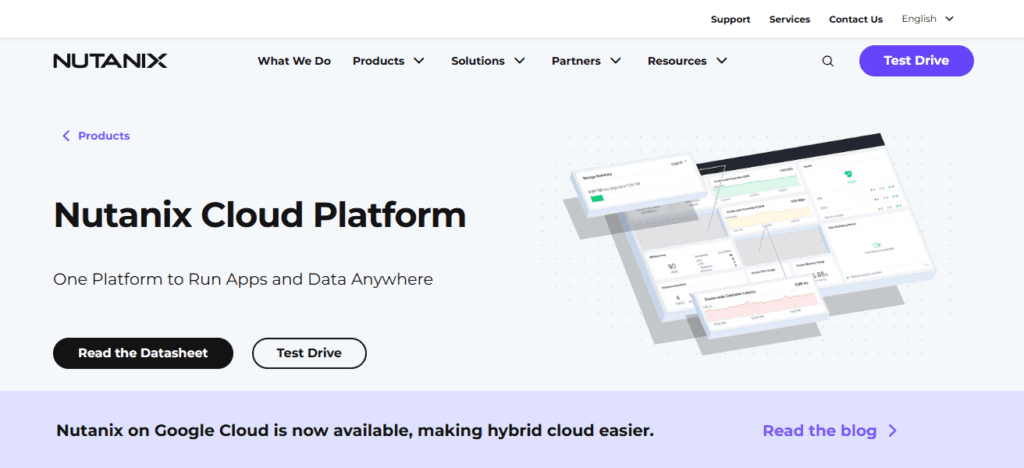
Nutanix is a solution of choice for firms looking for private, self-sovereign cloud environments, and is even more appealing given its versatility, security, and compliance, especially for advanced analytics, AI, and fraud detection.
| Pros | Cons |
|---|---|
| Hyperconverged architecture simplifies infrastructure management considerably | Licensing expenses may increase as workloads expand |
| Built-in disaster recovery strengthens business continuity planning | Advanced features may require additional subscription purchases |
| Centralized administration reduces operational complexity significantly | Limited compatibility with certain legacy enterprise systems |
| Excellent scalability for growing financial workloads and applications | The initial migration process can be resource-intensive |
| Supports AI and analytics workloads efficiently and securely | Premium support services may add extra operational costs |
7. VMware Cloud Foundation
VMware Cloud Foundation builds a private cloud on an integrated, unified environment for compute, storage, networking, and security.
Financial firms are offered the advantage of a more seamless picture with regard to the other elements of the cloud.
This environment yields automations which provide better business continuity and offer compliance and governance for modern operational workflows.
Additionally, with its use of micro-segmentation and advanced threat detection, VMware Cloud Foundation mitigates many cyber risks, which is fundamental for firms dealing with a large volume of transacting customers.
| Pros | Cons |
|---|---|
| Unified platform integrates compute, storage, and networking seamlessly | Licensing changes have increased costs for many organizations |
| Advanced micro-segmentation improves cybersecurity and risk management | Deployment complexity may require specialized VMware expertise |
| Strong automation reduces manual infrastructure management efforts | Significant resource requirements for optimal platform performance |
| Excellent support for modern and legacy applications together | Smaller organizations may find platform overly complex |
| High availability features improve operational resilience significantly | Dependence on VMware ecosystem limits technology flexibility |
8. Lenovo TruScale Private Cloud
Lenovo TruScale Private Cloud provides flexible enterprise cloud infrastructure to the customer at the enterprise level.
Financial firms benefit by being able to increase computing resources on demand and maintain proprietary control over their data.
TruScale Private Cloud contains highly advanced security, automated management, and strongly protected resources for compliance.
TruScale stands out for financial firms looking to adopt digital banking and advanced, integrated analytics because of its performance, operational reliability, and sovereignty.
| Pros | Cons |
|---|---|
| Flexible consumption model aligns costs with actual usage | Global service availability varies by geographic region |
| Enterprise-grade security supports highly regulated industries effectively | Fewer ecosystem integrations than larger cloud competitors |
| Scalable infrastructure accommodates evolving financial requirements easily | Limited market adoption compared with established cloud providers |
| Automated management tools reduce administrative workload significantly | Advanced customization options may be somewhat restricted |
| Strong compliance support for data sovereignty initiatives globally | Specialized expertise may be needed during implementation phases |
9. Fujitsu Private Cloud Solutions
Designed with strict data sovereignty and financial compliance in mind, Fujitsu Private Cloud Solutions strives to meet the needs of the finance sector.
Its local hosting capabilities and support for high availability and disaster recovery solutions help financial firms retain control over sensitive data.
Fujitsu’s dedication to sustainable development, as well as secure and innovative hybrid cloud solutions, means financial firms can use this infrastructure support with confidence to improve the efficiency of their operations and implement complex cloud solutions.
| Pros | Cons |
|---|---|
| Strong focus on data sovereignty and regulatory compliance | Global market presence smaller than leading cloud vendors |
| High-availability architecture supports mission-critical financial systems | Fewer third-party integrations compared with major competitors |
| Robust disaster recovery capabilities improve business continuity planning | Limited brand recognition outside specific enterprise markets |
| Sustainable infrastructure initiatives support environmental objectives effectively | Regional support availability may vary across locations |
| Secure local hosting enhances control over sensitive information | Custom deployments can require longer implementation timelines |
10. Cisco Hybrid Cloud Platform
The Cisco Hybrid Cloud Platform integrates Cisco’s advanced networking, cybersecurity, and cloud infrastructure technologies into a single solution for the finance segment.
Its secure by design infrastructure means financial firms can use the solution confident all data remains protected and compliance to the full extent of regulation can be achieved.
Its design also means seamless integration of on-premise and cloud systems can be achieved, thereby increasing operational flexibility.
Cisco’s focus on the automation of a zero-trust security model and secure, highly available infrastructure means the finance sector can rely on Cisco’s cloud solutions with confidence.
| Pros | Cons |
|---|---|
| Industry-leading networking expertise strengthens cloud connectivity significantly | Can be expensive for smaller financial organizations |
| Zero-trust security architecture improves overall protection levels | Requires Cisco-focused skills for advanced management tasks |
| Strong hybrid cloud integration supports flexible deployment strategies | Complex environments may increase operational management requirements |
| Advanced automation enhances efficiency and infrastructure performance | Licensing and support costs can accumulate over time |
| Reliable networking foundation supports critical financial operations | Full feature utilization may require additional Cisco products |
Conclusion
To sum up, we believe that the ideal on-premise sovereign cloud servers for high-security financial companies are those that provide the right combination of security, compliance, performance, and data sovereignty.
Solutions such as Dell APEX, HPE GreenLake, IBM Cloud Satellite, and Azure Stack Hub allow firms to preserve control over sensitive financial information and enable them to continue on their digital transformation journeys. The right solution is the one that fits your regulatory, flexible, cost, and future infrastructure needs.
FAQ
A sovereign cloud server keeps sensitive data within a company’s controlled infrastructure and jurisdiction.
They help meet regulatory requirements, improve security, and maintain full data control.
Dell APEX, IBM Cloud Satellite, and Oracle Cloud@Customer are strong choices.
They often provide greater control over security policies, access, and compliance.
Yes, solutions like Azure Stack Hub and Cisco Hybrid Cloud support hybrid environments.