
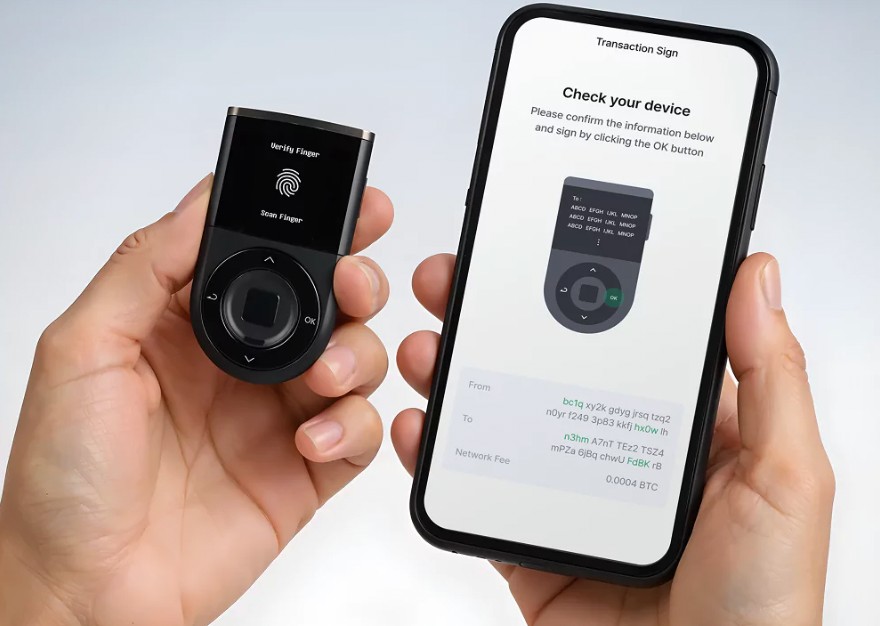

This article examines the Best Hardware Wallet Design and Dev Studios that allow businesses to develop secure, reliable, and user-friendly cryptocurrency wallets. I will analyze each studio in detail and explain the aspects most relevant to wallet development studios, such as experience, development capabilities,
key features, advantages, and shortcomings. Knowledge of these aspects will inform businesses on the best way to meet security, technology, customization, and digital-asset management needs from a wallet development studio.
Key Points & Best Hardware Wallet Design and Dev Studios
| Company | Explanation |
|---|---|
| LeewayHertz | Builds enterprise wallets, treasury tools, and secure multi-currency integrations. |
| PixelPlex | Provides regulated institutional storage with integrated AML, KYC compliance. |
| ConsenSys | Creates MetaMask and enterprise wallets for global blockchain businesses. |
| OmiSoft | Develops Web3 wallets supporting Bitcoin, Solana, and EVM networks. |
| SoluLab | Integrates AI-driven UX and anomaly detection into non-custodial wallets. |
| Unicsoft | Provides GDPR-compliant non-custodial wallets using advanced MPC key-management. |
| LimeChain | Develops EVM tooling and ERC-4337 smart-contract wallet solutions. |
| ScienceSoft | Builds secure transaction interfaces and mobile cryptocurrency wallet applications. |
| Antier Solutions | Delivers white-label crypto wallets with comprehensive multi-chain support. |
| HashCash Consultants | Develops enterprise blockchain wallets with trading and global integration capabilitie |
10 Best Hardware Wallet Design and Dev Studios
1. LeewayHertz
LeewayHertz is a technology firm that specializes in software and blockchain consulting. It was founded in 2007. In services related to building wallets, LeewayHertz focuses on building enterprise grade cryptocurrency wallets.
This company provides solutions in infrastructure working across multiple currencies, and offers services in treasury management along with secure integrations.
If what you are looking to do require engineering wallet infrastructure, rather than building a consumer oriented crypto application, then LeewayHertz can help you with connecting to blockchain, building secure workflows
for transactions, asset management, and providing integrations with systems within the enterprise. In this category, LeewayHertz is better described as a university enterprise wallet development studio rather than a manufacture of their own brand hardware wallet.
LeewayHertz Pros & Cons
Pros:
- Traditional enterprise company with decades of experience.
- Comprehensive knowledge of blockchain and digital asset technologies.
- Supports the development of customized, multi-currency wallets geared toward businesses.
- Can build wallet functionality into existing enterprise systems.
- Focused on building wallets for treasury management and institutional purposes.
Cons:
- More of a wallet development studio than a hardware-wallet manufacturer.
- Launch history and focus of hardware wallets is not clear.
- Solutions built for enterprise clients may be more complex than consumer wallets.
- High cost and longer lead time for custom development work.
2. PixelPlex
PixelPlex is a software development firm focused on blockchain technology and building custom digital solutions for businesses that include building blockchain infrastructure, and applications related to cryptocurrency.
PixelPlex’s wallet related services can be important for institutions and regulated environments where it is critical to think about security, transaction controls, identity verification, and compliance.
PixelPlex can build components of blockchain wallets along with secure asset management, and connectivity to blockchain, depending on the nature of the institutional and regulated environments.
For this category, PixelPlex would be best described as a blockchain and custom enterprise wallet development studio rather than a hardware wallet brand; there should be no mention of a planned launch of a hardware wallet until PixelPlex releases official documentation regarding this.
PixelPlex Pros & Cons
Pros:
- Focused on enterprise and institutional blockchain and wallets.
- Has the requisite skills to integrate AML and KYC technology.
- Can build unique architectures and interface with blockchains.
- Solutions can address security and regulatory considerations.
Cons:
- More of a wallet development studio than a hardware-wallet manufacturer.
- No clear branded launch date for a hardware wallet.
- Institutional features may demand more resources.
- Labor and time-intensive custom development.
3. ConsenSys
Founded by Joseph Lubin in 2014, ConsenSys is one of the pioneering Ethereum companies. While ConsenSys houses many companies, the strongest wallet of the bunch is MetaMask, founded as a browser extension by Kumavis and Dan Finlay in 2016. Since its original browsing extensions, MetaMask has grown beyond Ethereum as a self-custody wallet sleeving many blockchains.
MetaMask achieved 10 years as a downloadable extension, with 2026 marking 100 million downloads. For the ‘Best Hardware Wallet Design and Development Studios’ Category, ConsenSys is widely recognized for its wallet software, Web3 infrastructure, and self-custody technology, rather than its hardware wallets.
ConsenSys Pros & Cons
Pros:
- Founded by Joseph Lubin, one of the co-founders of Ethereum.
- Released MetaMask as abrowser extension in July 2016.
- Good standing in Ethereum and Web3 ecosystems.
- Extensive experience in developing blockchain self-custody ecosystems.
- MetaMask is a gateway to hundreds of thousands of crypto applications.
Cons:
- MetaMask is software, not a dedicated hardware wallet.
- Strong Ethereum and Web3 association may incentivize focusing on this ecosystem.
- Not a hardware-wallet manufacturing studio.
- Enterprise and institutional clients have different needs than the current consumer users
4. OmiSoft
OmiSoft builds custom multi-chain wallets designed to work across multiple blockchains, including Bitcoin, Solana, and EVM chains. With OmiSoft’s wallet solutions, businesses prioritizing multi-chain support when building modern digital asset products are able to create and deploy custom wallet solutions.
OmiSoft is able to build wallets that provide users with blockchain connectivity, built-in token support, UX/UI interface, transaction management, as well as security. OmiSoft is targeted at businesses building more sophisticated wallet solutions rather than turn-key, out-of-the-box wallet products.
For the Best Hardware Wallet Design and Development Studios, I would place OmiSoft in the Web3 engineering and wallet development studios; I would not give a date for the launch of a hardware wallet until OmiSoft has made an official announcement about it.
OmiSoft Pros & Cons
Pros
- Expert in designing Web3 applications and smart contracts.
- Develops applications across multiple blockchains with a multi-chain wallet strategy.
- Applicable for designing custom-made crypto wallets.
- Supports multiple transactions, token, and blockchain integrations.
Cons
- Low recognition as a hardware wallet manufacturing company.
- No confirmed launch date for hardware wallets.
- Building applications across multiple blockchains increases development complexity.
- High levels of security increase the demand for advanced development and ongoing maintenance.
5. SoluLab
SoluLab builds a competitive edge by combining Web3, AI, and modern Application Development frameworks to offer users a full range of blockchain services, including wallet development, automated user experiences, and security features. SoluLab also offers next-gen non-custodial wallets.
Unlike its competitors, it takes an AI-centric approach to wallet development to provide users with anomaly detection technologies and AI-driven assist to automate detection and analysis of potentially harmful or suspicious transactions.
SoluLab is a great fit in the Best Hardware Wallet Design and Development Studios, but in this context, I would place them closer to a custom software/Web3 development studio rather than a hardware wallet studio.
SoluLab Pros & Cons
Pros
- Develops blockchain apps and integrates AI.
- Builds wallet applications in the Web3 space.
- AI can be used to enhance the wallet automation and user experience.
- Can assist in transaction monitoring within the wallet and detection of abnormal activities.
Cons
- Primarily a blockchain, AI, and Web3 app development studio.
- Low recognition as a hardware wallet manufacturing company.
- Integrating AI complexifies development.
- Advanced functionalities will require additional efforts and ongoing upkeep
6. Unicsoft
Unicsoft has a proven track record of building blockchain, Web3, digital transformation, enterprise software, and even digital asset infrastructure solutions. Unicsoft offers wallet development services which can include non-custodial wallets, privacy, regulatory control, and advanced key management.
Digital asset infrastructure can use Multi-Party Computation (MPC) to distribute the responsibility of managing cryptographic keys across multiple parties instead of relying on a conventional private key storage system.
GDPR also can be applicable when wallet platforms process user data from the European Economic area. While Unicsoft is an enterprise blockchain and wallet engineering partner, there are no verified instances where the company has launched proprietary hardware wallets. Therefore, they should not be attributed a verified date for the launch of the Best Hardware Wallets until evidence is made available.
Unicsoft Pros & Cons
Pros
- Focused on enterprise blockchain development.
- Experience with non custodial wallets.
- MPC can be used in advanced key management solutions.
- European projects must consider the GDPR.
- Can be used in advanced institutional solutions.
Cons
- Low recognition as a hardware wallet manufacturing company.
- No confirmed launch of hardware wallets.
- MPC Architectures can be complex from a development standpoint.
- Privacy and legal compliance frameworks will increase the time needed for development.
7. LimeChain
A group of friends founded LimeChain in 2017. Their goal was to build and research blockchain technologies. They provide blockchain development, blockchain infrastructure, and developer infrastructure for Web3 and smart contracts.
LimeChain can leverage its experience to provide blockchain infrastructure. Especially when customers need more than just a basic wallet user interface. For the LimeChain hardware wallet, they should not be classified as a hardware wallet builder. There is also no verified launch of a hardware wallet.
Limechain Pros & Cons
Pros
- Founded in 2017 and focused on blockchain development.
- Specialized in building blockchain infrastructure and smart contracts.
- Relevant experience developing on the Ethereum Virtual Machine.
- Can be used in designing account-abstraction wallets.
- Can be used in designing smart contract wallets.
Cons
- Low recognition as a hardware wallet manufacturing company.
- No confirmed hardware wallet launch record.
- A strike against EVM specialization is that it may be less applicable to non-EVM requirements.
- Some advanced blockchain infrastructure may require specialized developers.
8. ScienceSoft
ScienceSoft develops custom software and provides IT consulting services, founded in 1989. They have experience in mobile application development, enterprise technologies, and cybersecurity. ScienceSoft can help with developing secure transaction interfaces, mobile wallets, integrations with back-end systems, and authentication along with enterprise application architectures.
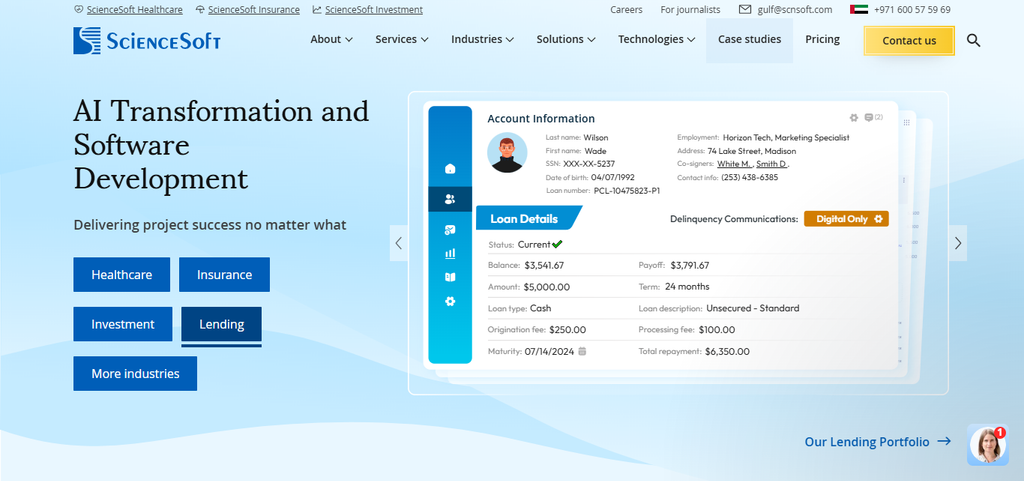
Because ScienceSoft can help develop conventional enterprise and/or mobile software, along with blockchain wallets, they are the ideal choice for developing hybrid blockchain and enterprise / mobile wallet products. ScienceSoft, does not manufacture physical hardware wallets.
In this context, ScienceSoft is more accurately described as a custom application and secure software development partner. Therefore no date is set for science soft launching its proprietary hardware wallet.
ScienceSoft Pros & Cons
Pros
- Over 30 years of software development.
- Extensive expertise in cybersecurity and enterprise software.
- Can develop mobile wallets.
- Can create secure transactions and backend interfaces.
- Has experience integrating custom applications with enterprise systems.
Cons
- No focus on manufacturing hardware wallets.
- No confirmed date of launch for hardware wallets.
- Broad focus on IT may result in reduced wallet focus.
- Large company projects can lead to long implementation time.
9. Antier Solutions
Antier Solutions Founded in 2011, Antier Solutions has built competencies in Blockchain, Web3, Digital Assets, AI, and Fintech.
Its Blockchain services build wallets, crypto exchanges, stablecoin infrastructure, tokenization, and other digital asset systems, providing a comprehensive crypto infrastructure offering for clients. Antier Solutions provides white label and customized wallets that support multiple chains.
The wallets provide clients with the flexibility to determine the wallet branding, the level of security, functionality, and the integrations. Antier Solutions would, thus, serve best in the category of Best Custom
Digital Asset and Wallet Development Studios and would not be considered as a proprietary hardware wallet manufacturer, since it does not claim to launch hardware wallets independently without citing a specific date.
Antier Solutions Pros & Cons
Pros
- Established blockchain and Web3 technology.
- Customized wallet development and white label wallet development.
- Supports multiple chain cryptocurrency wallets.
- Ability to integrate wallets with a broader ecosystem of digital assets.
- Experience encompasses the development of blockchain, tokens, and exchanges.
Cons
- No focus on hardware wallet manufacturing.
- No confirmed date of launch for a proprietary hardware wallet.
- White label solutions may require considerable development.
- Multi-chain wallets can require increased development for testing and maintenance.
10. HashCash Consultants
HashCash Consultants is a software company based out of Palo Alto Califonia in 2015 with an emphasis on blockchain, payments, trading, and infrastructure for financial markets.
They have services related to digital assets, crypto-exchanges, and payment systems, as well as bespoke blockchain services. Developing wallets then becomes part of a more comprehensive digital asset service for business enterprise customers they serve.
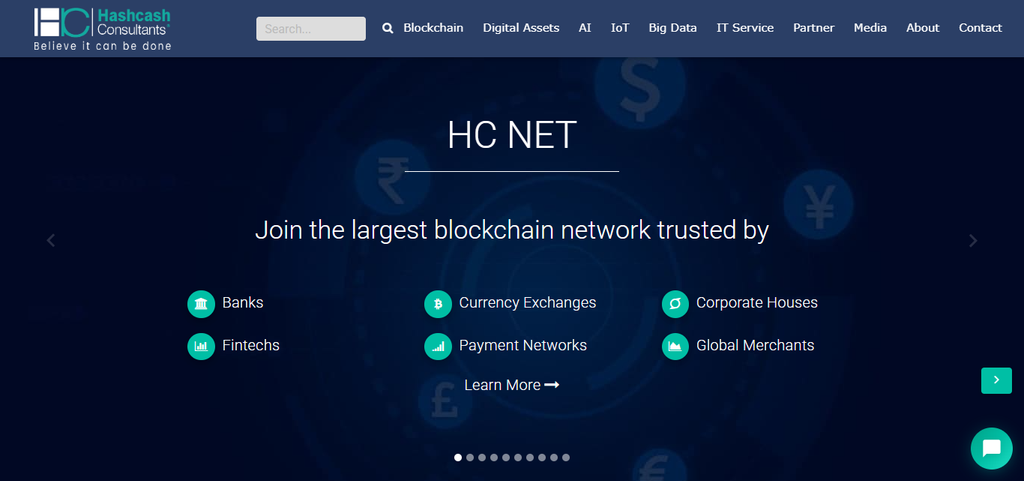
They should be considered for companies in need of wallets along the trading, payments, and/or crypto exchange value chain, in addition to other financial infrastructure services.
In the category Best Hardware Wallet Design and Development Studios, HashCash should be regarded more for blockchain enterprise and fintech development over hardware wallets.
HashCash Consultants Pros & Cons
Pros
- Blockchain focus since 2015 at a global level.
- Strong financial and blockchain technology.
- Can integrate wallets with trading systems.
- Can build enterprise wallets for digital assets and payments.
- Ecosystem experience includes tokens, exchanges, and blockchain services.
Cons
- Not primarily identified as hardware wallet manufacturers.
- No confirmed date of launch for a proprietary hardware wallet.
- Integrating financial and payment systems can make projects more complex.
- Enterprise solutions can require Extensive development.
Conclusion
In Conclusion Pick dependent on security requirements, blockchain integration, parametric flexibility, and priorities. You will find blockchain and wallet development services made available from LeewayHertz, PixelPlex, ConsenSys, OmiSoft, SoluLab, Unicsoft, LimeChain, ScienceSoft, Antier Solutions, and HashCash Consultants.
Digital asset project holders must deeply assess the options available with regard to services provided, safety, all security steps, development, and after-sales support provided before partnering with a technology service provider.
FAQ
Companies such as LeewayHertz, PixelPlex, ConsenSys, OmiSoft, SoluLab, Unicsoft, LimeChain, ScienceSoft, Antier Solutions, and HashCash Consultants offer relevant blockchain and wallet-development expertise.
No. Most are blockchain and software-development studios rather than manufacturers of physical hardware wallets.
Important features include secure key storage, PIN protection, recovery mechanisms, encryption, multi-chain support, transaction signing, and secure firmware.
Yes. Several studios provide customized wallet development based on a company’s preferred blockchain networks, security requirements, user experience, and business model.