


This article will discuss the Best Crypto Custody APIs that allow companies to securely manage, store and transfer digital assets. These APIs utilize MPC technology advanced security features, as well as, compliance, and easy blockchain integrations.
We will discuss leading crypto custody providers and explore their features, benefits, limitations and how they help institutions design safer, more scalable, cryptocurrency infrastructure.
What Are Crypto Custody APIs?
Crypto Custody APIs implement software that helps digital asset custody solution partners to securely store, transfer, and manage digital assets. These APIs create links between blockchain infrastructures and the applications and offer wallet management, private key management, transaction approval and compliance monitoring.
These APIs offer security, automation of crypto functions, and reduction of risks during cryptocurrency asset management. APIs help many platforms in operation, such as banks, exchanges, and multiple web platforms.
Why Are Crypto Custody APIs Important?
- Secure Private Key Management: Utilizing Multi-Party Computation, advanced encryption, and proprietary secure vaults protects digital assets from loss and theft.
- Institutional-Grade Protection: Offers enterprise-level security to all banks, funds, and crypto platforms.
- Regulatory Compliance: Assists businesses with the security standards and operational risks management required to meet compliance.
- Faster Transactions: Automates many tasks, including transfer and approval requests to and from the blockchain, as well as management of assets.
- Enterprise Crypto Adoption: Safely and efficiently enables the use of crypto services by businesses.
Key Points & Best Crypto Custody APIs
| Crypto Custody API | Explanation |
|---|---|
| Fireblocks API | Provides secure institutional crypto custody, transfers, MPC wallets, and transaction controls. |
| Coinbase Prime API | Offers enterprise custody, trading, staking, and institutional asset management solutions. |
| BitGo API | Enables regulated crypto custody with multi-signature wallets and security features. |
| Anchorage Digital API | Provides federally regulated digital asset custody and institutional crypto services. |
| Copper API | Delivers institutional custody, settlement, and trading infrastructure for cryptocurrencies. |
| Taurus API | Supports digital asset custody, tokenization, and blockchain infrastructure services. |
| Cobo Custody API | Provides MPC-based custody solutions with wallet management and security tools. |
| Ledger Enterprise API | Offers hardware-backed crypto custody with advanced institutional security controls. |
| Hex Trust API | Provides regulated digital asset custody and blockchain banking solutions. |
| Gemini Custody API | Delivers secure institutional crypto storage with compliance and insurance protections. |
10 Best Crypto Custody APIs
1. Fireblocks API
Using multi-party computation technology, Fireblocks API helps institutions mitigate private key compromises when executing rapid confirmations to the blockchain. Users can create wallets, transfer assets, set policies, control the Web3 gateway, and more.
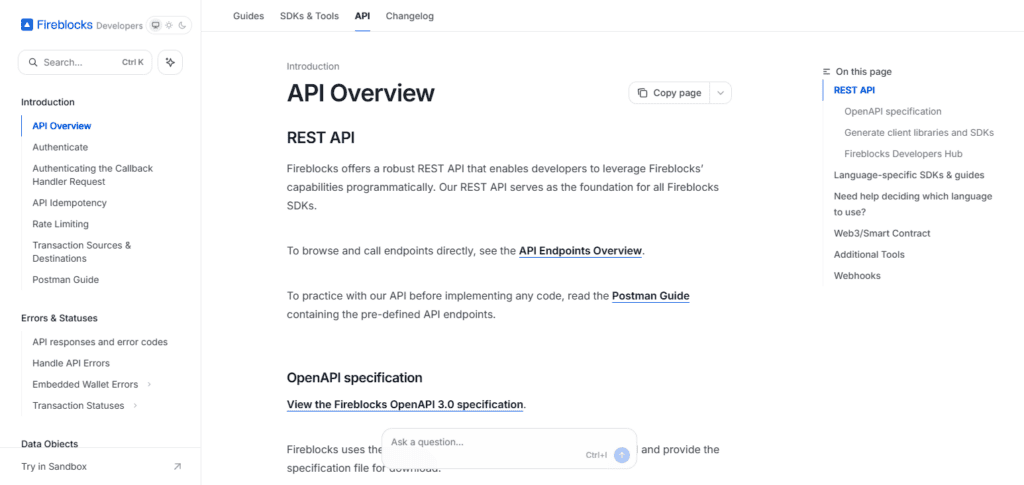
Fireblocks plans institutional infrastructure upgrades to support more tokens and automate compliance. These upgrades make Fireblocks a perfect fit for exchanges, banks, and financial institutions.
| Pros | Cons |
|---|---|
| Uses advanced MPC technology for institutional-grade asset protection. | Pricing can be expensive for small businesses and startups. |
| Supports multiple blockchains, wallets, and Web3 integrations. | Requires technical knowledge for complete API implementation. |
| Provides strong transaction controls and policy management. | Mainly focused on enterprise-level users rather than individuals. |
| Offers scalable infrastructure for banks and crypto platforms. | Advanced features may require additional configuration. |
| Provides reliable security and compliance capabilities. | Limited suitability for simple crypto storage needs. |
2. Coinbase Prime API
Coinbase Prime API offers a full custody, trading, and portfolio management solution built on the regulated Coinbase ecosystem. Its APIs enable the secure storage and compliance of a large digital asset portfolio, as well as the automated transfers and staking.
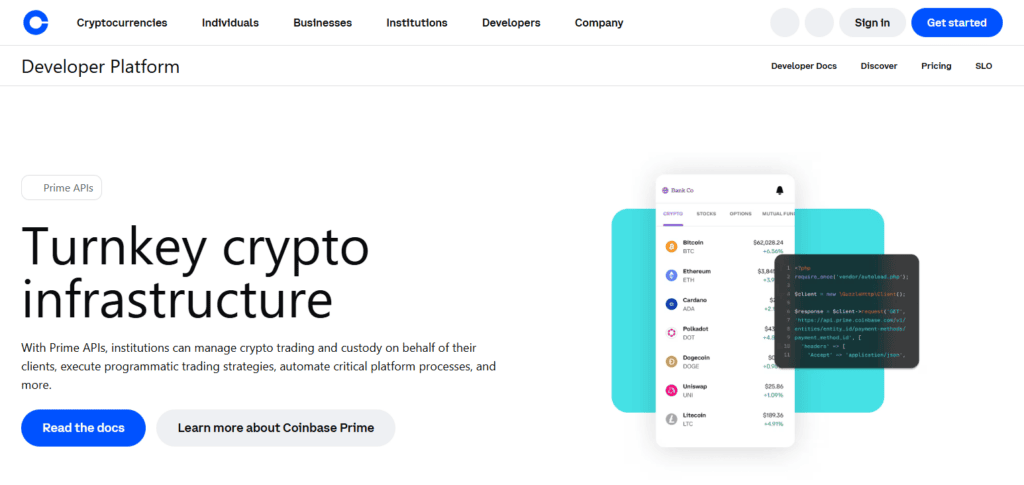
With even more institutional functionality planned for 2026, Coinbase Prime will continue to be a trusted partner for hedge funds and global investment firms.
| Pros | Cons |
|---|---|
| Provides regulated custody with strong institutional security. | Available features may vary by region and regulations. |
| Integrates custody, trading, and asset management services. | Higher costs compared to basic custody providers. |
| Offers detailed reporting and portfolio management tools. | Requires approval for institutional account access. |
| Supports major cryptocurrencies and digital assets. | Less flexible for highly customized blockchain solutions. |
| Backed by a trusted global crypto ecosystem. | Dependency on Coinbase infrastructure and policies. |
3. BitGo API
BitGo API employs multi-signature technology to secure custody for Bitcoin, Ethereum, and a variety of other blockchain assets. Users can approve transactions, manage wallets, and access compliance tools.
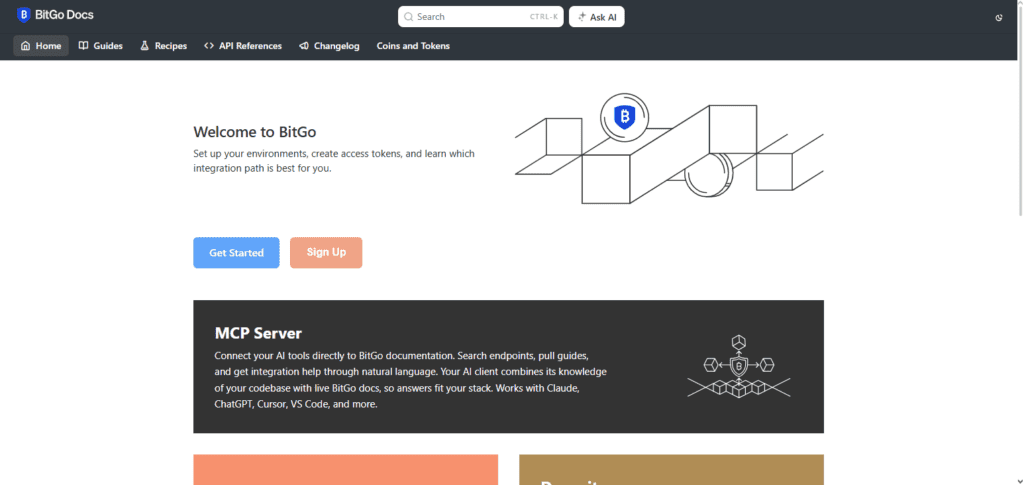
BitGo removes the burden of securing and insuring digital assets by providing advanced custody infrastructure that fulfills regulatory standards. This makes BitGo a preferred solution for crypto and financial institutions.
| Pros | Cons |
|---|---|
| Provides secure multi-signature wallet technology. | API setup can be complex for beginners. |
| Supports various cryptocurrencies and blockchain networks. | Premium pricing targets institutional customers. |
| Offers insurance coverage and compliance features. | Some advanced tools require additional subscriptions. |
| Provides strong transaction approval workflows. | Limited focus on decentralized finance applications. |
| Trusted by exchanges and financial institutions. | May require technical expertise for integration. |
4. Anchorage Digital API
Anchorage Digital API provides the infrastructure for the custody of regulated digital assets. As a federally chartered crypto bank, Anchorage offers custody, staking, governance, and blockchain services via APIs. The platform uses innovative security systems and the latest regulatory frameworks.
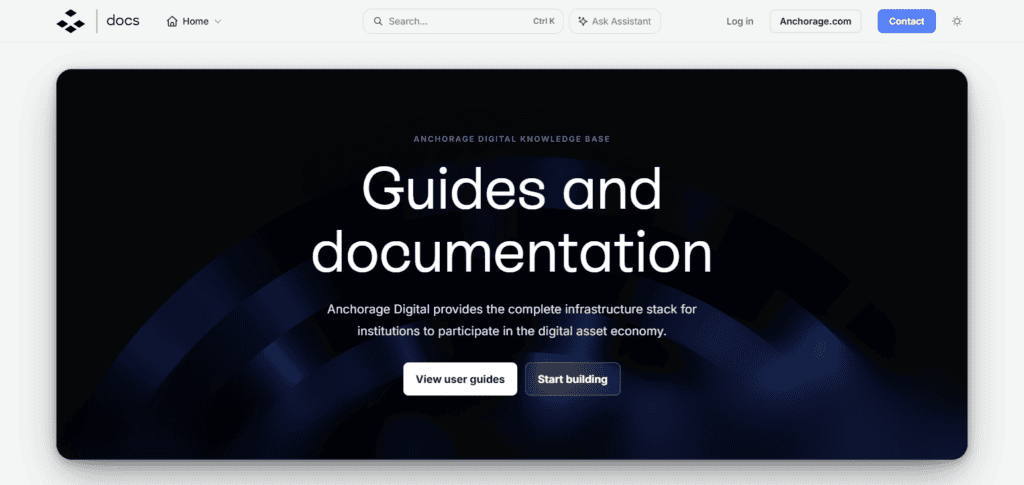
Anchorage will continue to support the institutional adoption of regulated digital assets by providing scalable custody solutions for banks, funds, and Web3 companies in 2026.
| Pros | Cons |
|---|---|
| Offers regulated custody through a crypto banking framework. | Mostly designed for institutional investors. |
| Provides secure custody, staking, and governance services. | Account onboarding can involve strict compliance checks. |
| Combines banking standards with blockchain technology. | Not ideal for small crypto businesses. |
| Provides strong regulatory protection and transparency. | Limited supported regions compared with global providers. |
| Supports enterprise-level digital asset management. | Higher operational requirements for users. |
5. Copper API
Copper API provides institutional cryptocurrency custody, settlement and trading infrastructure. Its ClearLoop technology provides secure off-exchange settlement that eliminates counterparty risk in crypto trading.
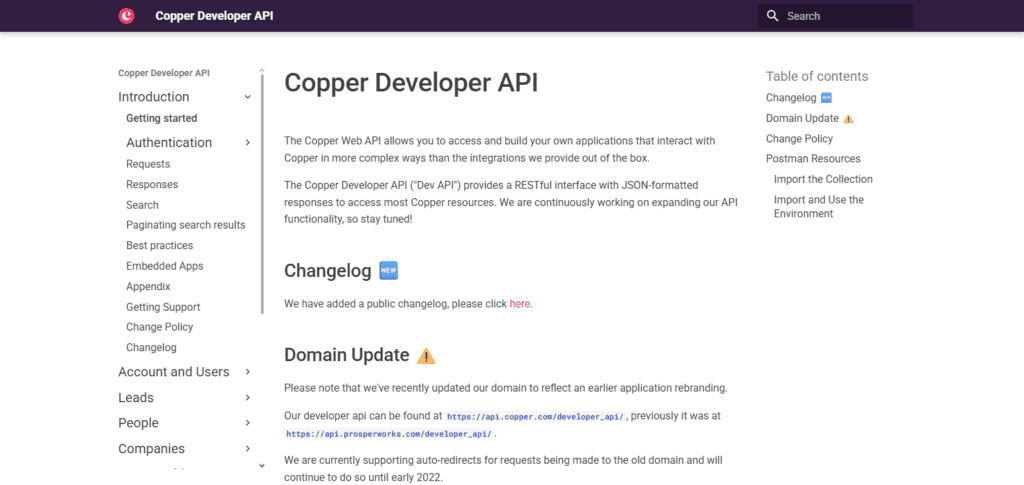
The API offers numerous features, including multi-asset support, portfolio management, wallet management, and compliance automation. With its focus on crypto markets, Copper provides digital asset infrastructure for hedge funds, brokers, and financial service providers.
| Pros | Cons |
|---|---|
| Provides secure custody and off-exchange settlement solutions. | Pricing information is not publicly transparent. |
| Reduces trading risks with ClearLoop technology. | Mainly suitable for professional investors. |
| Supports multiple digital assets and workflows. | Integration may require specialized developers. |
| Offers institutional-grade compliance features. | Less suitable for personal crypto management. |
| Improves operational efficiency for trading firms. | Smaller ecosystem compared with major competitors. |
6. Taurus API
Taurus API focuses on the custody of digital assets, tokenization, custody infrastructure, and blockchain technology for financial institutions. With a focus on enterprise-grade APIs, Taurus offers custody of digital tokens, security tokens, and cryptocurrencies.
For the financial services and banking sector, Taurus provides regulatory compliance, secure custody, and integration of blockchain and token systems with legacy systems of finance.
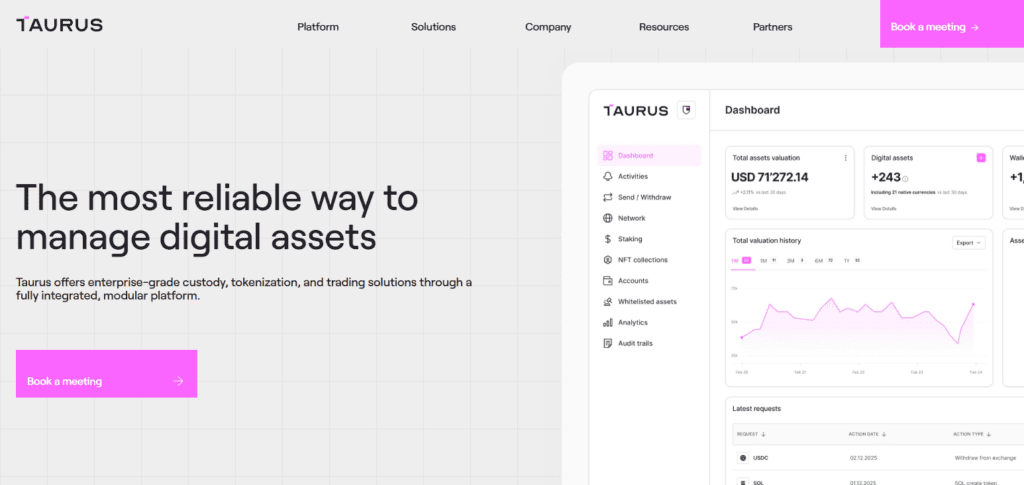
In 2026, Taurus’ enhanced capacity for tokenization will be of interest to organizations and banks seeking to utilize digitized, tokenized, and blockchain-based financial services.
| Pros | Cons |
|---|---|
| Supports crypto custody and tokenized asset management. | Focused mainly on financial institutions. |
| Provides blockchain infrastructure for digital securities. | Requires technical expertise for implementation. |
| Strong compliance and security framework. | Limited public pricing information available. |
| Helps banks adopt blockchain-based services. | May be complex for smaller companies. |
| Supports real-world asset tokenization projects. | Fewer consumer-focused features available. |
7. Cobo Custody API
Cobo Custody API means you can use MPC to control your crypto in the custody of Cobo. They have several wallet management features and enhanced security layers on their custody solution.
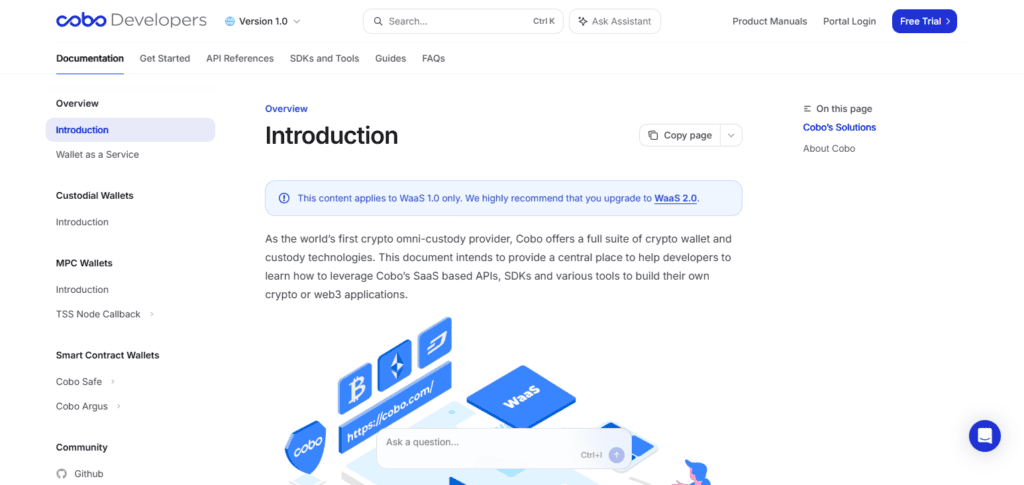
Cobo offers custody of MPC on the infrastructure of their secure, flexible, automated APIs built for exchanges, funds, and all things Web3. Their APIs suit institutional needs for automated custody with enterprise security and significantly lower risk from the management of private keys.
| Pros | Cons |
|---|---|
| Uses MPC technology for secure crypto custody. | Less recognized outside Asian crypto markets. |
| Supports DeFi, staking, and Web3 integrations. | Documentation may require developer experience. |
| Provides flexible wallet management solutions. | Enterprise pricing may be costly. |
| Offers automation for institutional operations. | Smaller global presence than leading providers. |
| Supports multiple blockchain networks and assets. | Advanced features require customization. |
8. Ledger Enterprise API
Ledger Enterprise API uses hardware trusted crypto custody solution built on secure hardware for custodial protection of private keys.
The Enterprise API enables users to manage their crypto on all blockchains, but continues to innovate in the space of custody, security, and hardware for enterprise asset management on all blockchains.
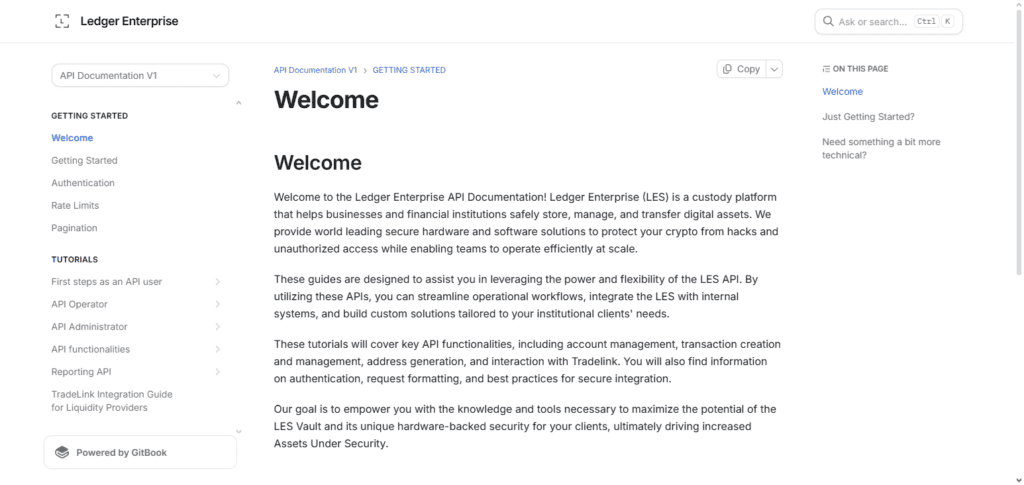
The Enterprise API has features to assist in the approval of enterprise transactions and management of enterprise governance and wallets.
| Pros | Cons |
|---|---|
| Uses hardware-backed security for private keys. | Hardware-based approach may limit flexibility. |
| Provides strong protection against cyber threats. | Setup can be complex for large teams. |
| Supports multiple blockchain assets and networks. | Higher costs for enterprise solutions. |
| Offers governance and transaction approval tools. | Requires understanding of hardware security systems. |
| Trusted brand with strong security reputation. | Not designed for casual crypto users. |
9. Hex Trust API
Hex Trust API gives institutions around the world access to custody of digital assets and banking services on the blockchain. Their custody solution for crypto enables secure crypto custody, crypto staking, and crypto token management and Web3 services.

Hex Trust API focuses on enterprise security and compliance. Hex Trust APIs supports multiple blockchains. Hex Trust is a popular custody of digital assets and regulated custody solution among token issuers and Web3 service providers.
| Pros | Cons |
|---|---|
| Provides regulated custody and blockchain banking services. | Mainly focused on institutional customers. |
| Supports staking, token management, and Web3 assets. | Limited information about public pricing plans. |
| Offers compliance-focused digital asset solutions. | Integration may require technical resources. |
| Supports multiple blockchain ecosystems. | Smaller market presence than Coinbase or Fireblocks. |
| Helps businesses manage digital assets securely. | May not fit small-scale crypto projects. |
10. Gemini Custody API
Gemini Custody API is an institutional-grade storage solution for digital assets. Gemini Custody API is Regulatory compliant and offers built-in insurance safeguards for your business’s and your clients’ peace of mind.
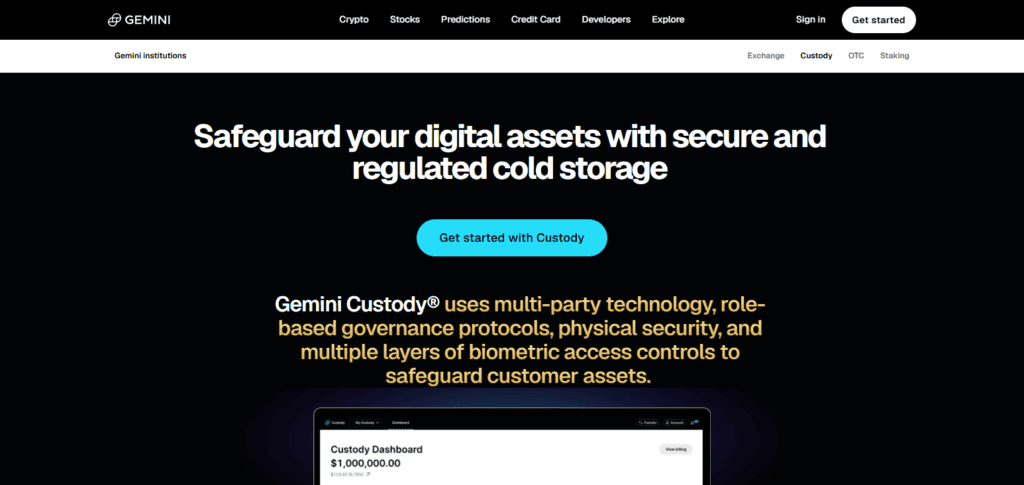
Gemini Custody API strengthens the security of its products with insurance and its vetted exchange ecosystem for the protection of business’s digital assets. Gemini Custody API will continue to provide the assurance of compliance in Crypto Custody and transparency of operations to its clients in 2026.
| Pros | Cons |
|---|---|
| Provides insured institutional crypto custody services. | Availability depends on regulatory regions. |
| Strong compliance and security infrastructure. | Higher fees compared with basic solutions. |
| Offers secure storage and reporting features. | Limited customization for advanced blockchain needs. |
| Backed by a recognized cryptocurrency platform. | Requires institutional onboarding processes. |
| Suitable for regulated financial organizations. | Smaller supported asset range than some competitors. |
Key Features to Look for In Crypto Custody APIs
- High End Security Framework: Built on cutting edge protective measures and provides encryption with fortified protection against various cyber threats.
- MPC & Multi-Sig: Provides a distributed method for protecting private keys.
- Blockchain Agnostic: Capable of protecting assets across multiple blockchains and various digital assets.
- Built In Compliance Tools: Provides business assurance and regulatory compliance with transparent transactional methods.
- Documented and Supported APIs: Enables ease of integration and customization at the request of the business and or the developer.
- Crypto Portfolio Tools: Provides tools for easy tracking, reporting, and monitoring of crypto portfolio holdings.
- Supports Enterprise Needs: Engages and supports the business and market requirements through scalable systems for a high volume of transactions.
Conclusion
In Conclusion Best Crypto Custody APIs Crypto Custody APIs have solid security and compliance to manage digital assets. Industry leaders such as Fireblocks, Coinbase Prime, BitGo, and Anchorage Digital offer businesses cutting-edge technologies to secure their funds.
By 2026, as the adoption of crypto technologies expands, custody APIs will ensure the safety of blockchain transactions and institutional and enterprise investments, as well as large-scale crypto management.
FAQ
Businesses use them for secure private key management, regulatory compliance, automated transactions, and institutional-grade cryptocurrency protection.
Fireblocks API, Coinbase Prime API, BitGo API, Anchorage Digital API, and Copper API are among the top crypto custody solutions.
They use MPC technology, multi-signature wallets, encryption, secure storage systems, and transaction approval controls to protect assets.
Yes, leading custody APIs provide enterprise security, compliance features, and risk management tools designed for institutions.