


In this article, I will cover some of the Best Node Infrastructure Providers that assist developers and businesses in building Web3 applications with scale and security in mind.
These providers help with blockchain node connectivity and offer RPC endpoints, APIs, and other advanced tools. I will cover the important features and support these providers offer to determine how these platforms assist developers with the dApps of today.
What Are Node Infrastructure Providers?
Node Infrastructure Providers offer managed blockchain nodes, RPC endpoints, and APIs for developers to integrate applications into blockchain networks. They create infrastructure for developers thereby eliminating the need to run and maintain personal nodes.
This makes development of Web3s faster as they offer real time data for Web3s and improve the performance for applications spanning multiple blockchain networks.
Why Node Infrastructure Matters for Web3 Development
- Faster dApp Performance: Access to fast blockchains reduces delays and improves user experience.
- Simplifies Node Management: No complex blockchain node maintenance.
- Scalable Infrastructure: Accommodates a growing number of users and web3 interactions for asynchronous applications.
- Better Reliability and Security: Provides secure connections and higher uptime with the optimal operation of blockchains.
Key Points & Best Node Infrastructure Providers
| Platform | Explanation |
|---|---|
| Alchemy | Developer-focused platform offering powerful APIs, debugging tools, and scalable dApp infrastructure solutions. |
| QuickNode | Fast blockchain infrastructure providing multi-chain RPC endpoints and real-time analytics services globally. |
| Infura | ConsenSys-backed platform delivering scalable Ethereum and IPFS network access for developers. |
| Chainstack | Flexible blockchain platform enabling quick deployment and management of cloud-based nodes. |
| Ankr | Decentralized infrastructure network offering affordable RPC services, staking, and developer APIs. |
| Blockdaemon | Enterprise blockchain platform providing secure nodes, staking solutions, and compliance features. |
| GetBlock | Blockchain-as-a-service provider offering API access to over fifty blockchain protocols. |
| Moralis | Web3 development platform offering APIs, authentication, and backend tools for dApps. |
| dRPC | Distributed RPC network providing multi-chain redundancy and affordable high-volume blockchain access. |
| Helius | Solana-focused infrastructure provider offering low-latency APIs for developers and traders. |
10 Best Node Infrastructure Providers
1. Alchemy
Alchemy is a sophisticated blockchain node infrastructure system that focuses on developers constructing scalable Web3 applications. Alchemy’s infrastructure is enhanced RPC, smart wallet solutions, and an extensive suite of NFT offerings and real-time debugging.
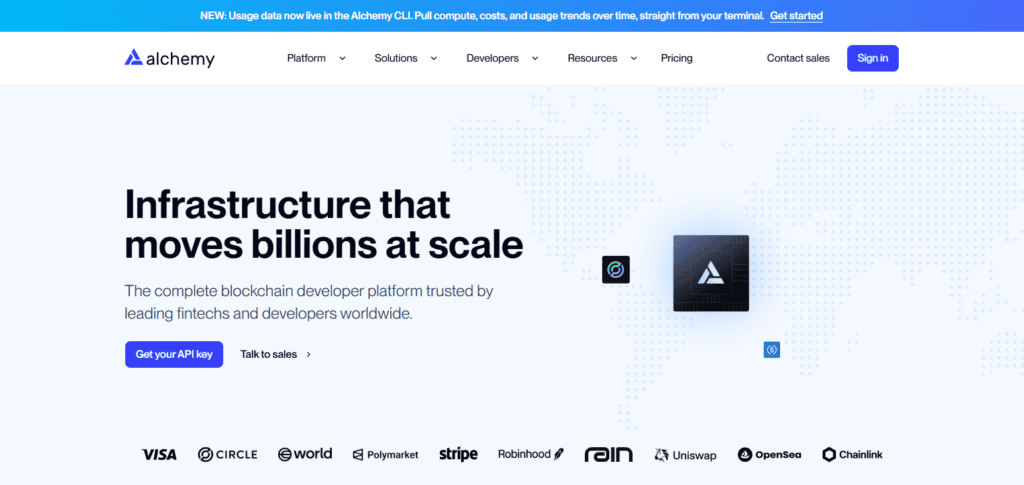
Alchemy is quite reliable but manages to avoid the hassles that come with node management, thus allowing the developer to focus on other aspects of their dApp.
Alchemy’s offerings are also highly enterprise-grade. Its developer-first ecosystem appeals to many enterprise and startup customers, allowing scaling across the various networks of blockchain with ease.
| Pros | Cons |
|---|---|
| Advanced developer tools with powerful APIs and debugging features. | Premium features can become expensive for high-volume applications. |
| Supports multiple blockchain networks with reliable infrastructure. | Some advanced tools may require technical expertise. |
| Provides scalable solutions for enterprise-level Web3 applications. | Limited customization compared with self-managed nodes. |
| Strong ecosystem support and extensive developer documentation. | Dependency on third-party infrastructure providers. |
2. QuickNode
QuickNode is an infrastructure platform for high-performance blockchain that is well-known for its connectivity that is ultra-rapid across multiple chains. The system of QuickNode offers developers the ability to access data, deploy their applications, and interact with networks without the hassle of managing their own nodes.
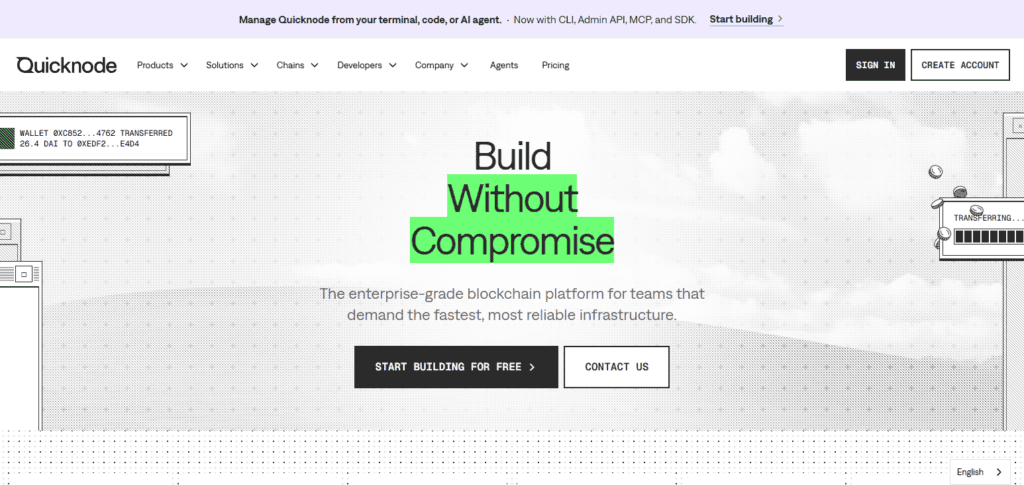
QuickNode offers advanced analytics and multiple APIs as well as Streams and an offering of developer resources to enhance the performance of Web3. The global infrastructure and low latency of QuickNode makes the system a preferred choice for many enterprises that wish to have the power of connection across blockchain ecosystems.
| Pros | Cons |
|---|---|
| Offers extremely fast RPC endpoints with global network coverage. | Higher pricing compared with some basic RPC providers. |
| Supports multiple blockchain networks and developer tools. | Advanced analytics features may require premium plans. |
| Provides reliable performance for high-traffic dApps. | Less control compared to running private nodes. |
| Includes useful features like Streams and token APIs. | Beginners may find enterprise features complex. |
3. Infura
Infura is a pioneer of blockchain infrastructure and a system of reliable access to Ethereum, IPFS, and other decentralized networks. Infura boasts quite scalable APIs as well as RPC endpoints. Infura also manages to eliminate the personal node management hassle
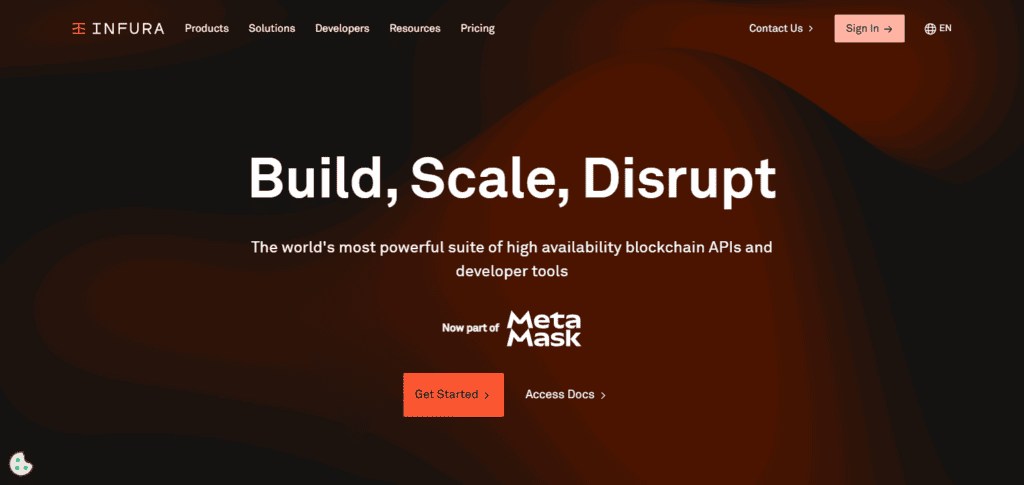
While maintaining an enterprise level service that other competitors of the industry lack. Infura’s long standing reputation and developer friendly offerings have made it a go to for many blockchain projects across the world.
| Pros | Cons |
|---|---|
| Trusted Ethereum infrastructure backed by ConsenSys. | Heavy Ethereum focus compared to other providers. |
| Provides stable APIs and scalable blockchain access. | Free-tier limits may restrict growing applications. |
| Strong security and enterprise reliability standards. | Centralized infrastructure creates dependency risks. |
| Excellent support for Ethereum and IPFS development. | Multi-chain support is smaller than some competitors. |
4. Chainstack
Chainstack offers blockchain node infrastructure with the flexibility for developers to deploy dedicated or shared nodes across multi-cloud environments.
With a storage capability for multiple blockchain networks, Chainstack also simplifies the process of managing a node by automating the deployment, monitoring, and scaling of the nodes.
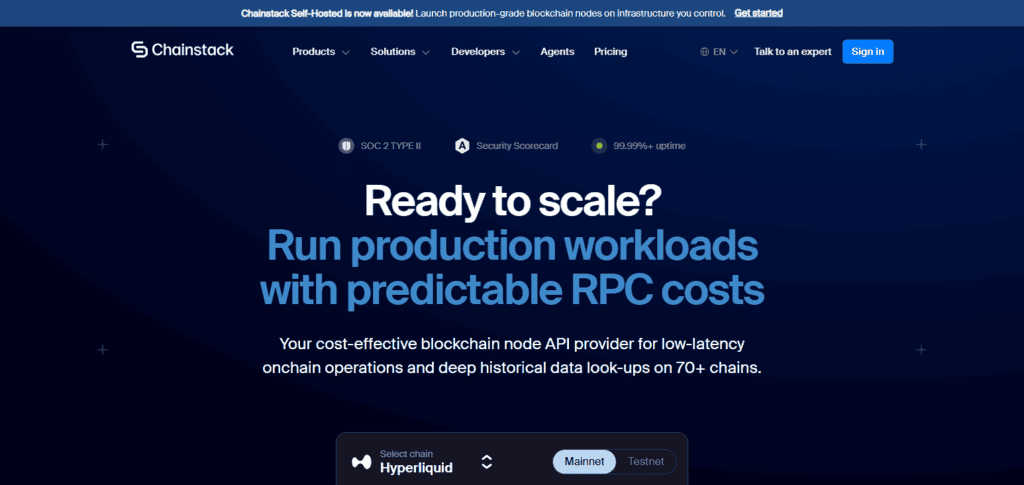
Chainstack fits the needs of teams requiring customizable infrastructure and takes the burden of complex operational tasks. With its emphasis on reliability and security, Chainstack is a great option for Web3 companies with a focus on cross-chain.
| Pros | Cons |
|---|---|
| Enables quick deployment of dedicated and shared blockchain nodes. | Pricing can increase for advanced infrastructure requirements. |
| Supports multiple cloud environments and blockchain networks. | Requires technical knowledge for maximum customization. |
| Provides automated node management and monitoring tools. | Smaller developer community compared with major providers. |
| Offers flexible infrastructure options for businesses. | Some features depend on selected subscription plans. |
5. Ankr
Ankr is a DePIN Web3 infrastructure provider that has decentralized, cost-effective, and efficient blockchain RPC, staking, and development services.
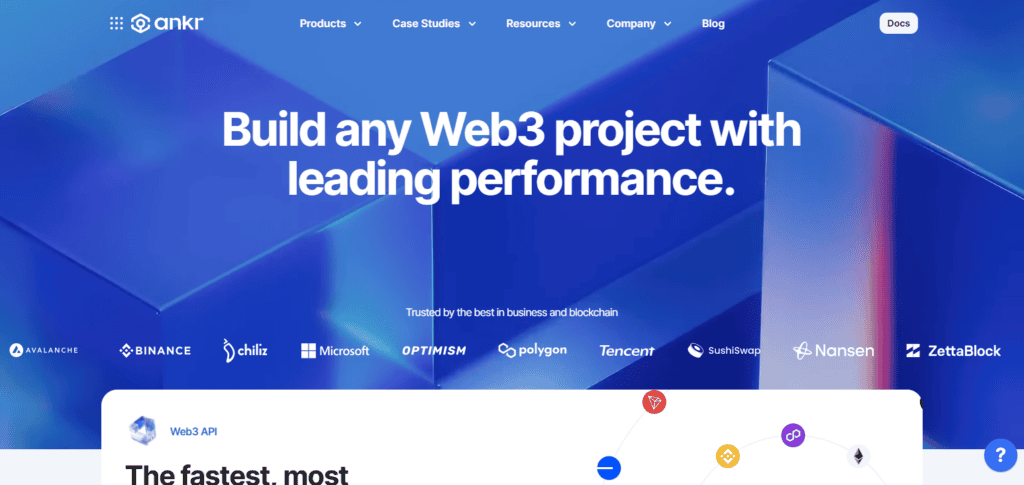
Compared to other node providers, Ankr offers faster and more cost-effective blockchain access because of its decentralized physical infrastructure network. Ankr has established itself as an important player in the blockchain space because of its focus on decentralized services and Web3 development.
| Pros | Cons |
|---|---|
| Provides cost-effective RPC services through decentralized infrastructure. | Performance may vary depending on network providers. |
| Supports many blockchain networks and Web3 applications. | Decentralized model can create consistency challenges. |
| Offers staking solutions and developer-friendly APIs. | Advanced enterprise features are more limited. |
| Helps reduce infrastructure costs for startups. | Documentation may require improvement for beginners. |
6. Blockdaemon
Blockdaemon is an enterprise-level, secure, compliant, and operationally robust blockchain infrastructure provider. With a focus on node management and staking, Blockdaemon provides enterprise clients a secure way to access the requirements of multiple blockchains.
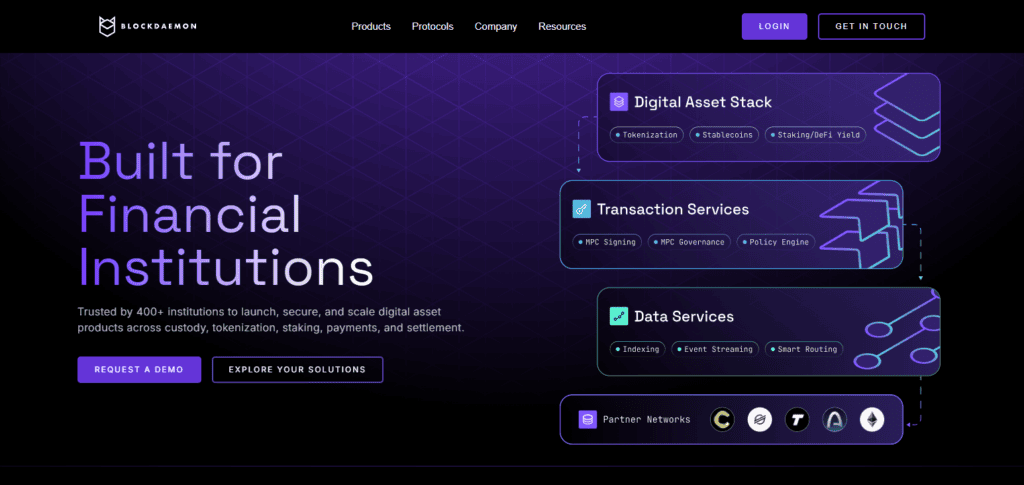
Its automation of node deployment and management, as well as the staking process, has made Blockdaemon a trusted partner to enterprises beginning their journey into the digital assets space.
| Pros | Cons |
|---|---|
| Enterprise-grade security and institutional blockchain solutions. | More expensive than developer-focused node providers. |
| Strong compliance and staking infrastructure support. | Designed mainly for businesses, not beginners. |
| Reliable node management for financial institutions. | May provide more features than small projects need. |
| Supports large-scale blockchain operations efficiently. | Limited focus on casual Web3 developers. |
7. GetBlock
As a blockchain-as-a-service provider, GetBlock offers instant access to dedicated and shared nodes for 50+ blockchain protocols. Through API integration, developers may connect applications to blockchain networks, with no need to manage infrastructure.
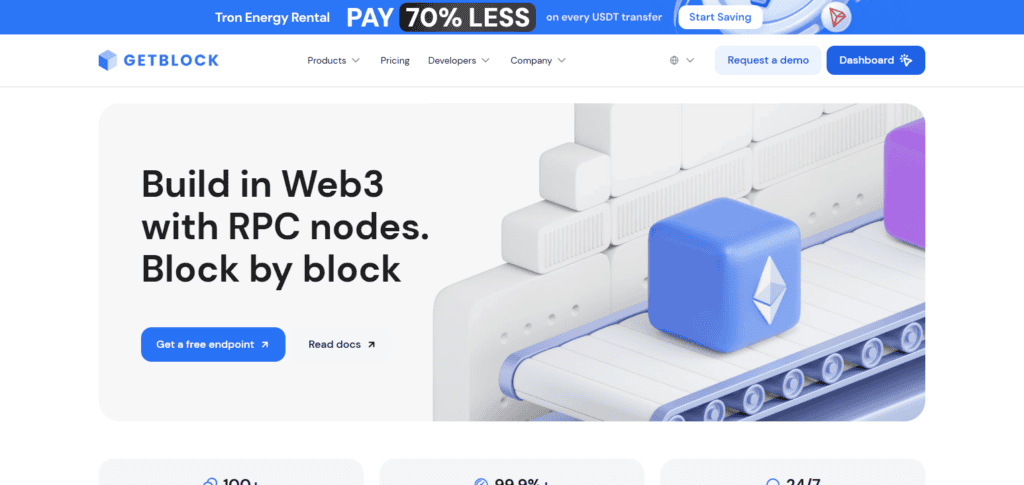
GetBlock, which offers support for nodes from Bitcoin, Ethereum, and other major networks, strives for speed and low costs for users. GetBlock’s flexible pricing and plans makes it ideal for developers and businesses working to create blockchain applications of varying scales and scopes.
| Pros | Cons |
|---|---|
| Provides easy API access to 50+ blockchain protocols. | Advanced customization options are limited. |
| Affordable solution for startups and developers. | Performance depends on shared node availability. |
| Supports both shared and dedicated blockchain nodes. | Enterprise-level features are fewer than competitors. |
| Simple integration reduces development complexity. | Smaller ecosystem compared with leading providers. |
8. Moralis
Moralis is a Web3 development platform that offers blockchain API’s, a backend infrastructure of decentralized databases, and authentication tools. Moralis offers a robust platform to speed up the process of developing a Web3 project, as it offers most of the backend tools to assist in integrating blockchain and managing users.
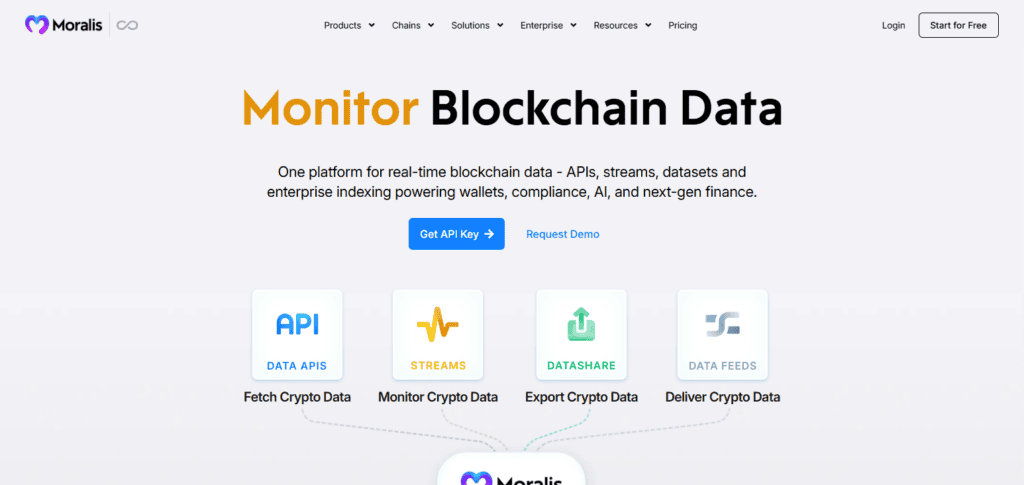
Moralis makes emphasis on the ease of integration of on-chain data, as it provides maintenance free and self-updating API’s for tokens, NFTs, wallets, and blockchain events across multiple networks.
| Pros | Cons |
|---|---|
| Complete Web3 development platform with APIs and backend tools. | Pricing can increase as application usage grows. |
| Simplifies blockchain data integration for developers. | Less suitable for developers wanting full infrastructure control. |
| Supports NFTs, tokens, wallets, and authentication features. | Some advanced features require paid subscriptions. |
| Speeds up dApp development significantly. | Dependency on Moralis ecosystem services. |
9. dRPC
dRPC is a decentralized RPC infrastructure provider that prioritizes reliability, cost-effectiveness, and support for high-traffic blockchain applications. Using architecture that is distributed, dRPC offers multiple chains with access, optimal performance, and redundancy.
With dRPC, developers of Web3 projects have decentralized infrastructure that is cost-effective and scalable, as dRPC support multiple blockchain ecosystems.
| Pros | Cons |
|---|---|
| Decentralized RPC architecture improves reliability and redundancy. | Relatively newer compared with established providers. |
| Supports multiple blockchain networks with flexible access. | Smaller ecosystem and community support. |
| Cost-effective option for high-volume applications. | Limited enterprise features compared with premium platforms. |
| Reduces downtime through distributed infrastructure. | Documentation and resources are still expanding. |
10. Helius
Blockchain infrastructure for the Solana ecosystem is Helius’ area of expertise. They create niche APIs and developer tools. Helius augments RPC, creates pathways to real-time data, facilitates transaction monitoring, and custom builds for Solana app needs.
Helius is favored by developers, traders, and high-performance-app-creating Web3 platforms for their ultra low latency. Helius is so excellent in its Solana proficiency and advances in infrastructure that between now and 2026, if you want tools to build your app on Solana, you would be very wise to choose Helius.
| Pros | Cons |
|---|---|
| Specialized Solana infrastructure with ultra-low latency performance. | Primarily focused on the Solana ecosystem. |
| Provides powerful APIs for Solana developers. | Limited support for non-Solana blockchain networks. |
| Offers real-time data tools and transaction monitoring. | Smaller market coverage compared with multi-chain providers. |
| Ideal for high-speed Solana applications and trading platforms. | Best suited for Solana-focused projects only. |
Key Features to Look for in the Best Node Infrastructure Providers
- Support for Multiple Blockchains: Providers should have the capacity for various networks.
- Fast and Reliable RPC Endpoints: Reliable and speedy communication should be available for blockchain RPC.
- Low-Latency Connections: Fast and responsive applications should have low latency.
- Robust and Secure Solutions: Security and compliance protection of blockchain access should be enterprise-level.
- Continuous and Instant Access to Data: Always available and instant transaction data on the blockchain.
- Easy and Flexible SDKs and APIs: Flexible APIs and SDKs that will ease the integration effort.
- Reliability Monitoring and Reporting: Infrastructure and performance monitoring and health reporting.
- Affordable Variable Cost Structures: Flexibly priced solutions that are affordable and based on application use.
Criteria for Choosing the Best Node Infrastructure Providers
- Blockchain Network Support: Providers should support the blockchain networks and major chains necessary for your Web3 projects.
- Uptime and Performance Assurance: The speed, reliability, and availability of the provider’s infrastructure should be evaluated.
- Security and Compliance: The node provider should have quality security and data protection with supporting regulatory compliance.
- Developer Education and Resources: Providers should have instructional documentation, guides, APIs, SDKs and other resources to support developers.
- Cost and Scalability: Cost and potential growth related to more users should be considered.
- Support Services: Technical and support services should be made readily available.
- Enterprise Ready Solutions: Evaluate quality infrastructure solutions that support large compliance and enterprise scoping solutions.
Conclusion
Final Thoughts Top Node Infrastructure Providers Selecting top Node Infrastructure Providers fuels reliable, scalable, high-performing Web3 apps. Providers like Alchemy, QuickNode, Infura, and Chainstack bring strong APIs and infrastructure built on security and multi-chain presence.
The perfect provider relates to the project, network, scalability, and economic considerations. A trusted partner aids developers in building faster, safer, and efficient blockchain solutions.
FAQ
Developers use them to improve dApp performance, reduce node management complexity, and access reliable blockchain data.
Alchemy, QuickNode, Infura, and Chainstack are among the top providers based on performance and reliability.
Important features include multi-chain support, fast RPC endpoints, security, APIs, analytics, and scalable infrastructure.
Yes, Alchemy provides powerful APIs, debugging tools, and scalable infrastructure for building advanced Web3 applications.