


This article covers top-tier RPC providers that allow developers to create blockchain applications with increased speed, consistency, and scalability. RPC providers assist with crucial infrastructure that connects Dapps to blockchain networks.
They facilitate secure, efficient data delivery. We will analyze their features, performance, pricing pros/cons, and limitations. This will help you select the best RPC for your Web3 infrastructure in 2026.
Key Points & Best RPC Providers
| Platform | Explanation |
|---|---|
| Alchemy | Premier multi-chain platform offering free tiers, uptime, and powerful production infrastructure. |
| QuickNode | Enterprise-focused provider delivering dedicated nodes and APIs across 65+ blockchain networks. |
| Chainstack | Affordable hybrid cloud platform with flexible pricing and multi-network blockchain support. |
| Infura | ConsenSys-backed Web3 infrastructure provider with reliable ecosystem integrations and services. |
| Ankr | Cost-effective blockchain provider supporting 70+ networks with fast global responses. |
| dRPC | Traffic management platform routing requests across providers to prevent blockchain outages. |
| GetBlock | Raw blockchain node access provider supporting cross-chain development and applications. |
| Helius | Solana-focused infrastructure offering fast endpoints for DeFi and trading applications. |
| Triton | High-frequency Solana trading provider delivering ultra-low latency dedicated server solutions. |
| Dwellir | Simplified blockchain infrastructure with transparent single-credit request-based billing model. |
10 Best RPC Providers
1. Alchemy
Alchemy is one of the best RPC providers available in 2026. Developers designing scalable Web3 applications will find it helpful due to its multi-chain infrastructure. It provides support for Ethereum, Polygon, Arbitrum, Optimism, Solana, and other developing networks.
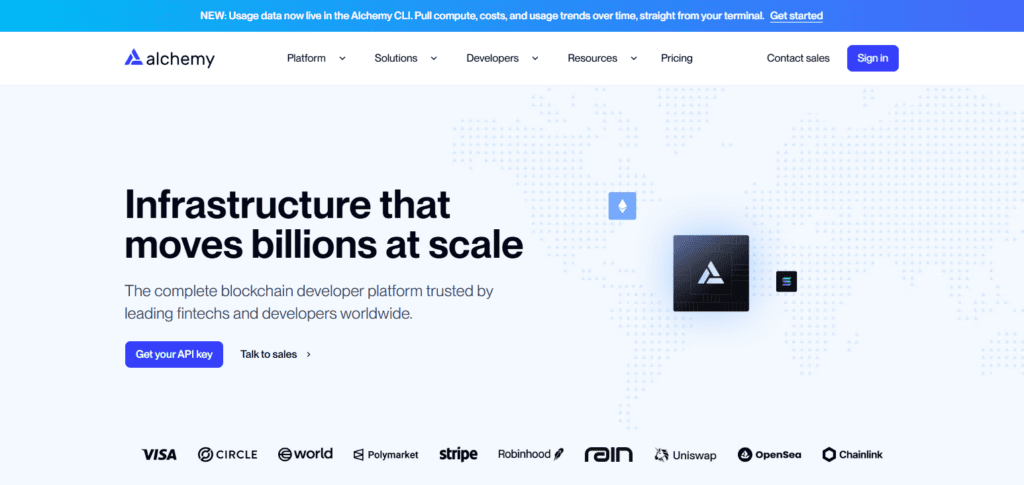
Alchemy is also generous to developers with millions of compute units each month available for free in exchange for RPC access. This is great for both beginning developers and large enterprises because Alchemy offers a reliable, secure, highly available (99.99% uptime) service.
Alchemy will also design even better developer tools, enhance its debugging services, and offer AI-based service monitoring and enterprise APIs in 2026.
| Pros | Cons |
|---|---|
| Multi-chain support (Ethereum, Polygon, Solana, etc.) | Higher pricing for enterprise usage |
| AI-powered monitoring & debugging tools | Limited customization compared to decentralized RPCs |
| 99.99% uptime reliability | Heavy reliance on centralized infrastructure |
| Generous free tier for startups | Advanced features may require steep learning curve |
2. QuickNode
QuickNode is an RPC service provider that is well-known for its speed and reliability. Over 65 different blockchain networks are supported and dedicated nodes are offered along with powerful APIs and customizable infrastructure.
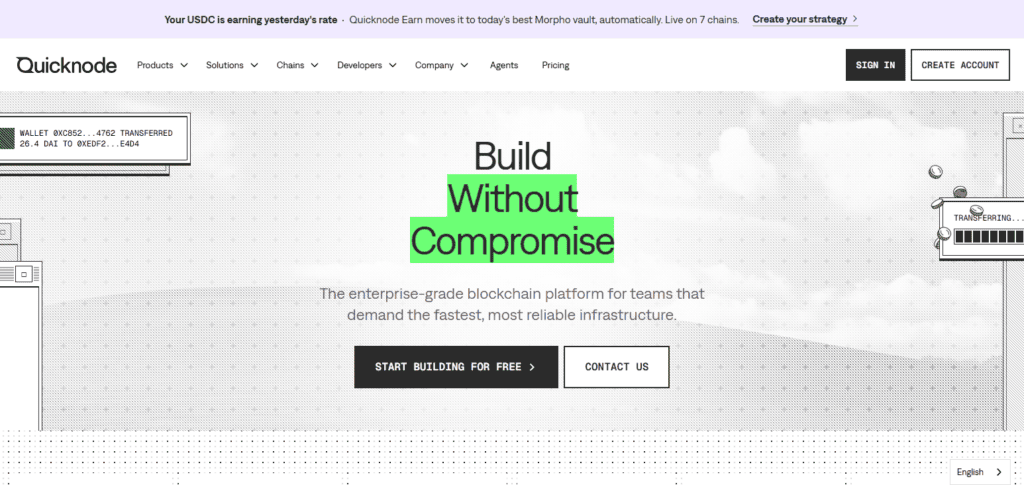
QuickNode will focus on developer experience, offering enhanced analytics and access to real-time blockchain data, along with enterprise solutions in 2026.
QuickNode is popular among blockchain based DeFi platforms, NFT marketplaces, and games because it is highly scalable and offers consistent connectivity to a large amount of blockchains.
| Pros | Cons |
|---|---|
| Supports 65+ blockchain networks | Premium pricing for high-volume apps |
| Dedicated nodes & customizable infrastructure | Complex setup for beginners |
| Real-time blockchain data access | Centralized provider dependency |
| Strong enterprise-grade solutions | May be excessive for small projects |
3. Chainstack
RPC solutions offered by Chainstack are great for developers and enterprises in the Web3 space that need flexible blockchain solutions. A hybrid cloud approaches allows public and private blockchains to have nodes deployed.
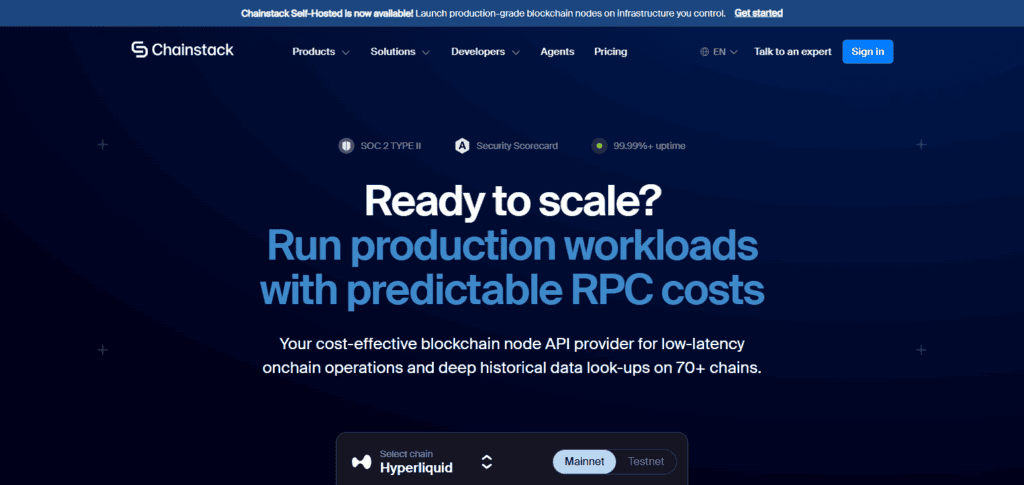
In 2026, Chainstack will continue to add more automation, making node and network management simple and rendering the transparent “Pay-As-You-Go” pricing even better. Chainstack is a great option for teams that need flexible and scalable infrastructure without the difficult operational tasks.
| Pros | Cons |
|---|---|
| Affordable Pay-As-You-Go pricing | Smaller ecosystem compared to Alchemy/QuickNode |
| Hybrid cloud deployment flexibility | Limited advanced analytics tools |
| Easy node management automation | Less suited for ultra-high performance apps |
| Supports Ethereum, Polygon, Avalanche, BNB Chain | May lack enterprise-grade SLAs |
4. Infura
As a leading RPC provider, and a product of the successful ConsenSys, Infura is a mainstay of the Ethereum ecosystem. With API access to Ethereum and other Web3 networks like IPFS and Polygon, Infura is a Web3 RPC provider of choice.
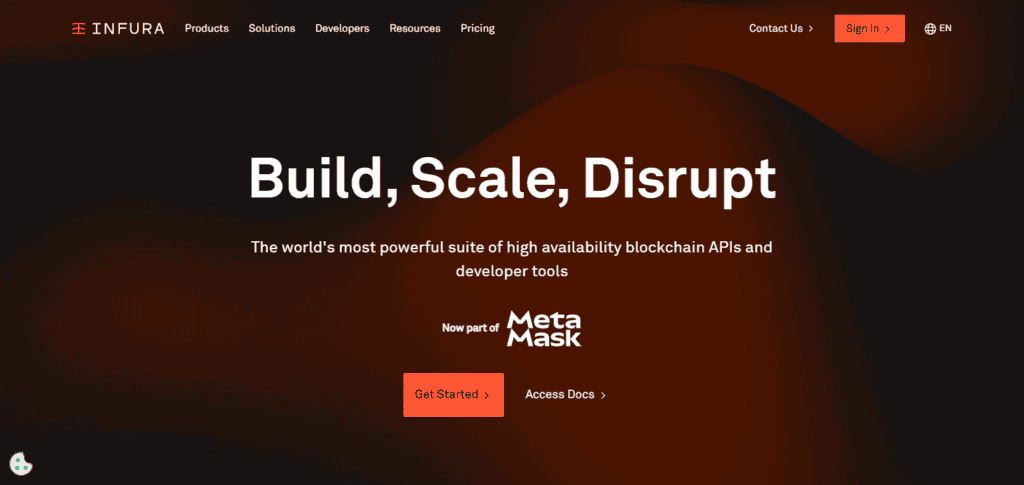
ConsenSys plans to invest even more in the Infura product, adding Web3 ecosystem integrations and improved security and scalability to existing Infura infrastructure. Infura is the preferred RPC provider to dApps, wallets, and enterprise grade blockchain solutions.
| Pros | Cons |
|---|---|
| Backed by ConsenSys (trusted reputation) | Primarily focused on Ethereum ecosystem |
| Reliable API access for Ethereum, IPFS, Polygon | Limited multi-chain expansion compared to competitors |
| Strong developer-friendly tools | Free tier restrictions can be limiting |
| Widely adopted by wallets & dApps | Centralized infrastructure dependency |
5. Ankr
Ankr relies on a combination of decentralized nodes and affordable pricing to offer RPC services on 70+ blockchains. With this competitive combination, Ankr ensures that developer access to blockchains is affordable and improved with each new service offered.
Ankr plans to offer even more robust RPC services and enhanced web3 services through improved node distribution globally and liquid staking in 2026. DeFi, Web3, and Gaming dApp developers will find Ankr to be a fast, affordable, and reliable RPC service.
| Pros | Cons |
|---|---|
| Supports 70+ blockchain networks | Performance may vary across regions |
| Cost-efficient pricing | Less enterprise-focused compared to QuickNode |
| Decentralized node infrastructure | Documentation less extensive than Alchemy |
| Liquid staking & Web3 services | May lack advanced debugging features |
6. dRPC
dRPC utilizes smart traffic management to provide decentralized RPC services that aim to improve the reliability of blockchain services. Instead of relying on a single RPC node provider, dRPC spreads the request across multiple services to minimize downtime and manage sudden spikes in demand.
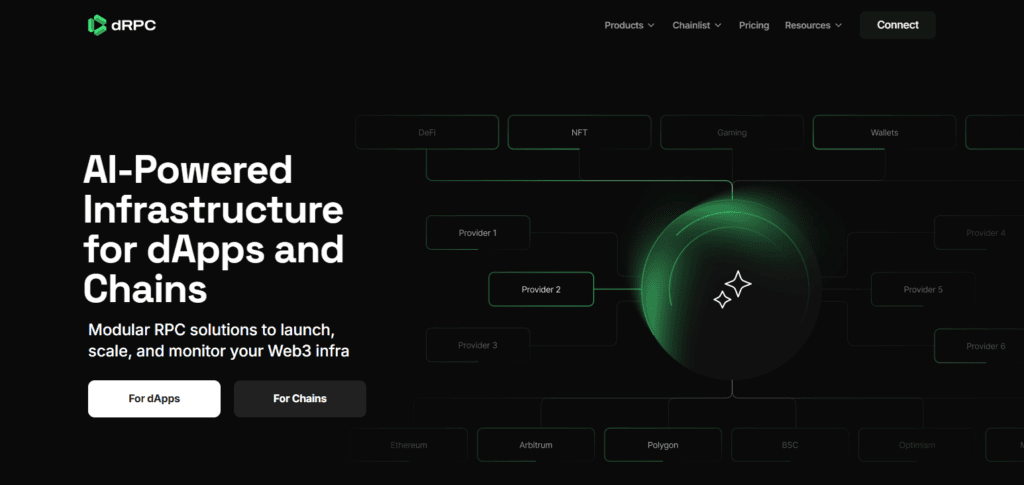
dRPC will also emphasize decentralized infrastructure, and privacy and performance in 2026. Stable RPC services for Web3 projects that anticipate high traffic from Gaming launches, large user crowds, and volatile market activity will find dRPC most beneficial.
| Pros | Cons |
|---|---|
| Decentralized traffic routing | Still relatively new in adoption |
| Reduces downtime during traffic spikes | Limited enterprise integrations |
| Enhanced privacy features | Smaller ecosystem compared to centralized providers |
| Optimized for high-demand applications | May lack advanced developer tooling |
7. GetBlock
GetBlock gives developers easy access to blockchain data and node infrastructure. GetBlock offers support for many popular chains such as Bitcoin, Ethereum, Polygon, Binance Smart Chain, and many more. By 2026, GetBlock will be improving their API services by making their response times faster and adding support for additional blockchain ecosystems.
This service is ideal for developers who need accurate blockchain information in order to build cross-chain applications, analytics tools, wallets, and decentralized applications, and for developers who do not want to run their blockchain nodes.
| Pros | Cons |
|---|---|
| Direct access to raw blockchain data | Requires technical expertise to use effectively |
| Supports Bitcoin, Ethereum, BSC, Polygon | Limited advanced APIs compared to Alchemy |
| Fast response speeds | Less enterprise-grade monitoring |
| Ideal for analytics & cross-chain apps | May lack free tier flexibility |
8. Helius
Helius is a Solana specific RPC provider, giving developers and businesses the infrastructure they need and operates at a higher level than Solana’s standard infrastructure. Helius provides fast Solana RPC endpoints along with enhanced APIs, webhooks, and blockchain data tools tailored to DeFi, NFTs, and trading.
In 2026, Helius will be furthering its dominance in Solana development by offering better indexing, real-time data, and developer-centric improvements. When speed and reliable Solana connectivity are crucial, Helius’s infrastructure is the best option.
| Pros | Cons |
|---|---|
| Specialized for Solana ecosystem | Limited to Solana only |
| High-performance RPC endpoints | Not suitable for multi-chain projects |
| Enhanced APIs & webhook services | Pricing may be higher for niche use cases |
| Real-time data & indexing tools | Smaller user base compared to Ethereum-focused providers |
9. Triton
Triton offers a premium Solana RPC service to applications that need the fastest access to the Solana blockchain and the lowest latency. It is especially useful for professional trading platforms, trading bots, and systems that need to validate and process transactions in a matter of seconds.
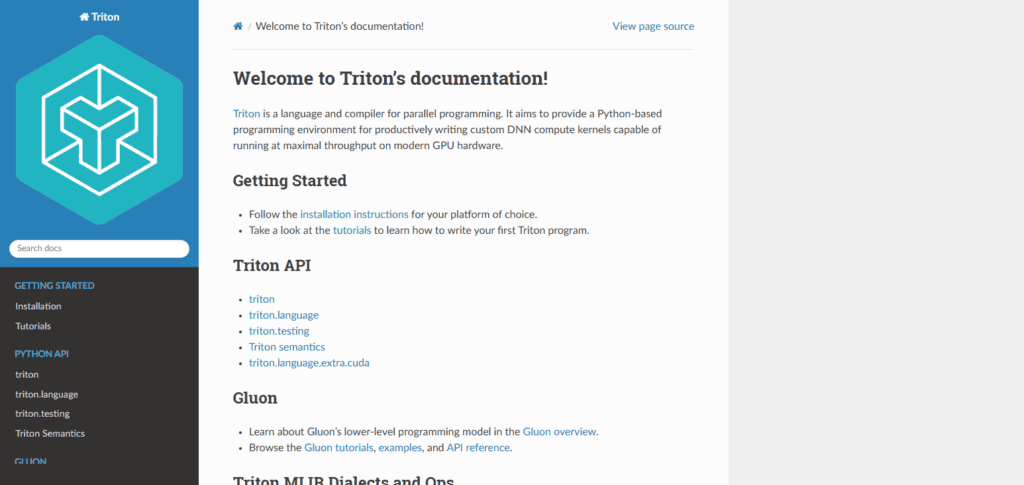
By 2026, Triton will have further enhanced their infrastructure by adding more dedicated servers, more Solana connection, and more advanced performance monitoring. Triton’s infrastructure is designed for systems that require absolute peak performance.
| Pros | Cons |
|---|---|
| Ultra-low latency RPC access | Exclusively focused on Solana |
| Optimized for trading & validators | Expensive for non-trading projects |
| Dedicated servers & advanced monitoring | Limited developer ecosystem |
| Ideal for high-frequency trading | Not beginner-friendly |
10. Dwellir
Dwellir provides a user-friendly and affordable blockchain RPC service. It simplifies infrastructure management and avoids the convoluted usage calculations that characterize many traditional services. Rather, it employs a clear, credit-based request system.
Dwellir will have further expanded its capabilities by 2026, adding support for more blockchains and improving the overall reliability of the service.
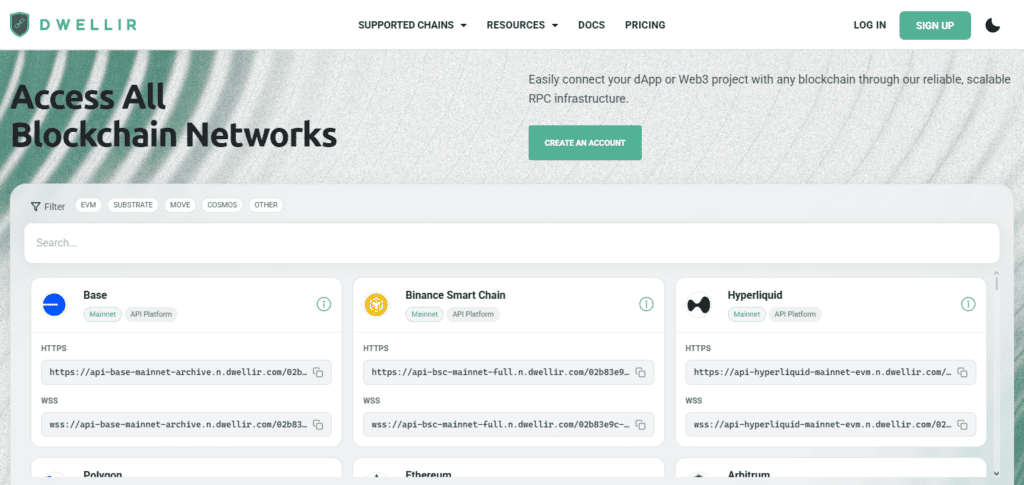
Dwellir is ideal for developers and businesses that seek cost predictability and timely access to nodes with flexible blockchain support. It will all be accomplished with a simple, developer-focused framework.
| Pros | Cons |
|---|---|
| Transparent credit-based pricing | Smaller network coverage compared to QuickNode |
| Easy infrastructure management | Limited advanced enterprise features |
| Predictable costs for developers | Less suited for ultra-high performance apps |
| Growing support for multiple chains | Still building reputation in 2026 |
Conclusion
In Conclusion Best RPC Providers in 2026 Choosing the best RPC provider is critical to developing dependable and extensible Web3 applications. Alchemy, QuickNode, Chainstack, Infura, and Ankr have versatile infrastructures.
Besides this, Helius and Triton provide high-level infrastructures on the Solana blockchain. Considering limitations and opportunities as well as costs scales and project goals is critical to choosing a provider.
FAQ
RPC Providers improve blockchain connectivity, speed, reliability, and scalability. They remove the need for developers to maintain personal blockchain nodes.
Alchemy, QuickNode, Chainstack, Infura, and Ankr are among the top RPC Providers in 2026 due to their performance, network support, and developer features.
Yes, Alchemy is a popular choice because it offers multi-chain support, advanced developer tools, high uptime, and scalable infrastructure for Web3 applications.
Providers like Ankr and QuickNode support a wide range of blockchain networks, with QuickNode offering 65+ chains and Ankr supporting more than 70 networks.