


In this article, I will cover the top Continuous Compliance Monitoring Systems for Multi-Jurisdictional Regulations. These systems allow organizations to manage tricky multiple cross-border regulations.
These systems feature the continuous surveillance of regulations, automatic compliance, integrated risk and compliance management, and detection of changes in regulations.
Regardless of whether you are a large global corporation or a fast-growing firm, these systems allow you to optimize compliance, lower risk, and improve governance.
What is a continuous compliance monitoring tool?
Software applications designed for continuous compliance monitoring evaluate compliance requirements and business risks in real time. They simplify the need for manual assessments and reviews by routinely monitoring compliance gaps, violations, and policies.
Additionally, these applications will notify the user of any legal compliance risks. As a result, the organization will remain compliant with regulations, improve the quality of audits, and reduce risks.
Key Poinst & Best Continuous Compliance Monitoring Tools for Multi-Jurisdictional Regulations
| Compliance Monitoring Tool | Explanation |
|---|---|
| MetricStream | Automates compliance tracking, risk management, audits across jurisdictions globally. |
| IBM OpenPages | Centralizes governance, risk, and compliance monitoring with regulatory intelligence tools. |
| LogicGate Risk Cloud | Flexible workflows streamline compliance processes across multiple regulations efficiently. |
| NAVEX One | Provides continuous monitoring, policy management, and regulatory compliance reporting. |
| ServiceNow GRC | Integrates compliance controls, risk assessments, and automated monitoring workflows. |
| Diligent One Platform | Delivers real-time compliance visibility and regulatory change management capabilities. |
| SAP GRC | Helps organizations manage compliance obligations across complex global regulations. |
| Hyperproof | Simplifies evidence collection, compliance tracking, and audit readiness continuously. |
| AuditBoard | Streamlines compliance monitoring, internal audits, and risk management programs. |
| Archer IRM | Enables enterprise-wide regulatory compliance management with automated oversight tools. |
10 Best Continuous Compliance Monitoring Tools for Multi-Jurisdictional Regulations
1. MetricStream
MetricStream is an excellent option for compliance monitoring platforms, particularly for organizations that must comply with multiple regulatory requirements. This product integrates multiple functions such as governance, risk management, compliance, and auditing.
Its continuous monitoring engine will track your legal obligations, discover compliance gaps, and report risks in real time. This product is especially favored among large organizations for its control mapping feature, which allows the user to map controls in multiple jurisdictions and thereby eliminates redundant controls.
This platform uses advanced analytics and AI to give compliance teams the edge in rapidly changing global regulations while ensuring you are audit-ready.
Key features MetricStream
- Compliance and risk mitigation monitoring using AI
- Active management of changing regulations
- Unified audit, risk, and compliance processes
- Multi-jurisdictional controls mapping
- Advanced analytics and executive dashboards
- Automated tracking of issues and remediation
2. IBM OpenPages
IBM OpenPages is an excellent compliance solution for regulated industries. The platform centralizes compliance data and provides automated workflows that simplify monitoring across multiple jurisdictions. Its AI-driven regulatory intelligence rapidly allows clients to interpret new laws and assess the impact.
OpenPages has an excellent design that integrates with outside enterprise systems. The platform’s customizable dashboards offer executives real-time visibility of regulatory risks. This ensures that informed decisions are made in order to comply with local and international regulatory requirements.
Key features IBM OpenPages
- AI-based regulatory intelligence
- Centralized governance, risk, and compliance
- Automated compliance processes and evaluation
- Dashboards of real-time risk
- Integration with all business systems
- Reporting and analytics customization
3. LogicGate Risk Cloud
LogicGate Risk Cloud offers a unique, flexible, no-code method to compliance management. Organizations can flexibly change workflows, automate compliance tasks, and alter procedures to adapt to specific requirements, regardless of the country.
Continuous compliance and risk assessment can be done through the tools available on the platform. The centralized repository system offers the most up-to-date compliance information for all stakeholders.
LogicGate’s scalability is beneficial for organizations with high growth, as it offers a management solution for increasing compliance and regulatory tasks with minimal additional administrative compliance costs.
Key features LogicGate Risk Cloud
- Customization of workflows without coding
- Automated compliance and risk processes
- Central repository for compliance documents
- Control monitoring made easy
- Compliance frameworks for flexible growth
- Tools for collaboration and reporting
4. NAVEX One
NAVEX One’s compliance management system is a fully integrated ecosystem for managing policies, assessing risks, monitoring third parties, and overseeing regulatory compliance. The platform proactively manages compliance by continuously assessing compliance performance and offering real-time reports with built-in suggestions.
The Regulatory Compliance content library assists organizations in meeting continuously evolving compliance requirements across legal jurisdictions. NAVEX One builds compliance accountability and streamlines compliance training and policy attestation for employees.
Organizations can manage compliance risks while promoting a transparent governance system through automated workflows and extensive process monitoring.
Key features NAVEX One
- Fully developed systems for policy management
- Third-party assessment and risk management
- Regulatory content and legal updates
- Training and attestation for employees
- Automated compliance reporting
- Dashboards for compliance reporting
5. ServiceNow GRC
ServiceNow GRC enables enterprises to automate and streamline the management of compliance obligations. Integrated workflows and the ability to monitor compliance obligations in real time allow ServiceNow GRC to connect compliance activities to operational processes.
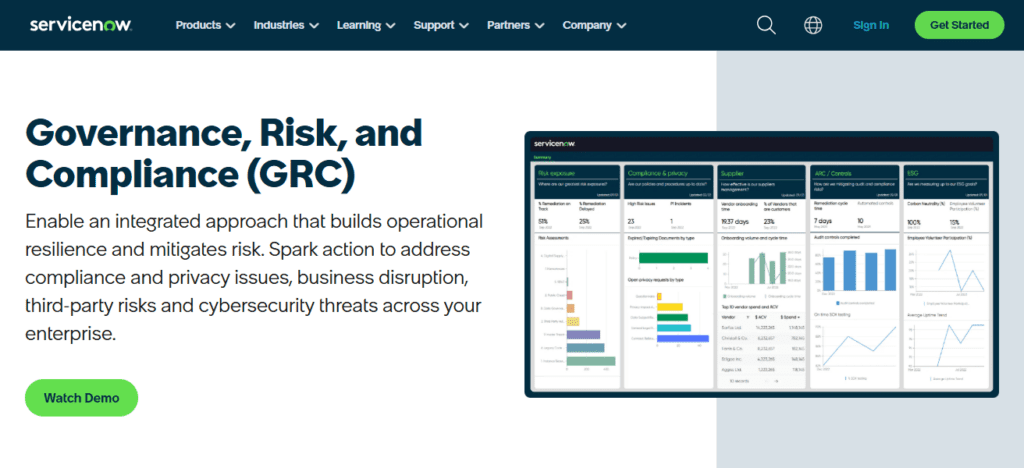
The burden of compliance is further alleviated through automation that persistently evaluates controls and finds violations. ServiceNow GRC’s consolidated dashboard illustrates compliance status throughout global operations. ServiceNow GRC helps improve regulatory reporting and strengthens collaboration between the compliance, risk, and IT domains.
Key features
- Unified governance, risk, and compliance system
- Automated validation and testing of controls
- Real-time monitoring of compliance
- Integrated risk and compliance dashboards
- Automated workflows for compliance issues
- Robust integration with enterprise systems
6. Diligent One Platform
Diligent One Platform uses automated oversight and advanced risk intelligence to provide continuous compliance monitoring. The platform enables organizations to identify regulatory changes within multiple jurisdictions and determine the effects of those changes on business activities.
Compliance professionals can see emerging risks and the effectiveness of control measures through real-time monitoring. Diligent One’s integrated audit and governance capabilities build trust and improve the quality of decisions. Organizations that operate internationally value Diligent One’s ability to streamline compliance on a single platform.
Key features Diligent One Platform
- Risk and compliance intelligence
- Automated monitoring of regulatory changes
- Integrated audit and governance
- Dashboards for executive reporting
- Centralized compliance oversight framework.
- Advanced analytics for risk visibility.
7. SAP GRC
SAP GRC is a leading compliance management tool that structures compliance processes for the majority of multinational organizations. SAP GRC automates the assessment of risk, the management of access controls, and the fulfillment of regulatory reporting across diverse business structures.
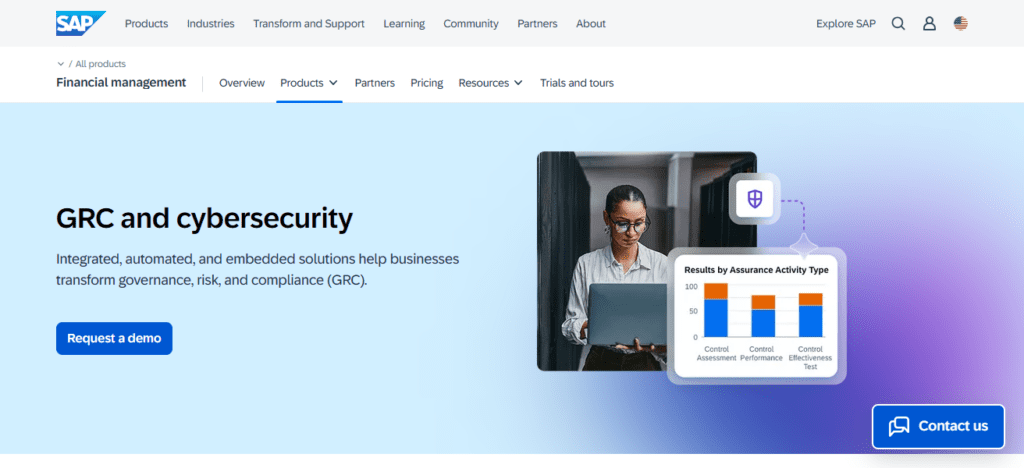
SAP GRC’s dynamic compliance monitoring functionality ensures that organizations are alerted to compliance risks before they reach critical levels. SAP GRC’s seamless integration with other SAP business applications empowers organizations to manage compliance across financial
operational, and IT oversight. SAP GRC’s sophisticated analytics on compliance provide organizations with the ability to manage compliance in a way that simultaneously increases operational efficiency.
Key Features SAP GRC
- Automated regulatory compliance management.
- Enterprise-wide access control monitoring.
- Risk assessment and mitigation workflows.
- Continuous compliance monitoring tools.
- Deep integration with SAP ecosystems.
- Advanced reporting and compliance analytics.
8. Hyperproof
Hyperproof was created to handle many tedious tasks associated with compliance operations. Built to streamline continuous compliance monitoring, audit preparation, and compliance evidence collection, Hyperproof reduces the burden on compliance teams.
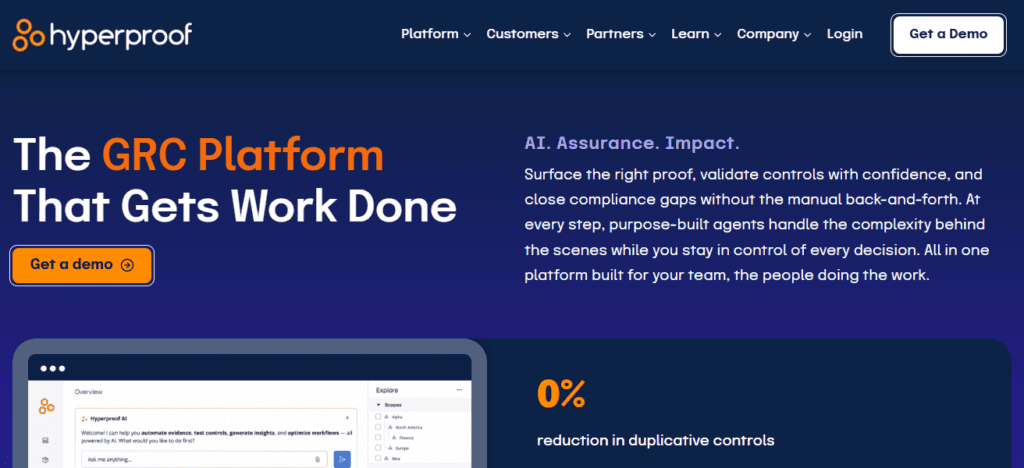
Unlike other tools, Hyperproof can support multiple compliance frameworks at the same time, making it especially useful to organizations that deal with multiple, sometimes conflicting, regulatory requirements.
The system is designed to keep compliance status up to date and accurate throughout the year. Hyperproof also builds a collaborative workspace to improve interdepartmental engagement to help organizations meet their compliance obligations while being audit-ready.
Key Features Hyperproof
- Automated evidence collection and storage.
- Continuous compliance tracking capabilities.
- Multi-framework compliance support.
- Audit readiness management tools.
- Cross-team collaboration workspace.
- Real-time control monitoring dashboards.
9. AuditBoard
AuditBoard combines many functions into one system. It incorporates compliance management, risk assessment, and internal auditing, making it a full-service tool. AuditBoard is especially useful to organizations that want to ensure better collaboration among different teams that work on audit, risk, and compliance functions.
AuditBoard also makes it easy to assess control effectiveness, compliance, and risk, while identifying compliance issues that may be of concern. AuditBoard uses continuous monitoring and automated workflows to streamline testing, reporting, and documentation for compliance management.
Key Features AuditBoard
- Integrated audit and compliance management.
- Automated testing and documentation workflows.
- Continuous control effectiveness monitoring.
- Risk assessment and reporting tools.
- Cloud-based collaboration platform.
- Executive dashboards and analytics reporting.
10. Archer IRM
Archer IRM is another tool that makes it easy to manage compliance requirements for multiple regulatory systems. It also uses continuous monitoring to track compliance and risk exposures.
Archer IRM makes it easy to align compliance with multiple regulatory systems by providing support for regulatory mapping.
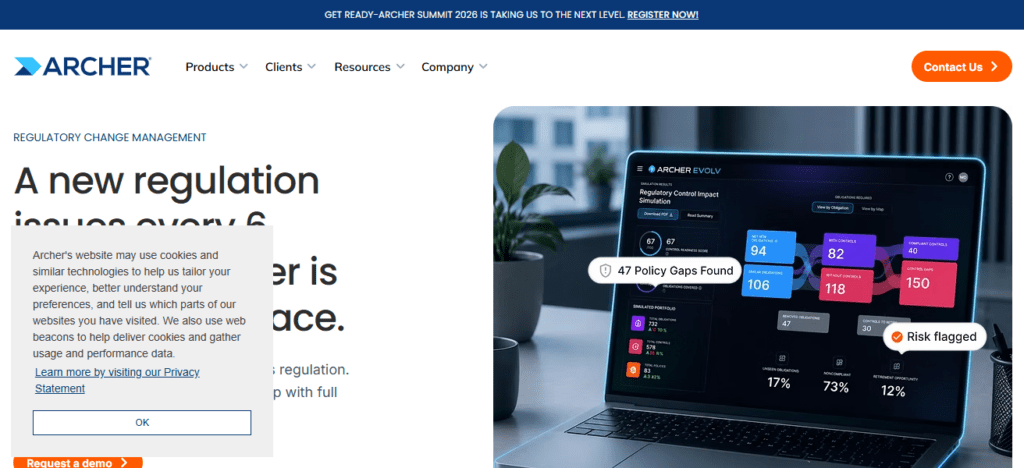
It also provides a lot of automation to help with compliance tasks. Lastly, it provides very useful reporting and analytics to help governance and compliance leadership make informed decisions.
Key Features Archer IRM
- Enterprise-wide integrated risk management.
- Regulatory mapping across multiple jurisdictions.
- Automated compliance monitoring workflows.
- Real-time policy and control oversight.
- Advanced risk analytics and reporting.
- Centralized governance and compliance management.
Selection Process for Continuous Compliance Monitoring Tools for Multi-Jurisdictional Regulations
- Regulatory Coverage – Assessed how many global, regional, and industry regulations were covered.
- Real-Time Monitoring – Checked if the system had the ability to continuously track compliance and provide alerts.
- Regulatory Change Management – Evaluated systems that track and conform to changes in laws.
- Automation Capabilities – Evaluated the system’s ability to automate workflows, testing of controls, and reporting.
- Risk Management Integration – Evaluated the system’s ability to automate risk assessment and risk mitigation.
- Multi-Jurisdiction Support – Went with systems that support multiple countries.
- Audit Readiness – Assessed systems that provide evidence collection, documentation, and support for audits.
- Scalability – Went with solutions that accommodate start-ups to large enterprises.
- Reporting and Analytics – Assessed the ability to provide dashboards, insights, and reports at an executive level.
- Ease of Integration – Assessed how easily the system would integrate with enterprise systems and security systems.
- User Experience – Evaluated how easy the system would be to use, customize, and adapt.
- Industry Reputation – Covered the systems provided by trusted vendors with a good industry and customer/client track record.
Conclusion
In conclusion, organizations dealing with intricate, multi-jurisdictional regulations must select the appropriate continuous compliance monitoring tool.
Some platforms, including MetricStream, IBM OpenPages, LogicGate Risk Cloud, and Archer IRM, automate compliance handling and risk mitigation to enhance audit preparedness.
The use of continuous monitoring, regulatory intelligence, and the automation of workflows allows organizations to streamline their compliance efforts and enhance their proactive responses to regulatory shifts while strengthening governance over their worldwide operations.
FAQ
Financial services, healthcare, manufacturing, energy, technology, and government organizations benefit significantly due to strict regulatory requirements.
MetricStream, IBM OpenPages, SAP GRC, and Archer IRM are popular choices for large enterprises managing complex regulatory environments.
Yes. Most modern platforms provide automated regulatory change tracking, alerts, and impact assessments for evolving compliance requirements.
AI helps identify risks, detect compliance gaps, analyze regulatory updates, and automate repetitive compliance management tasks.
Yes. Solutions like Hyperproof and LogicGate Risk Cloud offer scalable features that support growing businesses with manageable compliance needs.