


In this article, I will look at the Best Air-Gapped Local Vector Databases for Secure Corporate AI Training. With the rising focus of organizations on data privacy and regulations, air-gapped vector databases have become a must for creating safe AI systems.
In this article, we will look at the top solutions, the main features, and the benefits of each, and how they assist corporations in developing AI models while keeping sensitive corporate data fully air-gapped from external networks.
Key Poinst & Best Air-Gapped Local Vector Databases for Secure Corporate AI Training
| Air-Gapped Local Vector Database | Explanation |
|---|---|
| ChromaDB | Lightweight local vector database supporting secure offline AI model training. |
| Qdrant | High-performance vector search engine with reliable air-gapped deployment capabilities. |
| Milvus | Scalable vector database enabling private AI training within isolated environments. |
| Weaviate | Open-source vector database offering secure local semantic search functionality. |
| FAISS | Facebook-developed library providing fast offline similarity search and clustering. |
| LanceDB | Embedded vector database optimized for local storage and private AI. |
| Vespa | Powerful search platform supporting vector retrieval in disconnected networks. |
| Elasticsearch Vector Search | Enterprise-grade vector search solution operating securely within isolated infrastructures. |
| PostgreSQL with pgvector | Traditional database enhanced with vector capabilities for secure deployments. |
| SQLite-VSS | Lightweight SQLite extension enabling vector search without internet dependencies. |
10 Best Air-Gapped Local Vector Databases for Secure Corporate AI Training
1. ChromaDB
ChromaDB is a great option for companies setting up private AI systems in air-gapped environments. It is lightweight, easy to set up, and maintains rapid vector retrieval.
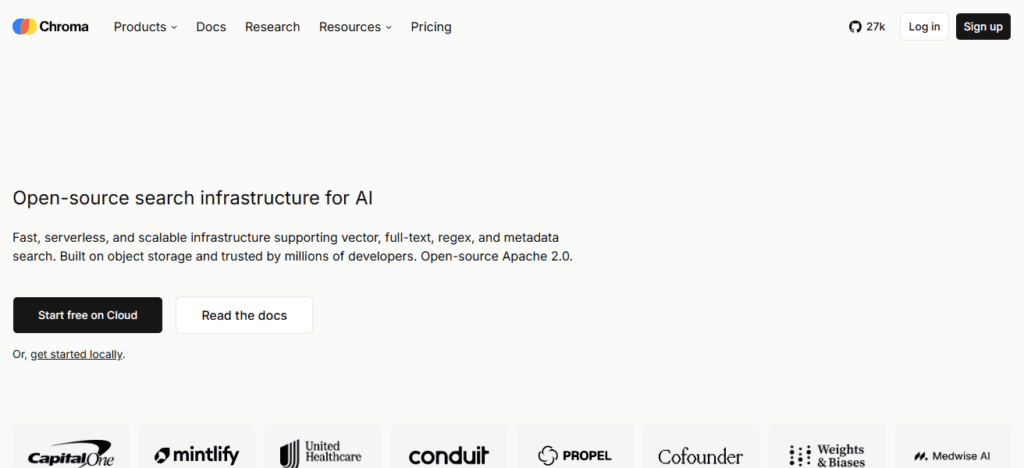
Companies can keep embeddings safe and stored locally without the use of cloud systems, which protects sensitive data. ChromaDB works with the majority of new AI systems and large language models.
This makes it a great option for companies trying to build secure internal knowledge bases, document search systems, and AI systems that are trained and operate offline with the utmost concern for data privacy and regulatory compliance.
ChromaDB Pros and Cons
| Pros | Cons |
|---|---|
| Lightweight and easy to deploy locally | Limited enterprise management features |
| Excellent integration with LangChain and LLMs | Less suitable for extremely large datasets |
| Fast semantic search performance | Smaller enterprise support ecosystem |
| Ideal for air-gapped AI projects | Advanced clustering options are limited |
| Minimal hardware requirements | Requires manual optimization at scale |
2. Qdrant
Qdrant is also a great option for companies building private AI systems in air-gapped environments. It has advanced indexing technology that allows for rapid similarity searches with millions of vectors stored locally.
Like ChromaDB, Qdrant is very useful for data management systems that support AI in air-gapped environments.
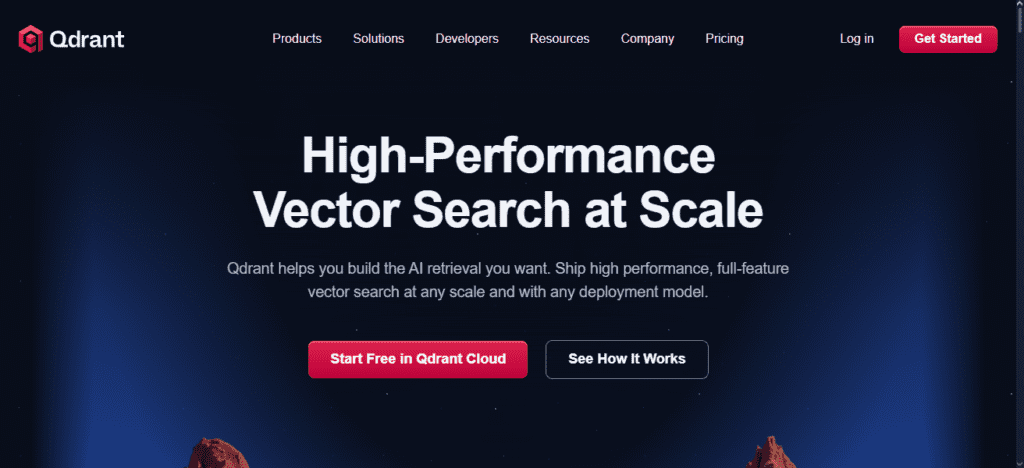
It is also very useful for companies in the defense and finance sectors that require advanced filtering because of the sensitive nature of the data that they work with.
Qdrant Pros and Cons
| Pros | Cons |
|---|---|
| High-speed vector indexing and retrieval | Resource usage increases with massive datasets |
| Advanced filtering and metadata support | Enterprise features may require additional setup |
| Strong scalability for corporate AI workloads | Learning curve for beginners |
| Excellent performance in offline environments | Smaller community than traditional databases |
| Designed specifically for vector search applications | Complex deployments need experienced administrators |
3. Milvus
Milvus is a scalable vector database generally constructed for big AI datasets when embedded in a completely isolated corporate infrastructure.
Many organizations training private AI models adopt Milvus due to its capacity to handle billions of vector embeddings with outstanding search performance.
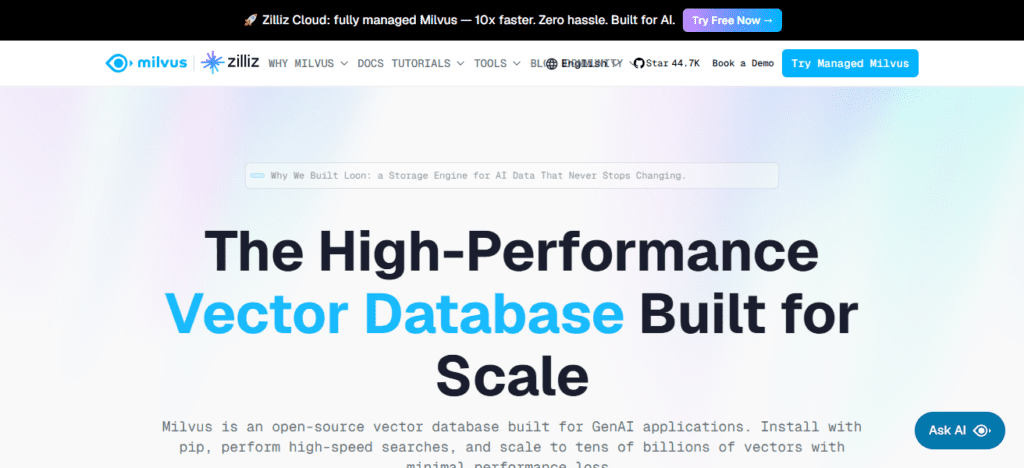
Its completely distributed design allows it to handle enterprise workloads and future growth. Within air-gapped networks,
Milvus helps store sensitive business knowledge securely. Moreover, it has good support for different machine learning frameworks, making it a solid fit for corporate AI-based R&D.
Milvus Pros and Cons
| Pros | Cons |
|---|---|
| Handles billions of vector embeddings efficiently | Deployment can be complex |
| Highly scalable distributed architecture | Higher infrastructure requirements |
| Strong support for enterprise AI projects | Resource-intensive for small businesses |
| Compatible with major AI frameworks | Requires dedicated management expertise |
| Excellent search accuracy at large scale | Overkill for simple vector workloads |
4. Weaviate
Weaviate integrates the best of vector search and modern AI-based data management. This makes it a viable candidate for secure corporate environments.
Its open-source platform provides a full in-network deployment and customization opportunity. Weaviate, combined with knowledge graphs
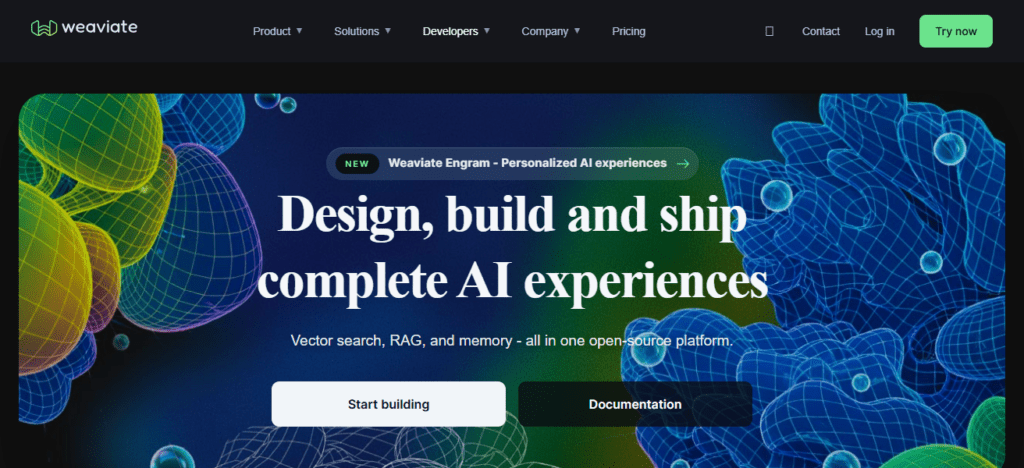
Helps improve the recall and accuracy of AI training systems and provides a more advanced semantic search and contextual retrieval. The flexible architecture of Weaviate further serves to assist companies in building their custom AI systems.
Weaviate Pros and Cons
| Pros | Cons |
|---|---|
| Open-source and highly customizable | More complex than lightweight alternatives |
| Supports semantic search and knowledge graphs | Higher memory consumption |
| Flexible deployment in air-gapped environments | Configuration can be challenging |
| Strong AI ecosystem integrations | Requires regular maintenance |
| Advanced contextual retrieval capabilities | Some advanced features increase complexity |
5. FAISS
FAISS is from Meta AI and was one of the first great libraries for vector similarity search and clustering. The community holds it in high regard.
It performs well even in air-gapped environments, as it is completely offline. FAISS excels in the search of large datasets and implements efficient nearest-neighbor searches using both CPU and GPU.
Since many companies implement FAISS in custom AI applications, it is not uncommon to find companies forgoing a standalone database.
FAISS is well-suited to handle the specialized corporate AI training and retrieval workflows and is very flexible in design.
FAISS Pros and Cons
| Pros | Cons |
|---|---|
| Extremely fast similarity search performance | Not a complete database solution |
| Supports CPU and GPU acceleration | Requires additional storage systems |
| Trusted by researchers and AI developers | Limited built-in management features |
| Excellent for custom AI applications | Steeper development effort |
| Efficient handling of large datasets | Less user-friendly for non-developers |
6. LanceDB
LanceDB is a newer vector database, and people are excited about it because it is lightning fast and very easy to use. Design choices made with the developer in mind are present.
LanceDB, because it was built with AI workloads in mind, can efficiently store and retrieve embeddings with Local Storage. It can be deployed offline due to the design.
Columnar data storage increases the speed of computation for analytics and machine learning. In air-gapped environments,
LanceDB can serve to capture and retain internally proprietary data. Modern, efficient design paired with ease of use has made LanceDB a great choice for organizations wanting to use a vector database for their private AI initiatives.
LanceDB Pros and Cons
| Pros | Cons |
|---|---|
| Simple and developer-friendly architecture | Newer ecosystem compared to competitors |
| Optimized for modern AI workloads | Fewer enterprise deployment examples |
| Fast local vector storage and retrieval | Smaller community support base |
| Efficient columnar data structure | Some advanced features still evolving |
| Suitable for offline AI deployments | Long-term enterprise adoption still growing |
7. Vespa
Vespa is a convenient search and recommendation tool that lets users perform large-scale data processing within isolated environments, implements vector search, and runs machine learning inference.
Vespa is a suitable option for demanding enterprise AI applications due to its architecture that facilitates real-time indexing and retrieval.
Because it efficiently handles structured and unstructured data, air-gapped infrastructures also benefit from Vespa. Vespa excels at low-latency and high-throughput situations, and due to these characteristics, is a popular choice for large enterprises that create complex internal AI search systems
Vespa Pros and Cons
| Pros | Cons |
|---|---|
| Supports vector search and AI inference | Complex setup and administration |
| Excellent for high-volume enterprise workloads | Requires significant technical expertise |
| Real-time indexing and retrieval capabilities | Higher operational costs |
| Handles structured and unstructured data | Resource-heavy for smaller organizations |
| Outstanding scalability and performance | Longer deployment timelines |
8. ElasticSearch Vector Search
By adding semantic search and vector retrieval functions, ElasticSearch Vector Search expands the features present in standard ElasticSearch deployments.
Many enterprises have ElasticSearch deployed for document management, making the vector retrieval addition a straightforward task.
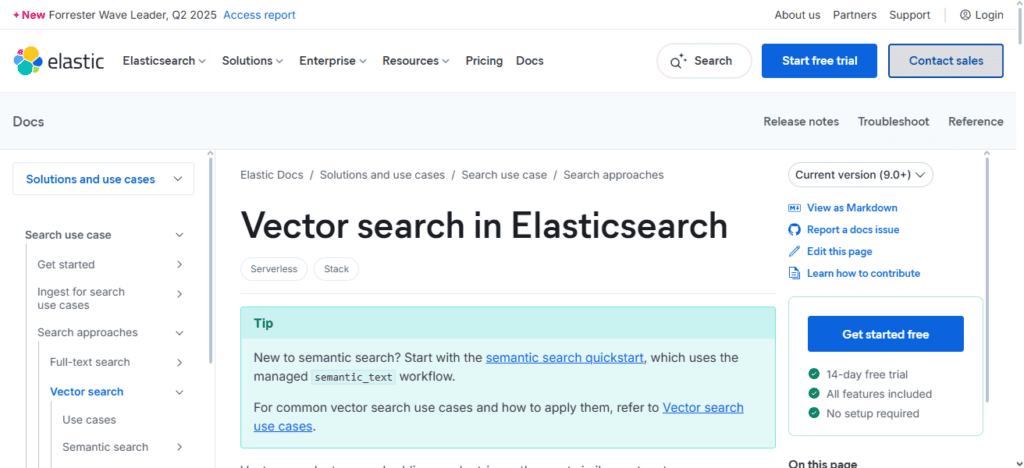
This makes it possible for air-gapped organizations to create sophisticated AI-enhanced search solutions and stick to their legacy infrastructure.
ElasticSearch Vector Search is also a good choice for flexible enterprise frameworks because it supports hybrid search to better combine keyword search with vector search, and is a modern addition to internal knowledge management systems.
Elasticsearch Vector Search Pros and Cons
| Pros | Cons |
|---|---|
| Leverages existing Elasticsearch infrastructure | Vector search not its primary focus |
| Supports hybrid keyword and semantic search | Can consume substantial system resources |
| Mature enterprise ecosystem | Configuration complexity increases rapidly |
| Strong security and access controls | Licensing considerations for some features |
| Ideal for knowledge management systems | Search tuning may require expertise |
9. PostgreSQL with pgvector
For organizations using PostgreSQL, PostgreSQL with pgvector provides an option to implement AI search without replacing their entire database. pgvector allows organizations to manage embedding storage, semantic search, and similarity searches.
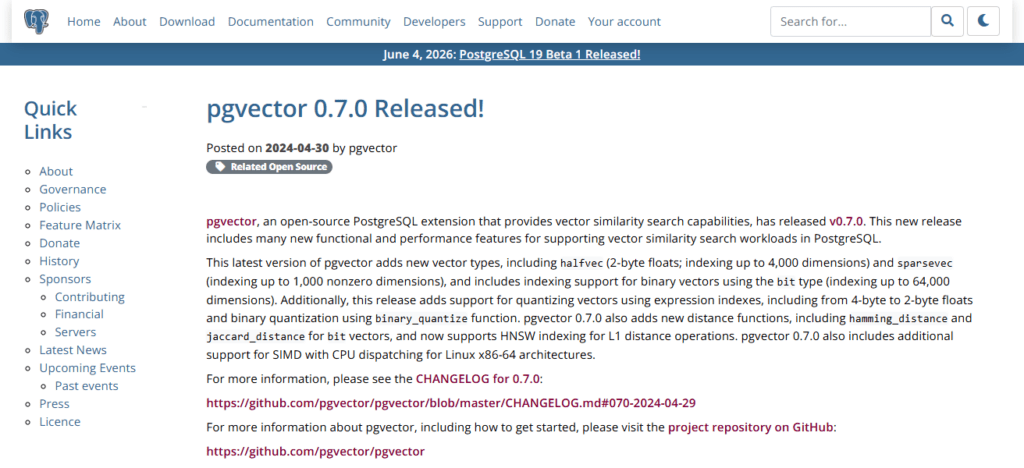
It does this while providing enterprise security controls. It also helps organizations in air-gapped networks implement private AI using the database tools and workflows they are already using.
The popularity of pgvector is because of its easy implementation and fast building capabilities for organizations that use AI technologies.
PostgreSQL with pgvector Pros and Cons
| Pros | Cons |
|---|---|
| Uses familiar PostgreSQL environment | Performance may lag dedicated vector databases |
| Easy integration with existing applications | Limited scalability for huge vector collections |
| Strong security and compliance controls | Fewer vector-specific optimization features |
| Simple deployment and management | Search speed can decline at very large scales |
| Cost-effective for many enterprises | Advanced AI workloads may require alternatives |
10. SQLite-VSS
SQLite-VSS adds vector searching to the already popular SQLite database. Because of its lightweight nature, SQLite-VSS is designed for edge devices, especially those with limited infrastructure.
Vector searching is a similarity search and is especially useful for AI retrieval. SQLite-VSS performs well, but if your AI and knowledge discovery are more casual and unofficial, you may consider using something else.
SQLite-VSS Pros and Cons
| Pros | Cons |
|---|---|
| Extremely lightweight and portable | Not designed for enterprise-scale deployments |
| Minimal setup and configuration requirements | Limited concurrent user support |
| Works well on edge devices | Fewer advanced vector search features |
| Fully offline and air-gap friendly | Scalability constraints for large datasets |
| Low hardware resource consumption | Basic ecosystem compared to larger platforms |
Conclsuion
In conclusion, the right air-gapped local vector database for your business hinges on your unique security, scalability, and AI training needs.
Databases such as ChromaDB, Qdrant, Milvus, Weaviate, and the like, balance powerful offline vector search functionality with data protection.
Deploying isolated databases enables organizations to design secure, compliant, and performant AI systems with advanced retrieval, knowledge management, and private model training capabilities.
FAQ
Vector databases store and retrieve embeddings efficiently, helping AI models perform semantic search, retrieval-augmented generation (RAG), and knowledge discovery tasks with greater accuracy.
ChromaDB and LanceDB are excellent choices for small businesses due to their lightweight architecture, easy deployment, and lower hardware requirements.
Milvus, Vespa, and Qdrant are often preferred for enterprise deployments because they can handle massive datasets and high-performance workloads.
Yes. Air-gapped vector databases are specifically designed to operate locally without requiring cloud connectivity, making them ideal for secure corporate environments.