

In this article, I’ll be discussing the Best GMX Rivals for Real-Yield Perpetual DEXs. I’ll go over the top decentralized exchanges competing in the perpetual trading market.
We will compare their trading volumes, fees, supported markets, sustainable revenue, coverage of their networks, and their key advantages and disadvantages to see which of the platforms has the strongest liquidity, sustainable real yield and long-term growth potential.
Key Points & Best GMX Rivals for Real-Yield Perpetual DEXs
| Project | Key Point |
|---|---|
| Hyperliquid | High-performance perpetual exchange combining deep liquidity, fast execution, and competitive trading fees. |
| dYdX | Decentralized derivatives platform offering advanced trading tools, deep liquidity, and perpetual markets. |
| Aster | Multi-chain perpetual exchange focused on capital efficiency, leveraged trading, and user accessibility. |
| Vertex | Unified trading ecosystem combining spot, perpetuals, money markets, and efficient capital utilization. |
| Drift Protocol | Solana-based derivatives platform offering perpetuals, lending, borrowing, and capital-efficient trading strategies. |
| Gains Network | Synthetic leverage trading protocol generating fees through decentralized perpetual markets and trading activity. |
| Jupiter | Solana trading aggregator expanding into perpetuals with liquidity access and integrated DeFi services. |
| Lighter | Order-book perpetual exchange emphasizing execution efficiency, transparency, and decentralized trading infrastructure. |
| ApeX Protocol | Decentralized derivatives platform delivering cross-chain perpetual trading and liquidity-efficient market access. |
| Aevo | Options and perpetuals exchange combining advanced derivatives trading with structured market infrastructure. |
| Avantis | Onchain perpetual exchange offering leveraged exposure across crypto and traditional asset markets. |
| edgeX | Decentralized perpetual exchange focused on institutional-grade execution, liquidity, and trading infrastructure. |
| Grvt | Privacy-focused perpetual exchange combining self-custody, high-performance trading, and advanced risk management. |
| Variational Omni | Peer-to-peer perpetual trading protocol offering flexible markets and capital-efficient derivatives exposure. |
| Level Finance | Decentralized perpetual exchange using liquidity pools and trader-driven risk management mechanisms. |
15 Best GMX Rivals for Real-Yield Perpetual DEXs
1. Hyperliquid
Hyperliquid is a high-performance decentralized perpetuals exchange, built on its own layer-1 blockchain, providing an order-book trading experience. Trading Volume its perpetual daily and monthly trading volume is huge making it one of the strongest competitors to GMX.
Trading Fees Maker-taker fees are used, with the standard perpetual taker fee being 0.045% and the maker fee 0.015%. Volume-based discounts are offered. Supported Markets: Crypto perpetuals, spot markets and other permissionless markets.
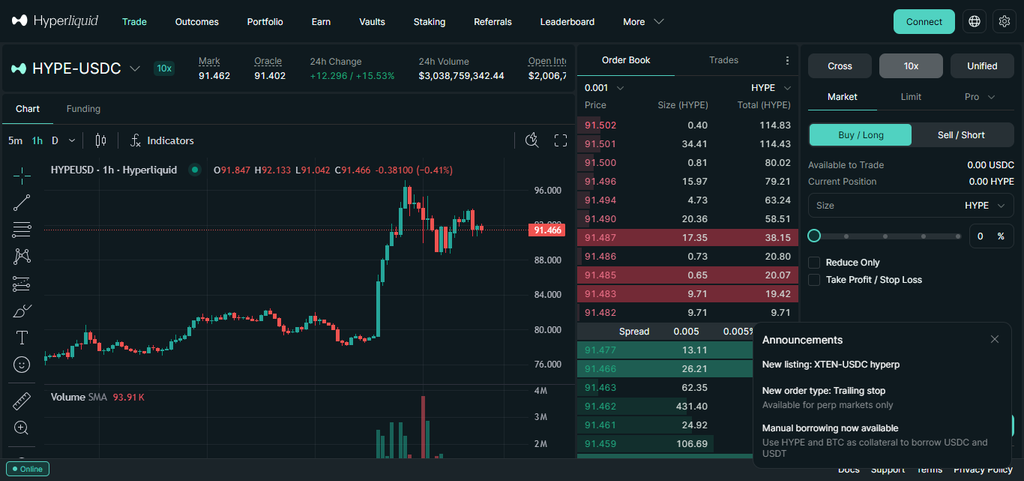
Revenue Sustainability: Trading fees fund community mechanisms such as HLP and the Assistance Fund, which buys HYPE for burning. Network Coverage: Mostly Hyperliquid L1, integrated HyperEVM infrastructure.
Hyperliquid Pros & Cons
| Pros | Cons |
|---|---|
| Deep liquidity and strong trading volume. | Heavy dependence on its own blockchain ecosystem. |
| Fast order-book execution and low latency. | Validator and bridge security assumptions. |
| Strong HYPE buyback and fee-driven value capture. | HYPE token volatility creates additional exposure. |
| Supports spot and perpetual trading. | Competition from emerging low-fee exchanges. |
| Advanced trading infrastructure and growing ecosystem. | Concentration of liquidity within one ecosystem. |
2. dYdX
dYdX is an established decentralized derivatives exchange providing professional trading infrastructure, perpetual contracts and an on-chain order-book system. Trading Volume . Trading volume is a measure of demand from active retail and institutional traders.
Trading Fees: The exchange uses a maker-taker fee structure with rates determined by trading volume and adjustable parameters set by governance. Supported Markets: Primarily crypto perpetuals, but also their growing spot capabilities.
Revenue Sustainability: DYDX buybacks consume 75% of net protocol revenue, and staking provides additional economic participation. Network Coverage: It uses its own Cosmos-based dYdX Chain and other ecosystem integrations.
dYdX Pros & Cons
| Pros | Cons |
|---|---|
| Established decentralized derivatives infrastructure. | Lower trading activity than leading competitors. |
| Professional order-book trading experience. | Separate appchain requires dedicated ecosystem participation. |
| Maker-taker fee structure supports active traders. | Limited asset coverage compared with multi-asset platforms. |
| Trading fees support validator and staker economics. | Revenue depends heavily on derivatives activity. |
| Governance and staking through DYDX. | Cosmos-based infrastructure adds ecosystem complexity. |
3. Aster
Aster is a decentralized trading platform that merges spot and perpetual markets with a focus on accessible execution and capital efficiency. Trading Volume: The increasing perpetual trading volume makes it a strong contender in the decentralized derivatives space.
Trading Fees The platform has competitive maker-taker fees and offers discounts and incentives based on your account status. Supported Markets: Crypto perpetuals, spot and certain traditional asset exposures. Revenue Sustainability:
The ASTER token ecosystem includes buyback mechanisms and staking incentives tied to fees, so actual fee generation is a key consideration for long-term value. Network Coverage: Its ecosystem consists of BNB Chain and dedicated Aster infrastructure which allows for wider access to decentralized trading.
Aster Pros & Cons
| Pros | Cons |
|---|---|
| Competitive maker and taker trading fees. | Complex product structure across different trading modes. |
| Supports multiple blockchain networks. | Multi-chain infrastructure increases security considerations. |
| Offers crypto and selected traditional asset exposure. | Some markets may have limited liquidity. |
| ASTER buybacks and veASTER revenue distribution. | Token incentives can influence reported trading activity. |
| Advanced trading modes and capital efficiency. | High leverage increases liquidation risks. |
4. Vertex
Vertex Protocol was a vertically integrated decentralized exchange to bring together spot trading, perpetual contracts and money markets. Its trading activity historically included leveraged derivatives and spot markets, making it a relevant historical GMX competitor.
Trading Volume Trading Fees Its exchange featured competitive maker-taker fees on a range of trading products. Supported Markets Spot and perpetual futures markets on cryptocurrencies and integrated lending markets.

Its original business model was based on trading fees, borrowing activity and liquidity utilization instead of just trading incentives. Network Coverage Its main infrastructure was on Arbitrum. But Vertex’s original exchange operations and token ecosystem should be considered legacy after its transition and technology absorption into Ink/Kraken.
Vertex Protocol Pros & Cons
| Pros | Cons |
|---|---|
| Previously combined spot, perpetuals, and money markets. | Original exchange operations are no longer a current leading venue. |
| Integrated trading and lending infrastructure. | VRTX token ecosystem has been retired. |
| Hybrid order-book and liquidity architecture. | Historical volume should not be treated as current volume. |
| Arbitrum-based trading infrastructure. | Technology transition creates continuity concerns. |
| Previously offered capital-efficient DeFi trading. | Not a like-for-like active GMX competitor today. |
5. Drift Protocol
Drift Protocol is a decentralized trading platform on Solana that first offered perpetual futures, spot trading, lending and borrowing services. Trading Volume: It had its historical trading volume from leveraged positions and spot market activity. Trading Fees: It charges trading fees along with borrowing and other market-related fees depending on the product.
Supported Markets: The original markets were perpetuals on cryptocurrencies, spot assets and lending products . Revenue Sustainability Real trading demand, borrowing, and protocol fee generation, not token incentives, lead to sustainable revenue.
Network Coverage: Built on Solana’s core infrastructure. Note its operational status following the security incident in April 2026 and the reported subsequent restructuring, with historical figures not presented as current activity.
Drift Protocol Pros & Cons
| Pros | Cons |
|---|---|
| Native Solana integration and fast execution. | Dependence on Solana network infrastructure. |
| Historically offered perpetuals, spot, and lending. | Security incident in April 2026 raises major concerns. |
| Hybrid liquidity and order-book architecture. | Recovery and operational continuity require verification. |
| DRIFT governance and staking ecosystem. | Liquidity and user confidence may be affected. |
| Multiple DeFi trading products. | Historical volume may not represent current activity. |
6. Gains Network
Gains Network runs gTrade, a decentralized leveraged trading platform that provides synthetic exposure to a diverse set of financial markets. Trading Volume: It creates volume from leveraged trading activity in cryptocurrency and other supported asset classes. Trading Fees The platform makes money by charging trading fees, spreads and borrowing costs, depending on market conditions.
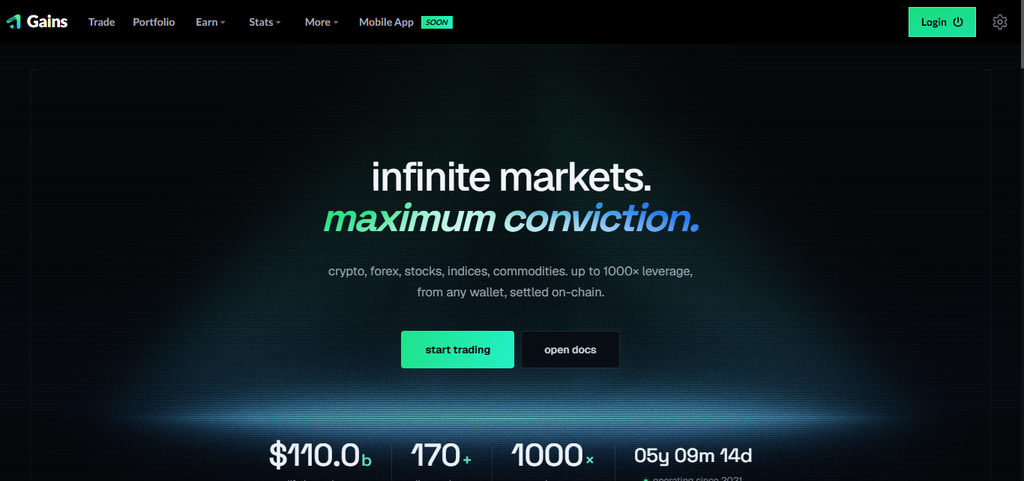
Supported Markets: Provides cryptocurrencies, forex, stocks and commodities where available. Revenue Sustainability: The long-term model hinges on trader activity, protocol profitability, and sustainable fee generation to sustain its GNS ecosystem. Network Coverage: Deployed on Polygon and Arbitrum giving access to multiple blockchain ecosystems.
Gains Network Pros & Cons
| Pros | Cons |
|---|---|
| Supports leveraged exposure beyond cryptocurrencies. | Oracle dependency introduces additional risks. |
| Forex, commodities, and stock exposure. | Liquidity varies across supported markets. |
| Trading fees and borrowing costs generate revenue. | Complex synthetic pricing mechanisms. |
| GNS token connects with protocol economics. | Token value remains exposed to market volatility. |
| Multi-chain deployment expands accessibility. | Fragmented liquidity across different networks. |
7. Jupiter
Jupiter is a large DeFi ecosystem on Solana, allowing users to swap tokens, route liquidity, and trade perpetuals through Jupiter Perps. Trading Volume: Its derivatives volume reflects the demand for leveraged crypto trading, and its wider ecosystem also fuels spot trading activity.
Trading Fees Jupiter Perps will charge trading fees including position-opening and closing fees, and any borrowing and price-impact fees. Supported Markets: Its perpetual products are largely based on crypto, with additional markets based on product availability.
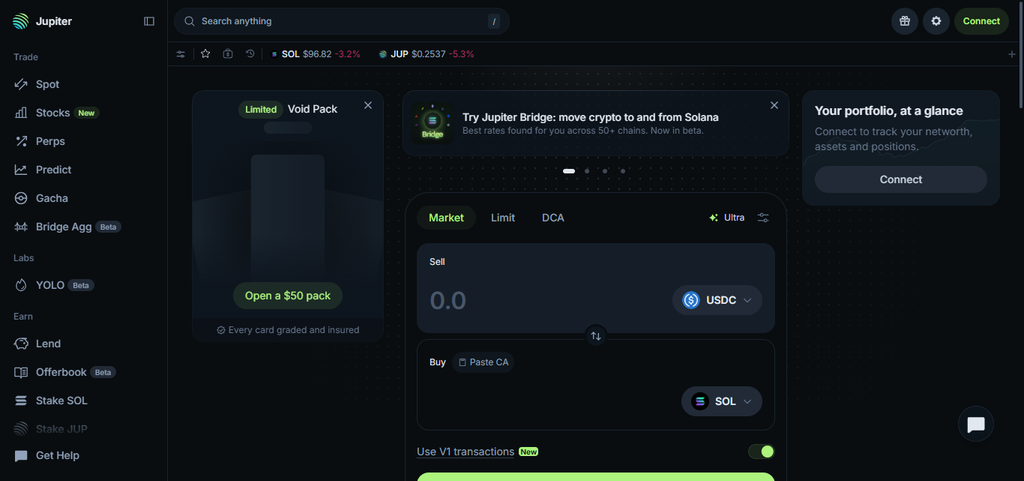
Revenue sustainability Another value-capture mechanism comes from relevant trading revenue that goes to the JLP liquidity pool of Jupiter and token-related buybacks. Network Coverage: The core trading infrastructure is built on Solana, with integrations across the cross-chain ecosystem.
Jupiter Pros & Cons
| Pros | Cons |
|---|---|
| Strong Solana ecosystem and trading integrations. | Significant dependence on Solana infrastructure. |
| Jupiter Perps provides leveraged trading. | Perpetual liquidity depends on JLP pool capacity. |
| Integrated swaps and liquidity routing. | Pool providers face trader-profit and inventory risks. |
| JLP offers exposure to trading-related revenue. | Returns are variable and not guaranteed. |
| JUP governance and buyback mechanisms. | Broader ecosystem complexity can affect token value capture. |
8. Lighter
Lighter is a decentralized derivatives exchange built for high-performance order-book trading and cryptographic verification. Trading Volume It is one of the main players in the on-chain derivatives sector thanks to its massive perpetual trading volume. Trading Fees: While certain user categories have been granted zero-fee trading, users should verify the relevant fee schedules and market conditions.
Supported Markets: The product is targeting cryptocurrency perpetual contracts and related trading markets. Revenue Sustainability: Evaluating the long-term economics via actual collected fees, revenue allocation and sustainability of its trading incentives. Network Coverage: An Ethereum Layer 2 ecosystem that utilizes zero-knowledge technology to offer scalable trading infrastructure.
Lighter Pros & Cons
| Pros | Cons |
|---|---|
| Zero-knowledge-based trading verification. | Newer ecosystem with a shorter operating history. |
| Competitive and potentially zero-fee trading. | Fee-free activity may not generate sustainable revenue. |
| Efficient order-book trading infrastructure. | Liquidity can vary across trading pairs. |
| Ethereum scaling technology. | Rollup and infrastructure dependencies. |
| LIT token value-capture mechanisms. | Token economics require ongoing evaluation. |
9. ApeX Protocol
ApeX Protocol is a decentralized derivatives platform that offers perpetual futures trading via its ApeX Omni infrastructure. Trading Volume: Its trading volume is backed by leveraged cryptocurrency markets and cross-chain accessibility.
Trading Fees It implements maker-taker trading fees, with discounts and other incentives depending on the platform’s conditions. Its offering is focused on cryptocurrency perpetual contracts and selected other trading markets.
Supported Markets: Revenue Sustainability It has APEX token buybacks as its fee model. 50% of collected fees are set aside for buybacks based on its reported revenue methodology. Network Coverage: ApeX Omni covers multiple ecosystems, including Ethereum, Arbitrum, Base, BNB Chain and Mantle, increasing the potential reach of liquidity.
ApeX Protocol Pros & Cons
| Pros | Cons |
|---|---|
| Omnichain perpetual trading infrastructure. | Cross-chain integrations increase technical complexity. |
| Competitive maker-taker fee structure. | Liquidity may vary between supported markets. |
| APEX buyback and burn mechanisms. | Buybacks depend on actual fee generation. |
| Supports multiple blockchain ecosystems. | Bridge and settlement risks require consideration. |
| Advanced order-book trading experience. | Competition from larger perpetual exchanges. |
10. Aevo
Aevo is a decentralized derivatives exchange for options and perpetual futures, that combines advanced trading infrastructure with an order-book based experience. Trading Volume: Its volume is linked to activity on perpetual futures and options markets, thus derivatives participation is a key performance measure.
Trading Fees Trades are subject to trading fees based on the relevant market and maker-taker conditions. Supported Markets: It offers crypto perpetuals and options, allowing traders to employ various derivatives strategies.
Revenue Sustainability Long-term sustainability is not based on temporary incentive programs but on recurring trading fees, participation in options markets, liquidity and effective risk management. Network Coverage Aevo is running on its Ethereum based Layer 2 infrastructure, built to enable scalable derivatives execution.
Aevo Pros & Cons
| Pros | Cons |
|---|---|
| Combines perpetuals and options trading. | Options markets require more complex risk management. |
| Advanced derivatives trading infrastructure. | Liquidity may be fragmented across products. |
| Ethereum-based Layer 2 architecture. | Additional Layer 2 infrastructure dependencies. |
| Supports sophisticated trading strategies. | Less suitable for beginners. |
| Multiple derivatives revenue opportunities. | Revenue depends on sustained trading demand. |
11. Avantis
Avantis is a decentralized perpetual exchange that offers leveraged exposure to both crypto and conventional financial assets. Trading Volume : Trading volume drives leveraged positions and demand in various asset classes.
Trading charges Its fee structure includes trading charges, which are subject to market and platform conditions. Supported Markets: Its products cover crypto, forex, commodities and other supported financial markets.
Revenue Sustainability The long-term model is not only about token rewards but also trading fees and market activity, liquidity utilization, and sustainable protocol economics. Network Coverage Avantis is based on Base infrastructure, providing traders access to Ethereum Layer 2 and its surrounding DeFi ecosystem.
Avantis Pros & Cons
| Pros | Cons |
|---|---|
| Offers crypto and traditional asset exposure. | Market availability varies by asset. |
| Supports forex and commodities trading. | Oracle and pricing risks for non-crypto assets. |
| Base ecosystem integration. | Dependence on Base infrastructure. |
| Trading fees create protocol revenue opportunities. | Revenue depends on active trader participation. |
| Expands perpetual trading beyond crypto. | Liquidity depth may differ across markets. |
12. edgeX
edgeX is a high-performance decentralized derivatives exchange built for efficient order-book trading and professional execution. Trading Volume Its continuous trading activity makes it an important competitor to the established decentralized exchanges, especially in leveraged markets. Trading Fees It provides competitive maker-taker fees.
The rates in effect depend on the trading tiers and platform circumstances. Supported Markets: Its trading products are mostly cryptocurrency perpetual contracts and some spot markets. Revenue Sustainability The economic model should be evaluated against real trading fees, protocol revenue, token value capture and recurring user demand. Network Coverage: Infrastructure leveraging Ethereum scaling technologies, such as StarkEx-based architecture, to support scalable trading and settlement.
edgeX Pros & Cons
| Pros | Cons |
|---|---|
| High-performance order-book trading infrastructure. | Relatively young competitive ecosystem. |
| Competitive trading fees. | Liquidity depth varies by trading pair. |
| Ethereum scaling infrastructure. | Additional technical infrastructure dependencies. |
| EDGE token ecosystem and value-capture opportunities. | Token economics require long-term validation. |
| Supports professional derivatives trading. | Faces competition from established order-book exchanges. |
13. Grvt
GRVT is a hybrid trading platform, that combines decentralized self-custody principles with centralized-exchange-style execution performance. Trading Volume: Its derivatives volume is driven by active perpetual trading and increasing market participation. Trading Fees: It uses a tiered maker-taker fee structure, which means that higher volume traders can benefit from maker rebates and lower taker fees.
Supported Markets The platform is targeted toward Cryptocurrency Spot and Perpetual Futures markets. Revenue Sustainability: The long-term revenue potential is built on recurring trading fees, liquidity growth, market participation, and transparent token-related value capture. Network Coverage: GRVT is based on zkSync Validium and supports withdrawals to multiple networks like Ethereum, Arbitrum, BNB Chain, Solana, and Tron.
GRVT Pros & Cons
| Pros | Cons |
|---|---|
| Combines decentralized custody with exchange-style execution. | Hybrid architecture introduces additional trust assumptions. |
| Advanced order-book trading infrastructure. | Complex technology can increase operational risks. |
| zkSync-based infrastructure. | Dependence on underlying Layer 2 infrastructure. |
| Focuses on professional trading experiences. | Liquidity may be lower than leading competitors. |
| Supports perpetual and spot trading. | Long-term revenue sustainability needs validation. |
14. Variational Omni
Variational Omni is a decentralized peer-to-peer perpetual trading platform that aims to provide flexible derivatives markets and capital efficient execution. Trading Volume: The growing trading volume makes it an upcoming competitor in the perpetual DEX space.
Trading Fees The current fee structure promotes no fees for makers and takers when opening and closing positions, deposits, withdrawals and liquidations. Supported Markets: The platform offers cryptocurrency perpetuals and is expanding into other asset classes.
Zero Trading Fees ≠ Real Yield The business model means we have to consider income from liquidation, market-making economics and sustainable treasury or protocol revenue rather than assuming zero trading fees result in real yield. Network Coverage: Its main trading infrastructure operates on an Ethereum-based ecosystem with supported blockchain connectivity.
Variational Omni Pros & Cons
| Pros | Cons |
|---|---|
| Peer-to-peer perpetual trading architecture. | Relatively new market infrastructure. |
| Flexible derivatives market design. | Liquidity depends on available counterparties. |
| Competitive fee structure. | Zero trading fees can limit direct revenue generation. |
| Capital-efficient trading opportunities. | Risk management requires careful evaluation. |
| Expanding perpetual market access. | Long-term token value capture remains uncertain. |
15. Level Finance
Level Finance is a decentralized perpetual exchange with a liquidity-pool-based trading model and trader-driven risk management mechanisms. Trading Volume: Its historical perpetual trading activity came from leveraged positions and liquidity-pool utilization.
Trading Fees The fee structure it claims to have is a 0.05% position fee for opening and closing trades and dynamic borrowing fees. Supported Markets: Its original offering focused on cryptocurrency perpetual contracts and decentralized spot swaps.

Revenue Sustainability The model generated revenue from position fees, borrowing fees and liquidity activity, with historical revenue shared across its ecosystem. Network Coverage: Previously it was running on BNB Chain and Arbitrum. But it’s current activity and liquidity look very limited so it should be viewed as a legacy competitor not a leading active rival.
Level Finance Pros & Cons
| Pros | Cons |
|---|---|
| Innovative liquidity-pool-based trading model. | Limited current trading activity. |
| Historically offered decentralized perpetual markets. | Liquidity and market depth have declined. |
| Revenue generated through trading and borrowing fees. | Historical revenue does not establish current sustainability. |
| Trader-driven risk management mechanisms. | Liquidity providers faced trader-profit exposure. |
| Previously supported BNB Chain and Arbitrum. | No longer a leading active competitor to GMX. |
Conclusion
To summarize, the Best GMX Rivals for Real-Yield Perpetual DEXs provide varying advantages regarding trading volume, liquidity, fees, and revenue generation. Hyperliquid, dYdX, Aster, Jupiter and Lighter are unique with their trading infrastructure and market.
But before picking a platform for sustainable real-yield opportunities, investors should look into actual protocol revenue, fee distribution, security and tokenomics.
FAQ
Hyperliquid, dYdX, Aster, Jupiter, Lighter, and Gains Network are notable competitors.
Hyperliquid is among the leading perpetual DEXs by trading volume.
Protocols distributing actual trading-fee revenue to users or token holders offer real-yield mechanisms.
It depends on liquidity, fees, execution, security, supported markets, and revenue sustainability.