

In this article, I will talk about the Top dYdX Competitors for Decentralized Margin Trading. I will cover the leading platforms that provide alternatives for leveraged trading in decentralized finance.
We’ll discuss their key features, trading options, supported blockchains, liquidity, and special perks to help readers understand how these platforms stack up against dYdX and select the right ones for their trading needs.
How We Choose the Top dYdX Competitors
- Trading Functionality: Assess advanced order execution capabilities, margin trading, derivatives, and perpetual futures.
- Supported Cryptocurrencies: Examine trading pairs, supported blockchain-based digital assets, and available cryptocurrencies.
- Liquidity Availability: Evaluate trade volume, market depth, liquidity sources, and effective transaction execution.
- Leverage choices: Look at collateral choices, margin requirements, available leverage limitations, and liquidation procedures.
- Security Infrastructure: Examine risk management systems, smart contract audits, security procedures, and safeguards.
- Non-Custodial Architecture: Give top priority to platforms that help consumers keep control over digital assets and wallets.
- Trading Fees: Examine financing rates, maker fees, taker fees, and other trading expenses.
- User Experience: Assess wallet connectivity, trading interfaces, platform navigation, and general user accessibility.
- Market Accessibility: Take into account trading marketplaces, blockchain compatibility, supported geographies, and platform accessibility.
- Competitive Advantages: List distinctive characteristics, liquidity models, trading technologies, and advantages over dYdX.
Key Points & Top dYdX Competitors for Decentralized Margin Trading
| Competitor | Explanation |
|---|---|
| Hyperliquid | Offers fast onchain perpetual trading with deep liquidity, leverage, and advanced order execution. |
| GMX | Enables decentralized leveraged trading through liquidity pools, supporting perpetuals and spot markets. |
| Drift Protocol | Provides decentralized perpetuals, spot trading, lending, borrowing, and capital-efficient margin management tools. |
| Synthetix | Powers onchain derivatives markets, enabling synthetic assets and perpetual trading through collateralized liquidity. |
| Gains Network (gTrade) | Offers leveraged trading across crypto, forex, stocks, and commodities through decentralized infrastructure. |
| Aevo | Combines decentralized perpetual futures and options trading with a specialized derivatives trading interface. |
| Vertex Protocol | Integrates decentralized spot, perpetuals, and money markets with unified cross-margin trading capabilities. |
| Bluefin | Provides decentralized derivatives trading with an order book designed for speed and capital efficiency. |
| Jupiter Perps | Delivers leveraged perpetual trading on Solana, leveraging oracle pricing and decentralized liquidity mechanisms. |
| Apex Protocol | Supports decentralized perpetual futures trading with leverage, advanced order types, and self-custody. |
10 Top dYdX Competitors for Decentralized Margin Trading
1. Hyperliquid
Hyperliquid is a high-performance decentralized perpetuals exchange running on its own custom Layer-1 blockchain and HyperEVM for intelligent contracts. It uses a fully on-chain central limit order book, so trading feels like a centralized exchange but remains transparent and self-custodial. Large assets like BTC and ETH can have leverage up to about 40x to 50x, while smaller tokens have lower caps.
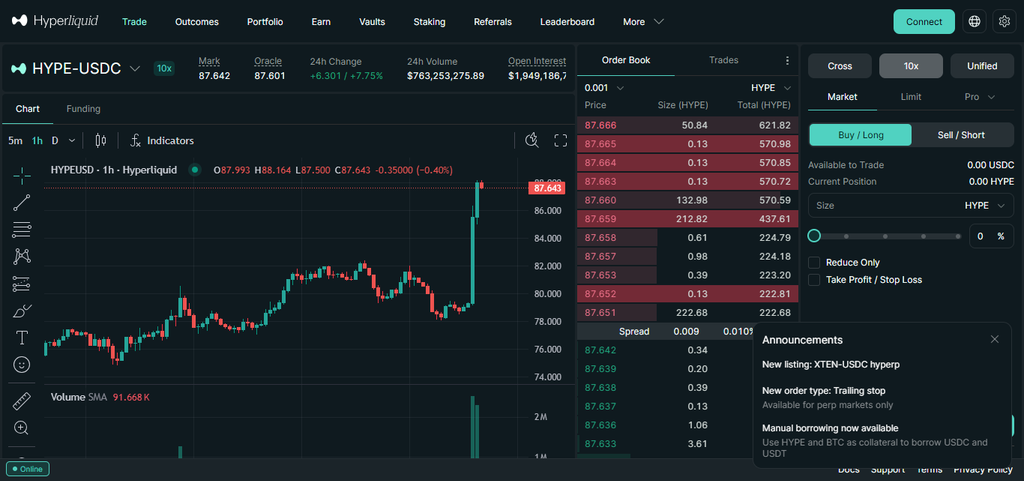
Fee structure is a maker/taker tier system, starting at around 0.01% for makers and 0.035% for takers, with volume discounts. It has no gas fees for trading and is thus popular among active traders and market makers.
Hyperliquid Benefits
- Fast onchain perpetual trading
- Deep liquidity
- Flexible leverage
- Advanced order execution for active derivatives traders
| Feature | Explanation |
|---|---|
| Perpetual Trading | Supports onchain perpetual futures trading with leverage. |
| Order Book | Uses an onchain order book for trade execution. |
| High Performance | Offers fast trading and responsive order execution. |
| Self-Custody | Enables users to trade while maintaining control of their assets. |
2. GMX
GMX is one of the most trusted, oldest decentralized perpetual exchanges. It runs on Arbitrum and Avalanche and uses Chainlink-based oracle pricing to give traders low-slippage execution without a traditional order book. Traders are given a liquidity pool (GM pools) instead of matching buyers and sellers and liquidity providers are paid trading fees.
In GMX V2 some markets have as much as 100x leverage available. Fees include opening and closing charges of approximately 0.05% to 0.07% of the size of the position and hourly borrow fees. Its pooled model offers deep liquidity for major assets but liquidity providers bear counterparty risk.
GMX Benefits
- Decentralized leveraged trading through liquidity pools
- Supports perpetual contracts and spot markets
- No traditional centralized exchange infrastructure required
| Feature | Explanation |
|---|---|
| Leveraged Trading | Supports leveraged trading through decentralized perpetual markets. |
| Liquidity Pools | Uses liquidity pools to facilitate trading and provide market liquidity. |
| Oracle Pricing | Uses price feeds to support market pricing and trade execution. |
| Multi-Chain Support | Operates across supported blockchain networks, including Arbitrum and Avalanche. |
3. Drift Protocol
Drift Protocol is the leading Solana native decentralized perpetuals and margin trading platform. It utilizes a hybrid model that combines a decentralized limit order book, just-in-time (JIT) liquidity auctions and backstop AMM, giving traders strong fills at low latency.
Leverage is usually up to 20x for most markets, with higher limits for some major pairs. Fees are tiered, with takers paying around 0.1% and makers sometimes receiving rebates. Plus funding rates. Drift also supports cross-margin accounts, spot margin and lending, making it a versatile all-in-one DeFi trading venue in the Solana ecosystem.
Drift Protocol Benefits
- Decentralized perpetuals and spot trading
- Lending and borrowing built in
- Capital-efficient margin management tools
| Feature | Explanation |
|---|---|
| Perpetual Futures | Provides leveraged perpetual futures trading on Solana. |
| Spot Trading | Supports spot markets alongside derivatives trading. |
| Cross-Margin | Allows eligible collateral to support multiple trading positions. |
| Lending and Borrowing | Offers lending and borrowing features within its trading ecosystem. |
4. Synthetix
Synthetix is one of the original DeFi derivatives protocols and now has perpetual futures with Synthetix Perps. It runs on Ethereum L2s, mainly Optimism and Base, with Arbitrum support, and is also the liquidity backbone for front-ends like Kwenta. It has a pooled-collateral model with Pyth oracle pricing so that trades are executed against a common pool with deep liquidity and no order book.
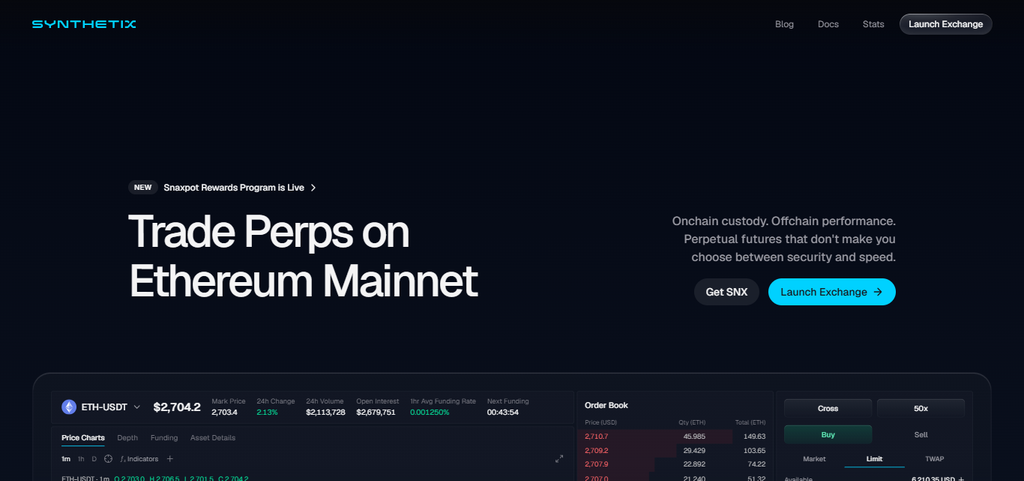
As a rule of thumb, up to about 25x leverage on major assets. Fees are a mix of maker/taker fee that is skewed depending on market imbalance, typically from around 0.01% to 0.1%, plus funding rates. It’s for traders who want composable perpetuals at the protocol level.
Synthetix Benefits
- Powers onchain derivatives markets
- Enables synthetic assets and perpetual trading
- Collateralized liquidity and decentralized financial infrastructure
| Feature | Explanation |
|---|---|
| Perpetual Markets | Provides infrastructure for decentralized perpetual futures markets. |
| Synthetic Assets | Supports synthetic financial exposure through its protocol architecture. |
| Collateral System | Uses collateral mechanisms to support derivatives markets. |
| Liquidity Infrastructure | Provides liquidity infrastructure for integrated decentralized trading applications. |
5. Gains Network (gTrade)
Gains Network is recognized for its very high leverage on crypto, Forex, stocks and commodities via its gTrade platform. It runs on Arbitrum, Polygon and Base and more networks will be added over time. Trades are synthetic (and oracle priced) and the counterparty is the gUSD/gDAI vaults.
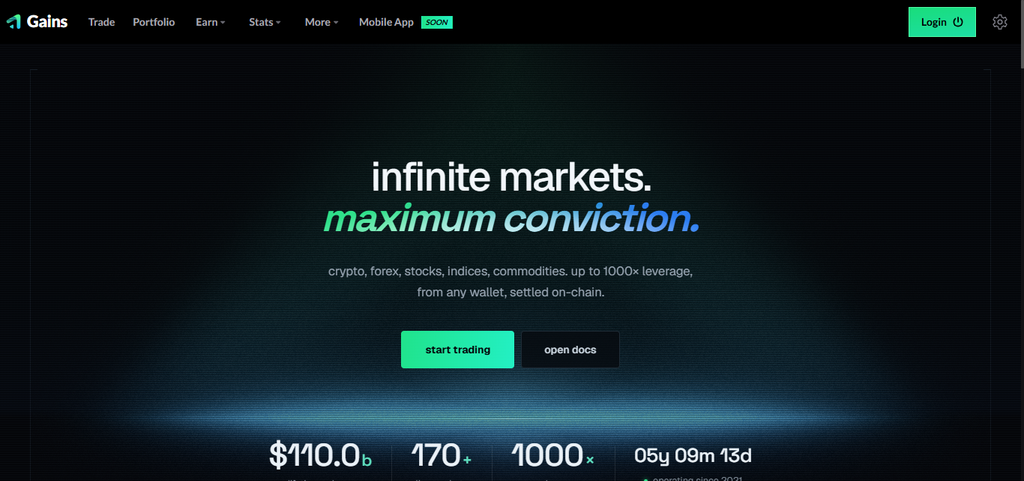
Leverage can be as high as around 150x on crypto and up to 1,000x on some forex pairs. Fees generally start at about 0.06% open and close, plus dynamic spreads, rollover or funding fees and liquidation fees. So, gTrade is perfect for traders who want to get multi-asset exposure from one decentralized platform.
Gains Network (gTrade) Benefits
- Leveraged trading across crypto, forex, stocks, and commodities
- Decentralized infrastructure
- Flexible trading markets
| Feature | Explanation |
|---|---|
| Leveraged Trading | Offers leveraged trading across supported financial markets. |
| Multiple Asset Classes | Supports selected crypto, forex, stock, and commodity markets. |
| Oracle Integration | Uses oracle price feeds for market pricing and execution. |
| Decentralized Trading | Enables users to access leveraged markets through decentralized smart contracts. |
6. Aevo
Aevo is a decentralized derivatives exchange on its own Ethereum Layer-2 rollup using the OP Stack. It has perpetual futures and options, which most of the competitors don’t. Aevo uses a hybrid model, with off-chain order matching for speed and on-chain settlement for security and self custody.
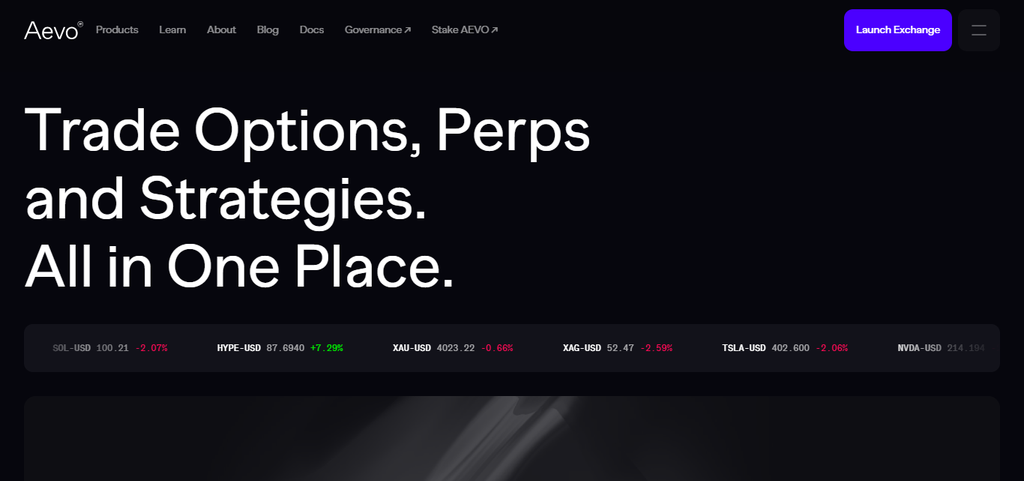
Perpetuals can use up to ~20x leverage on major assets. Fees are generally 0.03% to 0.05% based on maker/taker status plus funding rates, plus charges for options trades. Its pre-launch markets and options tools appeal to experienced traders wanting sophisticated strategies.
Aevo Benefits
- Decentralized perpetual futures and options trading in one place
- Specialized derivatives interface
- Access to multiple trading opportunities
| Feature | Explanation |
|---|---|
| Perpetual Futures | Supports leveraged perpetual futures trading. |
| Options Trading | Provides options markets for eligible supported assets. |
| Order Book | Uses an order-book-based trading interface for derivatives. |
| Derivatives Platform | Combines multiple derivatives products within one trading environment. |
7. Vertex Protocol
Vertex Protocol was a cross-margined decentralized exchange that married a fast central limit order book with an integrated AMM alongside spot, perpetuals and money-market features in one account. It began on Arbitrum and then grew to chains such as Blast, Mantle, Sei and Base, offering up to around 20x leverage. Fees were low, with maker rebates and taker charges around 0.02-0.04%.
Note that Vertex’s exchange was bought by the Ink Foundation in 2025, and wound down in favor of a new venue based on Ink, so it is mostly useful as a design reference today. Check its current standing before using.
Vertex Protocol Benefits
- Decentralized spot trading, perpetual contracts, and money markets
- Unified cross-margin capabilities
- Improved capital efficiency
| Feature | Explanation |
|---|---|
| Perpetual Trading | Supports leveraged perpetual futures markets. |
| Spot Markets | Combines spot trading with derivatives markets. |
| Money Markets | Integrates lending and borrowing functionality. |
| Unified Margin | Supports cross-product margin features within its trading system. |
8. Bluefin
Bluefin is the leading decentralized perpetuals exchange on the Sui blockchain, taking advantage of the speed and low costs of Sui. It uses an order book model with off-chain matching and on-chain, non-custodial settlement for fast trading while users retain control over their funds.
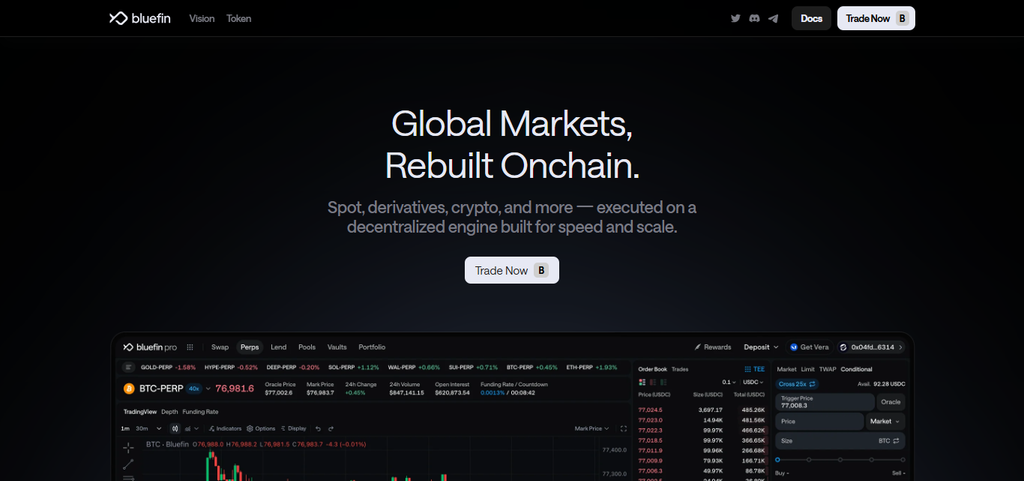
Major markets like BTC, ETH and SUI generally have 20x leverage. The fees are competitive, the makers are around 0.01% and the takers are around 0.035%-0.04% plus funding rates. Bluefin also provides a spot DEX and automated vault products, which makes it a good entry point for traders in the Sui ecosystem.
Bluefin Benefits
- Decentralized derivatives trading via an order book
- Designed for fast execution
- Improved liquidity and capital efficiency
| Feature | Explanation |
|---|---|
| Derivatives Trading | Provides decentralized derivatives trading for supported markets. |
| Order Book | Uses an order-book model for matching trades. |
| Self-Custody | Allows users to retain control of assets through its decentralized trading design. |
| Trading Interface | Offers a dedicated interface for executing and managing trading positions. |
9. Jupiter Perps
Jupiter Perps is Jupiter’s perpetuals product and is the largest DEX aggregator on Solana. It uses a pool based model where traders open positions against the Jupiter Liquidity Pool (JLP) which holds SOL, ETH, WBTC, USDC and USDT with prices from oracles for minimal slippage.
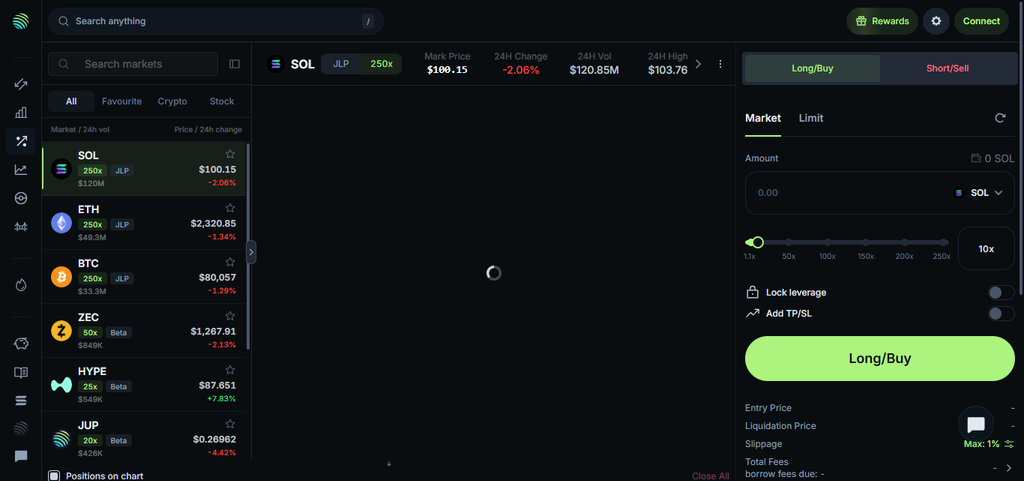
Up to 100x leverage on eligible markets. Positions are opened and closed at around 0.06% plus a borrow fee per hour depending on the pool’s utilization. The majority of the trading revenue is distributed to JLP holders, providing a strong incentive to provide liquidity. Its simple interface and Solana speed makes it a very popular.
Jupiter Perps Benefits
- Leveraged perpetual trading on Solana
- Oracle-based pricing
- Decentralized liquidity mechanisms
| Feature | Explanation |
|---|---|
| Perpetual Futures | Supports leveraged perpetual trading on Solana. |
| Oracle Pricing | Uses oracle-based pricing mechanisms for supported markets. |
| Liquidity Integration | Uses decentralized liquidity mechanisms to facilitate perpetual trades. |
| Solana Ecosystem | Connects perpetual trading with the broader Jupiter and Solana ecosystem. |
10. Apex Protocol
ApeX Protocol (ApeX Omni) is a decentralized derivatives exchange with a non-custodial, zero knowledge-powered architecture. It’s a central limit order book with off-chain matching and on-chain settlement and supports multiple EVM networks including Ethereum and Arbitrum with cross-chain deposits. Leverage on some perpetual contracts can be as high as 100x. Low and tiered fees.
Makers around 0.02%, takers around 0.05% + funding rates. ApeX also comes with a range of features, such as cross-margin trading, a mobile app, and a broad range of crypto perpetual markets, making it a multi-faceted alternative to dYdX.
Apex Protocol Benefits
- Decentralized perpetual futures trading with leverage
- Advanced order types
- Self-custodial trading for users
| Feature | Explanation |
|---|---|
| Perpetual Futures | Offers decentralized perpetual futures trading for supported markets. |
| Leverage | Allows traders to open leveraged positions, subject to platform limits. |
| Trading Tools | Provides tools for managing orders and derivatives positions. |
| Decentralized Access | Supports blockchain-based trading without relying entirely on a centralized exchange. |
Conclusion
The best dYdX alternatives for decentralized margin trading come with a range of features, including perpetual futures, leverage, liquidity, and advanced trading tools. Other trading experiences can be found on Hyperliquid, GMX, Drift Protocol, and Jupiter Perps.
Check out fees, supported assets, security and liquidity and select a platform that fits your trading goals and risk tolerance.DeFi dYdX alternatives for decentralized margin trading provide various features, including perpetual futures, leverage, liquidity and advanced trading tools.
Alternatives like Hyperliquid, GMX, Drift Protocol, and Jupiter Perps offer different trading experiences. Before you choose a platform, it’s a good idea to compare fees, supported assets, security and liquidity to ensure it’s a good fit for your trading goals and risk tolerance.
FAQ
Traders explore dYdX alternatives to compare trading fees, leverage, liquidity, supported blockchains, order execution, and available markets. Different platforms offer different trading experiences, allowing users to select options that better match their strategies and risk tolerance.
Hyperliquid is a notable alternative that offers perpetual trading through an onchain order book on its own Layer 1 blockchain. Traders can compare its liquidity, execution speed, supported markets, fees, and risk-management tools with dYdX before choosing a platform.
GMX primarily uses liquidity pools and oracle-based pricing for decentralized trading, while dYdX uses an order-book-based trading model. These different approaches affect liquidity, execution, fees, and trading strategies.
Drift Protocol offers perpetual futures and spot trading within the Solana ecosystem. Its hybrid liquidity model combines order-book functionality with other liquidity mechanisms, making it an alternative for traders comparing decentralized derivatives platforms.