


The Best GMX Rivals for Real-Yield Perpetual DEXs will be covered in this post, with a focus on 15 platforms that provide advanced trading capabilities, decentralized perpetual trading, and various liquidity models.
To assist you in comparing GMX alternatives and selecting a platform that best suits your trading requirements, you will learn about their salient characteristics, trading options, supported assets, and possible real-yield chances.
How We Choose the Best GMX Rivals for Real-Yield Perpetual DEXs
- Perpetual Trading Features: Evaluate available contracts, order types, and trading tools.
- Real-Yield Model: Check whether rewards come from actual protocol revenue or token incentives.
- Supported Assets: Consider the variety of cryptocurrencies and other available markets.
- Leverage Options: Compare leverage limits, margin requirements, and liquidation mechanisms.
- Liquidity: Assess liquidity depth, execution quality, and slippage.
- Trading Fees: Compare maker, taker, funding, and other applicable fees.
- Revenue Distribution: Review how protocol fees are shared with eligible users.
- Security: Examine audits, smart contract protections, and risk-management measures.
- Blockchain Support: Check supported networks and cross-chain trading availability.
- Capital Efficiency: Evaluate collateral requirements and liquidity utilization.
- User Experience: Consider interface design, trading tools, and platform accessibility.
- Competitive Advantages: Identify features that make each platform a strong GMX alternative.
Key Points & Best GMX Competitors Compared
| Rank | Exchange | Architecture Type | Primary Blockchain Network | Max Leverage | Key Advantage |
|---|---|---|---|---|---|
| 1 | Hyperliquid | App-Chain Order Book | Custom Layer-1 | 50x | Dominates global perp DEX volume by a wide margin. |
| 2 | Aster DEX | Multi-Chain Order Book | Multi-chain | 1001x | Ultra-high leverage and access to stock perps. |
| 3 | Lighter | zk-Rollup Order Book | Custom Layer-2 | 50x | Zero maker and taker fees for retail traders. |
| 4 | dYdX | App-Chain Order Book | Cosmos-based | 20x | Over 220 markets with battle-tested CEX-like UX. |
| 5 | Gains Network (gTrade) | Synthetic Liquidity Pool | Arbitrum / Polygon | 150x | High-leverage synthetic trading across crypto, forex, and stocks. |
| 6 | Grvt | Centralized Matching / Decentralized Settlement | zkSync Layer-2 | 50x | Near-zero maker fees paired with self-custodial architecture. |
| 7 | ApeX Protocol | Order Book Engine | Multi-chain / StarkEx | 100x | No-bridge multi-chain cross-funding architecture. |
| 8 | Drift Protocol | Hybrid vAMM / Order Book | Solana | 101x | The leading decentralized perpetual ecosystem on Solana. |
| 9 | Aevo | Rollup Order Book | Optimism Layer-2 | 20x | Native support for both pre-launch perpetuals and options. |
| 10 | Jupiter Perps | Pooled Liquidity (JLP) | Solana | 100x | The top pool-based real-yield engine operating on Solana. |
| 11 | Avantis | Synthetic Liquidity Pool | Base | 50x | Multi-asset synthetic trading specializing in crypto, FX, and commodities. |
| 12 | MYX Finance | Peer-to-Pool Matching | BNB Chain / Linea | 50x | Zero-slippage Multi-Asset Pool Matching (MPM) model. |
| 13 | Vertex Protocol | Hybrid Order Book / AMM | Arbitrum | 50x | Ultra-low latency trading with a unified cross-margin account structure. |
| 14 | edgeX | Order Book | StarkEx Validium | 50x | Off-chain matching with gasless, on-chain validium settlement. |
| 15 | Mux Protocol | Liquidity Aggregator & Pool | Multi-chain | 100x | Aggregates multi-venue liquidity to optimize execution and minimize slippage. |
15 Best GMX Rivals for Real-Yield Perpetual DEXs
1. Hyperliquid
Hyperliquid is a decentralized trading platform that uses its high-performance blockchain technology to provide spot markets, perpetual futures, and sophisticated order execution. Deep liquidity, quick transactions, and leveraged trading across many cryptocurrency marketplaces are all supported by its onchain order book.
BTC, ETH, SOL, HYPE, and over 100 perpetual trading assets are among the supported assets. Leverage Options: Depending on the market, collateral, and position requirements, different leverage restrictions apply.
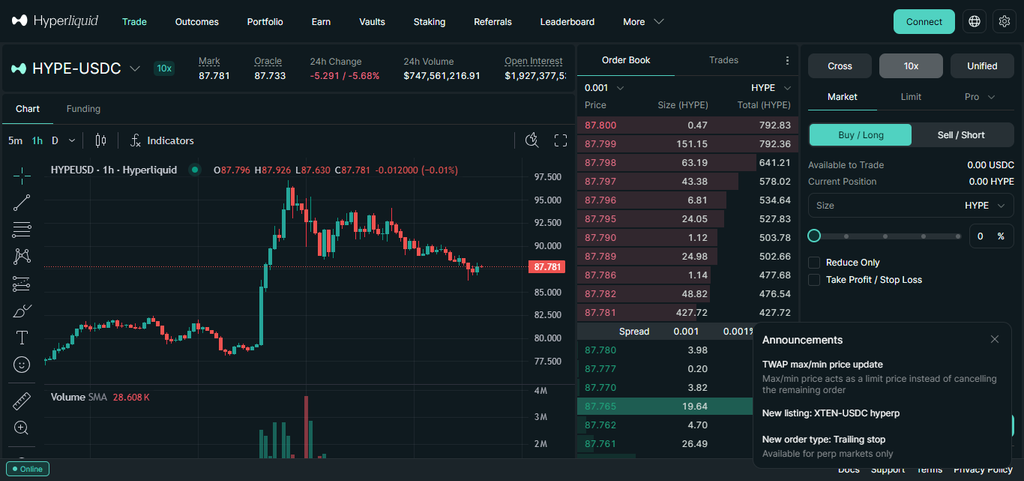
Supported Blockchain Networks: Arbitrum, Ethereum, and Solana are among the networks from which Hyperliquid accepts deposits. Hyperliquid runs on its own Hyperliquid Layer-1 blockchain. Trading Fees: With volume-based discounts and maker rebates, base perpetual fees begin at 0.015% maker and 0.045% taker.
Hyperliquid Features
- On-Chain Order Book: Uses an order-book trading model for transparent order placement and execution.
- Fast Trade Execution: Designed to support responsive trading and frequent position adjustments.
- Perpetual Markets: Offers leveraged long and short positions across supported crypto assets.
- Native Ecosystem: Uses the HYPE token for ecosystem-related functions and participation.
Hyperliquid Top Use Cases
- High-Frequency Perpetual Trading: Suitable for active traders seeking fast order execution.
- Advanced Order Book Trading: Useful for traders who prefer placing limit and market orders.
- Leveraged Crypto Trading: Enables users to take leveraged long and short positions.
- Market-Making Strategies: Supports trading strategies that rely on order-book liquidity.
- On-Chain Trading: Useful for traders who want access to a decentralized trading environment.
2. Aster DEX
Aster DEX is a decentralized perpetual trading platform that prioritizes advanced cryptocurrency trading, capital efficiency, and anonymity. Through its larger ecosystem, it provides yield-generating products, Shield Mode, spot trading, and order-book perpetuals.
BTC, ETH, BNB, SOL, USDT, USDF, and many more cryptocurrencies and market assets are among the supported assets. Leverage Options: Depending on the trading style and market, different markets may provide much higher limitations on leverage.
Blockchain Networks Supported: Aster’s multichain infrastructure supports Ethereum, Solana, Arbitrum, and BNB Chain. Trading Fees: Its stated USDT permanent base fees are 0.04% taker and 0% maker, with varying rates for USD1 markets and relevant reductions.
Aster DEX Features
- Multi-Market Trading: Provides access to perpetual markets across supported digital assets.
- Multiple Trading Modes: Offers different trading experiences for users with varying levels of experience.
- Leverage Options: Supports leveraged positions, subject to market-specific limits.
- Yield-Related Features: Combines trading with ecosystem and reward features, depending on current program availability
Aster DEX Top Use Cases
- Perpetual Futures Trading: Used to open leveraged positions on supported markets.
- Multi-Asset Trading: Suitable for users seeking exposure to different supported crypto assets.
- Hedging Positions: Helps traders manage potential losses in their spot portfolios.
- Short-Term Speculation: Supports strategies based on anticipated market movements.
- DeFi Trading Access: Useful for users seeking perpetual markets within a decentralized exchange ecosystem.
3. Lighter
Lighter is a decentralized perpetual futures exchange that combines transparent trading, verifiable matching technology, and effective order execution. It supports its trading engine with zero-knowledge technology and gives derivatives traders an order-book experience.
Supported Assets: Perpetual markets for BTC, ETH, SOL, and other supported cryptocurrencies; additional markets may be available based on listings. Leverage Options: Individual contracts, collateral requirements, and account risk limitations all affect leverage.
Blockchain Networks Supported: Lighter uses its own Ethereum Layer-2 zk-rollup infrastructure. Trading Fees: According to their advertised fee structure, standard accounts have zero maker and taker trading fees, whereas premium account tiers have various fees.
Greater Liquidity and Trading Flexibility Features
- Order-Book Architecture: Uses an order-book model for matching perpetual trades.
- On-Chain Verification: Emphasizes verifiable trading operations and execution.
- Perpetual Contracts: Supports leveraged trading across listed markets.
- Trading Cost Structure: Provides a defined fee model, with applicable costs depending on account and trading conditions.
Lighter Top Use Cases
- Order-Book Perpetual Trading: Suitable for traders who prefer an order-book-based trading experience.
- Active Crypto Trading: Useful for users who frequently open and close leveraged positions.
- Limit Order Strategies: Supports traders who want more control over their entry and exit prices.
- Market-Based Execution: Useful for strategies that depend on visible order-book liquidity.
- Decentralized Derivatives Trading: Provides access to perpetual markets without relying on a traditional centralized exchange.
4. dYdX
A decentralized derivatives trading platform, dYdX focuses on professional cryptocurrency trading, margin management, and perpetual futures. Its specialized blockchain enables leveraged positions without conventional centralized exchange custody by utilizing decentralized validators and an order-book-based matching system.
BTC, ETH, SOL, and many other supported cryptocurrency permanent markets are examples of supported assets. Leverage Options: Depending on starting margin, maintenance margin, and position size, each market has different leverage restrictions.
Blockchain Networks Supported: dYdX runs on its own dYdX Chain, which is built on the Cosmos SDK. Trading Fees: It employs a maker-taker fee system with governance-adjustable fee parameters and volume-based reductions. Funding and relevant transaction fees should also be taken into account by traders.
More Blockchain Network Choices Features
- Decentralized Perpetual Markets: Supports leveraged trading across a range of crypto markets.
- Advanced Order Types: Provides trading tools for more controlled order placement.
- Margin Trading: Offers collateral and margin mechanisms for managing leveraged positions.
- DYDX Token Utility: The token supports governance and other ecosystem functions
dYdX Top Use Cases
- Perpetual Futures Trading: Suitable for trading leveraged positions across supported markets.
- Portfolio Hedging: Helps users offset potential losses from existing crypto holdings.
- Directional Trading: Supports long and short strategies based on market expectations.
- Advanced Derivatives Strategies: Useful for experienced traders managing multiple positions.
- Decentralized Market Access: Enables users to trade perpetual contracts through a decentralized exchange.
5. Gains Network (gTrade)
Gains Network runs gTrade, a decentralized leveraged trading platform that provides exposure to conventional financial markets and bitcoin derivatives. Liquidity vaults, automated execution methods, and decentralized oracle pricing are all part of its trading architecture. BTC, ETH, SOL, altcoins, currency pairings, equities, indices, and commodities are among the supported assets.
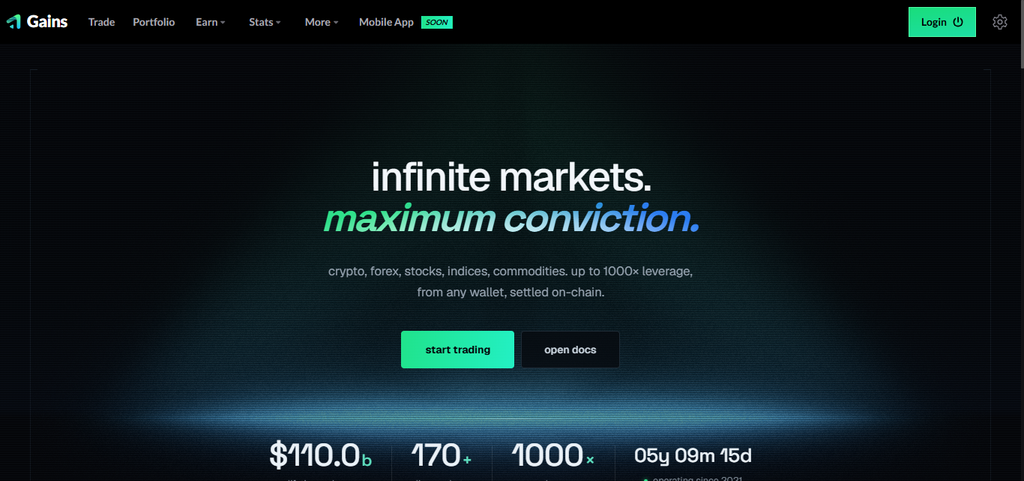
Leverage Options: Depending on the market and asset class, the maximum leverage can go up to 1,000x on certain products. Supported Blockchain Networks: The trade infrastructure for Arbitrum, Base, and Polygon deployments is supported by its ecosystem.
Spreads, opening fees, borrowing costs, and other market-dependent costs are examples of trading fees. Protocol revenue is crucial to real-yield research because it enables token-related procedures, governance, and liquidity providers.
More Competitive Trading Fees and Features
- Synthetic Trading Model: Provides exposure to supported markets through its decentralized trading system.
- Multiple Asset Categories: Supports selected crypto and non-crypto markets.
- Leveraged Positions: Allows users to take long and short positions with leverage.
- Liquidity and Rewards: Connects protocol liquidity and ecosystem participation with its reward mechanisms.
Gains Network (gTrade)
- Leveraged Asset Trading: Useful for traders seeking leveraged exposure to supported markets.
- Long and Short Positions: Supports strategies based on both rising and falling prices.
- Cross-Market Speculation: Suitable for users trading supported crypto and other asset categories.
- Portfolio Hedging: Can help offset price exposure in other investments.
- Liquidity-Based Participation: Relevant to users interested in protocol liquidity and its associated reward mechanisms.
6. Grvt
GRVT is a self-custodial cryptocurrency trading platform that combines yield-generating financial products, spot trading, and perpetual futures. It supports asset management while providing effective order execution through the use of zero-knowledge technologies and an institutional-style trading interface.
Assets that are supported include BTC, ETH, SOL, USDT, and other digital asset and cryptocurrency marketplaces. Leverage Options: Subject to position restrictions and margin requirements, eligible Bitcoin and Ethereum permanent markets provide up to 50x leverage.
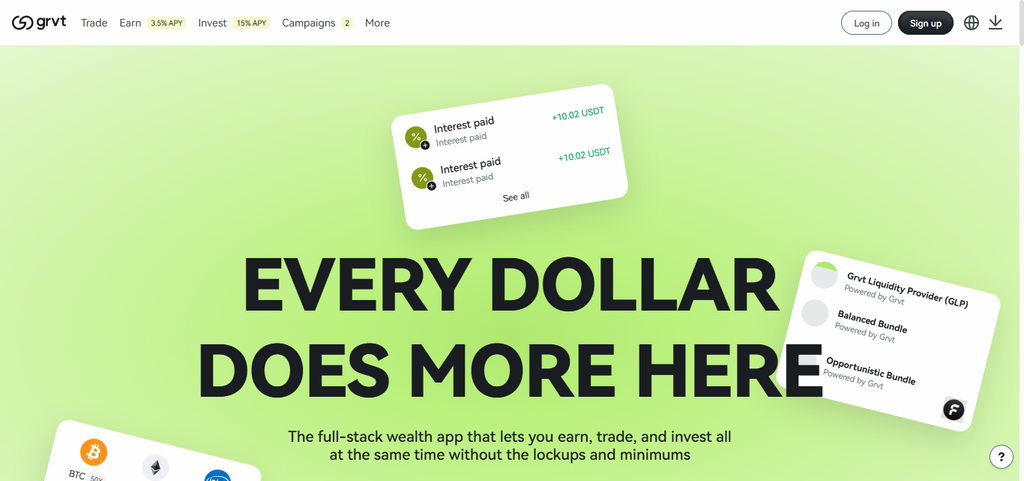
Supported Blockchain Networks: GRVT facilitates deposits and withdrawals from a variety of networks, including Ethereum, Arbitrum, BNB Chain, and Solana, using its own ZK-based trading infrastructure. Trading Fees: Base taker fees begin at 0.045% with volume-based levels, whereas perpetual maker fees may include rebates.
GRVT
- Hybrid Exchange Design: Combines elements of centralized-style trading performance with decentralized infrastructure.
- Perpetual Trading: Provides leveraged derivatives markets for supported assets.
- Self-Custody Approach: Uses a design intended to give users greater control over their assets.
- Privacy-Focused Technology: Incorporates privacy-oriented infrastructure into its trading architecture.
GRVT Top Use Cases
- Perpetual Derivatives Trading: Suitable for users seeking leveraged exposure to supported crypto markets.
- Professional Trading: Useful for traders who need a more advanced derivatives interface.
- Portfolio Hedging: Helps manage exposure to cryptocurrency price fluctuations.
- Order-Based Strategies: Supports users who prefer structured order placement and execution.
- Hybrid Exchange Access: Relevant to traders looking for a combination of centralized-style performance and decentralized features
7. ApeX Protocol
Perpetual futures, sophisticated order execution, and multichain trading are all features of the decentralized derivatives trading platform ApeX Protocol. Its omni-trading architecture prioritizes capital-efficient leveraged cryptocurrency trading, self-custody, and liquidity access. BTC, ETH, SOL, XRP, DOGE, ADA, AVAX, LINK, SUI, and other specified cryptocurrency marketplaces are among the supported assets.
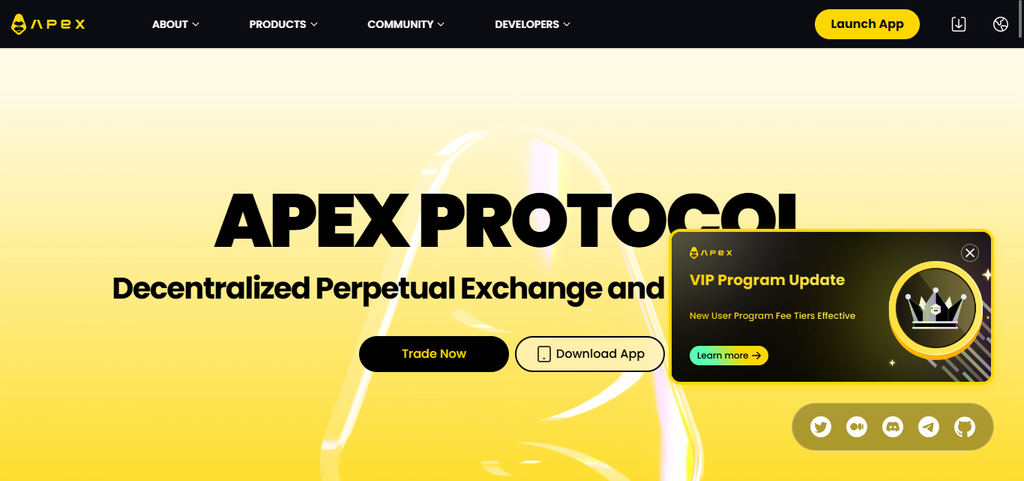
Leverage Options: While other assets have unique limits, many BTC and ETH markets allow up to 100x leverage. Supported Blockchain Networks ApeX’s Omni architecture reduces the need for manual bridging by enabling multichain access.
Trading Fees: The trading products, account tiers, and relevant market circumstances all affect the charge structure. For qualified users, the platform also provides vault-based reward options and staking.
ApeX Protocol
- Perpetual Trading Markets: Provides leveraged contracts across supported crypto assets.
- Order-Book Trading: Offers an order-book-based trading experience on supported products.
- Multi-Chain Ecosystem: Supports access through its compatible blockchain infrastructure.
- APEX Token Utility: Supports ecosystem participation and governance-related functions.
ApeX Protocol Top Use Cases
- Perpetual Contract Trading: Used to trade leveraged positions on supported assets.
- Directional Speculation: Suitable for traders expecting upward or downward price movements.
- Risk Hedging: Helps manage exposure to volatile crypto assets.
- Multi-Market Trading: Useful for users seeking access to different supported perpetual markets.
- DeFi Derivatives Access: Provides an alternative to centralized platforms for leveraged trading.
8. Drift Protocol
Drift Protocol is a decentralized trading platform built on Solana that combines spot markets, lending, borrowing, perpetual futures, and liquidity management. To enhance execution and liquidity availability, its hybrid trading infrastructure combines an order book, just-in-time auctions, and automated market-making processes.
BTC, ETH, SOL, JUP, JTO, PYTH, and other supported cryptocurrency markets are examples of supported assets. Leverage Options: Depending on the market, major assets have different leverage restrictions than minor tokens.
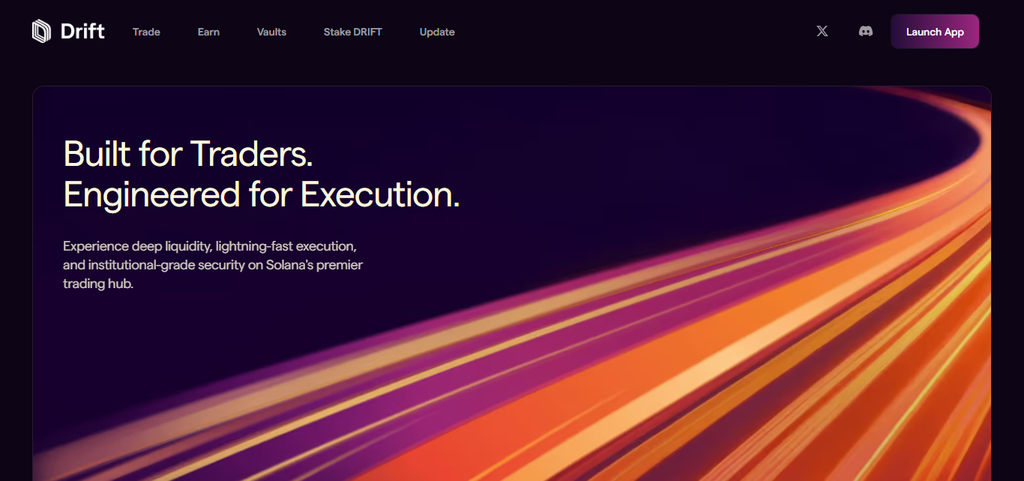
Blockchain Networks Supported: Solana is the native operating system for Drift. Trading Fees: Volume-based pricing and funding payments between long and short positions are used, along with maker-taker trading fees. Protocol-related income opportunities are available to liquidity providers.
Drift Protocol
- Spot and Perpetual Markets: Combines spot trading with leveraged derivatives.
- Cross-Margin System: Allows eligible positions to share collateral under supported margin rules.
- Decentralized Order Execution: Uses on-chain infrastructure for trading and settlement.
- Solana Integration: Operates within the Solana ecosystem and connects with its DeFi applications.
Drift Protocol Top Use Cases
- Solana-Based Perpetual Trading: Suitable for users trading derivatives within the Solana ecosystem.
- Spot and Derivatives Strategies: Useful for combining spot exposure with perpetual positions.
- Portfolio Hedging: Helps manage risks associated with existing crypto holdings.
- Margin Trading: Supports leveraged strategies through its margin and collateral systems.
- DeFi Capital Management: Relevant to users who want to manage trading positions and other supported DeFi activities within one ecosystem.
9. Aevo
Aevo is a decentralized derivatives exchange with an order-book-based trading interface that specializes in trading perpetual futures and options. Its architecture gives customers access to cryptocurrency markets and sophisticated order execution by combining derivatives products with a specialized Ethereum Layer-2 trading environment.
Supported Assets: Perpetual markets for BTC, ETH, SOL, and other supported cryptocurrencies, as well as options and a few other markets. Leverage Options: Depending on the market, collateral, and risk criteria, perpetual leverage varies.
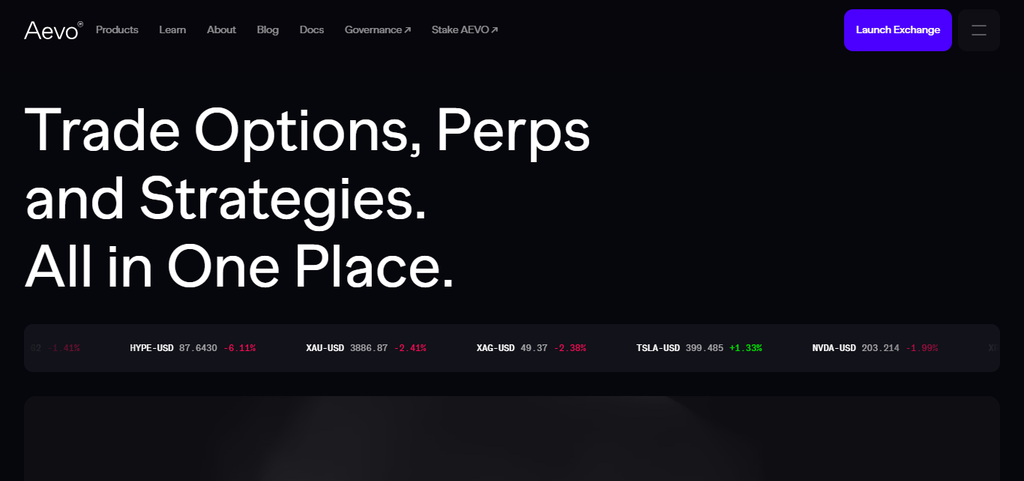
Supported Blockchain Networks: Aevo uses Ethereum rollup technology to run its specialized Aevo Layer-2 environment. trade costs: Depending on the product, trade volume, and account circumstances, there are maker and taker costs. Additionally, staking and participation linked to governance are supported by its AEVO ecosystem.
Aevo
- Perpetual Futures: Supports leveraged trading across available crypto markets.
- Options Trading: Offers options markets for users seeking more advanced derivatives strategies.
- Order-Book Interface: Provides an order-book-style trading experience.
- AEVO Token: Supports ecosystem and governance-related functions.
Aevo Top Use Cases
- Perpetual Futures Trading: Suitable for leveraged trading on supported crypto markets.
- Options Trading: Useful for users seeking options-based strategies where available.
- Market Volatility Strategies: Helps traders position around expected price movements.
- Portfolio Hedging: Supports strategies designed to reduce exposure to market fluctuations.
- Advanced Derivatives Trading: Relevant to experienced users seeking multiple derivatives products on one platform.
10. Jupiter Perps
Within the Jupiter ecosystem, Jupiter Perps is a decentralized perpetual futures trading platform that enables users to open leveraged long and short contracts via shared liquidity pools. Without just relying on conventional order-book matching, its oracle-based pricing method facilitates effective execution. Supported Assets: USDC and other supported tokens are available as collateral on the well-established permanent markets BTC, ETH, and SOL.
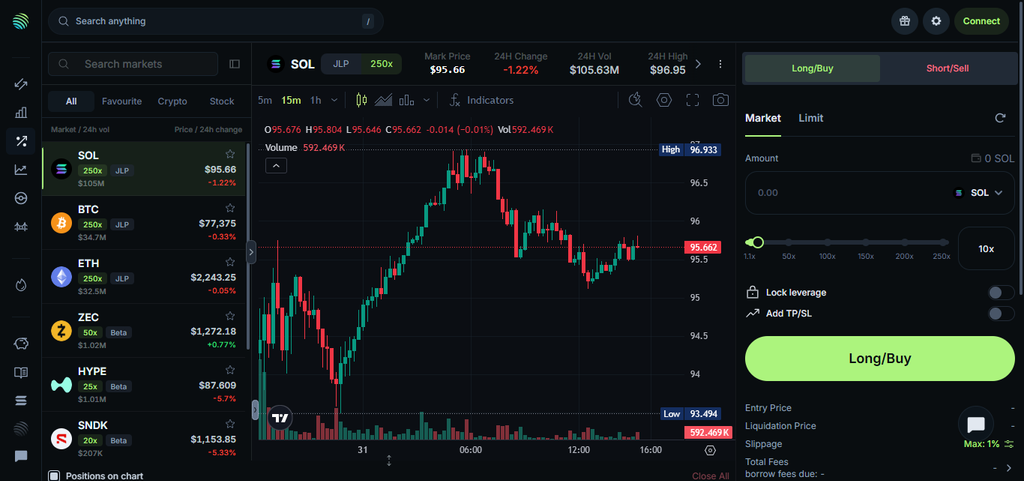
Leverage Options: Subject to market-specific restrictions, eligible major markets offer up to 100x leverage. Blockchain Networks Supported: Solana is the native operating system for Jupiter Perps. Trading Fees Opening and closing fees, borrowing fees, and possible price-impact costs are all part of its fee structure. JLP liquidity providers generate revenue-based earning opportunities by receiving a portion of qualified trading fees.
Jupiter Perps
- Solana-Based Trading: Operates within the Solana ecosystem.
- Perpetual Markets: Supports leveraged long and short positions on listed assets.
- Liquidity Pool Model: Uses a pool-based liquidity mechanism for trade execution.
- Jupiter Ecosystem Integration: Connects perpetual trading with Jupiter’s broader DeFi and swap services.
Jupiter Perps Top Use Cases
- Solana Perpetual Trading: Suitable for users seeking leveraged markets within the Solana ecosystem.
- Directional Crypto Trading: Supports long and short positions on available assets.
- Portfolio Hedging: Helps users manage price exposure from their crypto holdings.
- DeFi Ecosystem Integration: Useful for traders who already use Jupiter’s broader trading ecosystem.
- Liquidity-Based Trading: Relevant to users seeking perpetual exposure through the platform’s liquidity model.
11. Avantis
A decentralized perpetual trading protocol called Avantis was created to offer leveraged exposure to both traditional and cryptocurrency markets. By utilizing USDC-backed pools, its liquidity architecture enables traders to access synthetic markets and liquidity providers to take part in market-making possibilities.
Depending on market availability, supported assets include BTC, ETH, SOL, altcoins, currency pairs, equities, and commodities. Leverage Options: Although real limitations vary depending on asset and risk characteristics, some qualified markets allow leverage up to 500x.
Supported Blockchain Networks: Base is used by Avantis. Trading Fees: Opening and closing fees, dynamic spreads, and margin-related expenses are all part of its fee structure. Through supported liquidity pools, qualified liquidity providers can generate income related to trade.
Avantis
- Multi-Asset Perpetuals: Provides perpetual trading across supported crypto and other asset markets.
- Leveraged Trading: Supports long and short positions with market-specific leverage limits.
- Liquidity-Based Architecture: Uses a liquidity model to facilitate trades.
- AVNT Token Utility: Supports ecosystem incentives and other token-related functions.
Avantis Top Use Cases
- Leveraged Perpetual Trading: Suitable for users seeking leveraged positions across supported markets.
- Multi-Asset Exposure: Useful for traders interested in available crypto and non-crypto markets.
- Long and Short Strategies: Supports trading based on different market directions.
- Portfolio Risk Management: Helps users hedge or adjust their exposure to supported assets.
- Decentralized Trading: Provides access to leveraged markets through an on-chain protocol.
12. MYX Finance
MYX Finance’s patented Matching Pool Mechanism (MPM), which enables trading through liquidity-backed execution, is the foundation of their decentralized perpetual trading system. Its technology is designed to facilitate permissionless derivatives markets, increase capital efficiency, and decrease slippage.
Supported Assets: Permissionless markets, such as eligible onchain assets, and USDC-margined cryptocurrency perpetuals. Leverage Options: Depending on market conditions and risk parameters, leverage up to 50x is described in its published protocol specifications.
Supported Blockchain Networks: By deploying many chains, such as BNB Chain and Robinhood Chain, MYX has broadened its ecosystem. Trading Charges: Its documented fee model uses volume-based VIP pricing to distinguish between producer and taker activity. Vault-based earning opportunities that qualify can be investigated by liquidity providers.
MYX Finance
- Perpetual Trading: Provides leveraged exposure to supported digital assets.
- Matching-Pool Mechanism: Uses its matching and liquidity architecture to facilitate trading.
- Capital-Efficient Design: Focuses on reducing the amount of idle liquidity required for trade execution.
- MYX Token Utility: Supports ecosystem participation and incentive-related functions.
MYX Finance Top Use Cases
- Perpetual Contract Trading: Suitable for users seeking leveraged exposure to supported assets.
- Capital-Efficient Trading: Relevant to traders looking for alternative margin and liquidity mechanisms.
- Long and Short Positions: Supports strategies based on expected price changes.
- Liquidity Participation: Useful for users interested in the protocol’s liquidity model and related incentives.
- On-Chain Derivatives Access: Provides an alternative to centralized perpetual futures exchanges.
13. Vertex Protocol
Vertex Protocol is a decentralized trading environment that integrates money markets, spot markets, and perpetual futures into a single trading infrastructure. Cross-margin functionality is supported by its unified trading architecture, which enables qualified collateral to fund several trading positions and enhance capital utilization.
Supported Assets: Supported spot, futures, and loan markets offer Bitcoin, Ethereum, USDC, and other cryptocurrencies. Leverage Options: Collateral requirements, risk criteria, and specific perpetual markets all influence leverage limits.
Supported Blockchain Networks: Vertex has grown its ecosystem by adding more supported deployments while operating on Arbitrum. Trading Fees: Depending on the trading items, account tiers, and relevant volume schedules, maker and taker fees differ. Its loan and liquidity markets offer more ways to make money.
Vertex Protocol
- Integrated Trading Platform: Combines spot, perpetual, and money-market products.
- Order-Book Execution: Provides an order-book trading interface for supported markets.
- Cross-Margin Features: Supports capital management across eligible trading positions.
- Multi-Chain Access: Has been designed to connect trading with supported blockchain ecosystems.
Vertex Protocol Top Use Cases
- Perpetual Futures Trading: Suitable for users seeking leveraged positions across supported markets.
- Spot Market Trading: Useful for buying and selling supported crypto assets.
- Cross-Margin Strategies: Relevant to traders managing multiple positions with shared collateral, where supported.
- Portfolio Hedging: Helps users balance spot and derivatives exposure.
- Integrated DeFi Trading: Useful for accessing multiple trading products within one platform.
14. edgeX
edgeX is a decentralized perpetual futures trading platform that combines blockchain-based transparency with centralized exchange-style execution. Its trading infrastructure offers expert bitcoin derivatives traders tools, an order-book methodology, and sophisticated margin management.
Supported Assets: Depending on the listings that are available, BTC, ETH, SOL, and many more coin everlasting markets. Leverage Options: Depending on the terms of the contract, the amount of collateral, and the size of the position, each leverage limit varies.
Supported Blockchain Networks: edgeX uses its own Layer-2 infrastructure based in Ethereum. Trading rates: While published everlasting rates change dependent on trading activity, it has a maker-taker fee structure with volume-based VIP tiers. Its main trading collateral is USDT, and it offers both isolated-margin and cross-margin account choices.
edgeX
- Perpetual Futures Markets: Provides leveraged trading across supported crypto assets.
- Order-Book Trading: Uses an order-book structure for placing and matching trades.
- Trading Interface: Offers tools for monitoring positions and managing orders.
- Ecosystem Incentives: Includes token and reward-related programs, subject to current eligibility conditions.
edgeX Top Use Cases
- Perpetual Futures Trading: Suitable for users seeking leveraged exposure to supported crypto assets.
- Active Trading Strategies: Useful for traders who frequently adjust their positions.
- Long and Short Trading: Supports strategies based on bullish and bearish market expectations.
- Portfolio Hedging: Helps manage exposure to cryptocurrency price movements.
- Decentralized Derivatives Access: Offers an alternative environment for users who prefer on-chain trading.
15. Mux Protocol
A decentralized perpetual trading ecosystem, MUX Protocol provides capital-efficient trading infrastructure, pooled liquidity, and leveraged coin markets. In order to find appropriate execution routes and minimize trading costs, its everlasting aggregator links several liquidity sources.
Supported Assets: Depending on integrated liquidity providers, supported cryptocurrency markets include BTC, ETH, BNB, AVAX, and others. Leverage Options: Depending on the specific market and risk constraints, its native trading protocol allows for up to 100x leverage.
Blockchain Networks Supported: MUX is compatible with deployments of Arbitrum, BNB Chain, Avalanche, and Optimism. Trading Charges: The execution channel, market conditions, and underlying trading protocol all affect fees. Through qualified staking mechanisms, MUX token rewards and protocol income are available to MUXLP liquidity providers.
MUX Protocol Features
- Perpetual Trading Aggregation: Connects users with supported perpetual trading liquidity sources.
- Multi-Chain Support: Provides access across compatible blockchain networks.
- Leveraged Trading: Supports long and short positions on available markets.
- Liquidity Integration: Uses protocol liquidity mechanisms to facilitate trade execution.
MUX Protocol Top Use Cases
- Leveraged Perpetual Trading: Suitable for users seeking exposure to supported markets through leverage.
- Multi-Chain Trading Access: Relevant to users who want to interact with supported blockchain networks.
- Long and Short Strategies: Supports trading in both rising and falling markets.
- Liquidity Provider Participation: Useful for users interested in supplying liquidity under the protocol’s supported model.
- Aggregated Trading Access: Relevant to traders seeking access to liquidity and execution across supported sources.
Conclusion
To sum up, The Best GMX Rivals for Real-Yield Perpetual DEXs give traders a variety of choices for revenue-based rewards, liquidity access, and decentralized derivatives trading. Different functionality and trading models are offered by platforms such as Hyperliquid,
Aster DEX, dYdX, and Gains Network. Find the best platform for your needs by comparing costs, leverage, liquidity, security, and actual revenue-sharing structures before selecting an alternative.
FAQ
A platform distributing revenue generated from actual protocol activity to eligible participants.
They typically earn revenue through trading fees, funding fees, and liquidation fees.
Yes, eligible users may earn fees through staking or liquidity provision.
Gains Network, Avantis, and other platforms support multiple asset categories.
No, rewards depend on protocol revenue, market activity, eligibility, and associated risks.