


In this article, I will describe prominent MEV Research and Mitigation Consultancies that allow blockchain projects to identify, monitor, and manage the risks associated with maximal extractable value. I will go over their sector knowledge, research, and infrastructure, their advantages, and disadvantages.
This overview will allow readers to make informed assessments of the leading organizations, and identify which service providers are best suited for their MEV research, security, and mitigation needs.
Key Points & Top MEV Research and Mitigation Consultancies
| Organization | explanation |
|---|---|
| Flashbots | Researches MEV markets and builds infrastructure mitigating harmful extraction across blockchains. |
| Blocknative | Developed mempool visibility, transaction orchestration, block-building, and MEV infrastructure solutions. |
| Nethermind | Provides Ethereum research, infrastructure, and engineering supporting MEV-aware blockchain development. |
| Galaxy Research | Publishes institutional research analyzing MEV markets, builders, validators, and Ethereum infrastructure. |
| Extropy | Provides blockchain consulting, auditing, and research covering emerging MEV market developments. |
| CoW DAO | Develops batch-auction trading mechanisms designed to reduce harmful MEV for traders. |
| Skip Protocol | Builds blockchain infrastructure and sequencing solutions addressing MEV and transaction-ordering challenges. |
| Reth / Paradigm | Advances Ethereum execution infrastructure and research relevant to high-performance MEV-aware block building. |
| Obol Labs | Develops distributed validator technology supporting resilient, decentralized Ethereum infrastructure and MEV participation. |
| Rated Network | Provides validator analytics and infrastructure insights supporting informed MEV and staking decisions. |
| Ultrasound.money | Provides Ethereum supply and issuance analytics useful for studying validator economics and MEV. |
| Sigma Prime | Provides Ethereum research, security engineering, and infrastructure expertise relevant to MEV mitigation. |
12 Top MEV Research and Mitigation Consultancies
1. Flashbots
As a key player in MEV research and mitigation, Flashbots has demonstrated interest in MAX(TM) extractable value’s impacts on users and validators. Builder, searcher, and blockchain decentralization issues are also considered.
Concerns about MEV’s centralization and its resultant user harm were the impetus for Flashbots’ creation in 2020. Initial efforts focused on the study and reduction of MEV’s externality in an open research and software context.
In November 2020, Flashbots offered MEV-Geth, enabling sealed bid transaction-bundle auctions, while transition research to PBS, SUAVE, privacy, and decentralized block-building infrastructure was undertaken.
Pros & Cons Flashbots
| Pros | Cons |
|---|---|
| Deep expertise in MEV research and market design. | Strong concentration around Ethereum can limit cross-chain applicability. |
| Develops widely used MEV infrastructure and research tools. | MEV infrastructure can introduce complex validator and builder dependencies. |
| Helps identify and mitigate harmful MEV extraction. | PBS-related infrastructure can raise centralization concerns. |
| Strong open-research culture and ecosystem influence. | Solutions can require significant technical knowledge to implement. |
| Extensive understanding of searchers, builders, validators, and relays. | Rapidly evolving MEV markets can make approaches obsolete quickly. |
2. Blocknative
This company focuses on real-time data for blockchain infrastructure, transaction monitoring, mempool data, and transaction orchestration. Although Blocknative was established in 2018, the visibility offered by the company’s first product focused on pre-chain, where the company developed its reputation.
The company’s first product focused on providing transaction infrastructure for Ethereum users and infra providers, and later built block-construction and MEV-related infrastructure.
Blocknative’s Dreamboat relay participated in the MEV-Boost ecosystem, while the company’s broader infrastructure aimed for more transparent and programmable gas and transaction markets.
Pros & Cons Blocknative
| Pros | Cons |
|---|---|
| Provides powerful real-time mempool and transaction visibility. | Advanced infrastructure may be expensive for smaller organizations. |
| Supports transaction monitoring and execution optimization. | Highly technical products require specialized blockchain expertise. |
| Offers valuable data for MEV analysis and detection. | Dependence on infrastructure providers can create operational risks. |
| Useful for wallets, developers, validators, and institutions. | Primarily infrastructure-focused rather than pure MEV research. |
| Strong expertise in transaction lifecycle management. | Real-time blockchain data can become difficult to manage at scale. |
3. Nethermind
Nethermind is a software engineering and blockchain research organization, especially regarding Ethereum. This includes execution clients, protocol research, developer tools, formal verification, and security of blockchain infrastructure. Nethermind was established in London in 2017.
Nethermind started as an Ethereum blockchain research and development company. In 2018, Nethermind received an Ethereum Foundation grant for the development of a full Ethereum client and since then has contributed to client diversity.
MEV relevance includes execution infrastructure, transaction processing, validator tech, research, and work supporting a resilient Ethereum ecosystem.
Pros & Cons Nethermind
| Pros | Cons |
|---|---|
| Extensive Ethereum protocol and infrastructure expertise. | Primarily an engineering organization rather than dedicated MEV consultancy. |
| Strong experience developing Ethereum execution infrastructure. | Ethereum specialization may limit relevance to other ecosystems. |
| Contributes significantly to open-source blockchain technology. | Complex enterprise infrastructure requires skilled technical teams. |
| Security and research capabilities complement MEV work. | Execution-client development involves substantial maintenance requirements. |
| Strong understanding of validator and transaction infrastructure. | Rapid protocol changes can increase development and operational costs. |
4. Galaxy Research
Galaxy Research is the research division of Galaxy. It provides institutional-grade analysis of digital assets, blockchain infrastructure, and markets and protocol development. MEV research analyzes economic incentives, builders and validators, searchers, block constructors, relays, and Ethereum’s proposer-builder architecture.

Galaxy was founded in 2018 and pursued the goal of mainstreaming blockchain technology with institutions. Galaxy Research subsequently created a great deal of cryptocurrency research, which included dedicated MEV studies.
Their 2022 and 2023 MEV Reports analyzed the extraction builder economy and examined centralization, censorship and relays, MEV-Boost, and some of the ways to counteract these threats.
Pros & Cons Galaxy Research
| Pros | Cons |
|---|---|
| Produces institutional-quality digital-asset and MEV research. | Research is not primarily focused on hands-on MEV mitigation. |
| Provides economic analysis of MEV markets and participants. | Institutional orientation may be less suitable for small developers. |
| Covers builders, validators, relays, and blockchain infrastructure. | Research findings may require technical expertise to implement. |
| Offers valuable market-level perspectives for investors and institutions. | Primarily research-oriented rather than infrastructure-development focused. |
| Strong understanding of cryptocurrency market structures. | Research priorities can change with broader digital-asset markets. |
5. Extropy
Extropy is a blockchain and cryptography consultancy offering security auditing, development, education, and specialized research. MEV is directly relevant to its work, which includes the extraction and ordering of transactions, private order flow, and the design of defensive smart contracts.
Extropy was operating as a blockchain consultancy by 2022. Its Oxford-based team offered security and development services. Educational work expanded to MEV research.
Extropy’s MEV curriculum includes the extraction mechanics and public mempools, the Flashbots order relaxation and return service, arbitrage, and risk management along with a variety of defensive strategies.
Pros & Cons 5. Extropy
| Pros | Cons |
|---|---|
| Combines blockchain consulting, security, and technical research. | Smaller organization than major blockchain infrastructure providers. |
| Provides specialized blockchain security expertise. | Availability of highly specialized consultants may be limited. |
| Relevant to smart-contract and MEV security assessments. | Less extensive MEV infrastructure than Flashbots or Blocknative. |
| Offers educational resources covering MEV concepts. | Specialized engagements may require significant budgets. |
| Can address customized blockchain security requirements. | Publicly available information about some capabilities is limited. |
6. CoW DAO
CoW DAO has a close working relationship to CoW Protocol. CoW Protocol is a decentralized trading protocol grounded in batch auctions and solver competitions. Its design has the potential to reduce negative aspects of MEV through grouping orders, finding coincident trades, and letting solvers compete for execution opportunities.

CoW Protocol grew out of the Gnosis ecosystem and launched the DEX CowSwap in 2021 to build out a decentralized trading infrastructure. CoW Protocol’s history centers around protecting traders and improving price discovery and has continued to build towards that goal as it has grown.
In 2021, CoW Protocol added the batch auction trading mechanism, star trading, which offers a unique solution to the problem of front running and sandwich attacks via transaction-by-transaction execution.
Pros & Cons CoW DAO
| Pros | Cons |
|---|---|
| Uses batch auctions to reduce certain harmful MEV. | Primarily focused on decentralized trading rather than general MEV. |
| Helps protect traders from some forms of frontrunning. | Effectiveness depends on solver competition and liquidity. |
| Provides innovative alternative trade-execution mechanisms. | Architecture can be more complex than conventional swaps. |
| Encourages competitive solver-based price discovery. | Users may need to understand protocol-specific execution mechanisms. |
| Strong focus on fairer decentralized trading. | Primarily relevant to trading-related MEV scenarios. |
7. Skip Protocol
Skip Protocol takes a blockchain infrastructure approach to the problem of transaction sequencing, block building, and MEV, specifically within the Cosmos ecosystem. Skip Protocol researched how validators, apps, and users could collaborate to create a better economic system.

Skip was built in the first half of the 2020s and started developing Skip Select and associated infrastructure, building better ordering systems for blockchains, and improving MEV within networks.
Their efforts helped establish the discussion on MEV, validator economics, and transaction fairness within a blockchain and sequencing framework.
Pros & Cons Skip Protocol
| Pros | Cons |
|---|---|
| Specializes in transaction sequencing and blockchain infrastructure. | Historically more concentrated on Cosmos and app-chain environments. |
| Addresses transaction-ordering and MEV challenges directly. | Cross-chain applicability may require ecosystem-specific integration. |
| Helps networks develop customized sequencing strategies. | Sequencing infrastructure can introduce governance complexity. |
| Strong focus on blockchain infrastructure innovation. | Technical deployment can require significant validator coordination. |
| Useful for application-specific blockchain architectures. | MEV solutions may vary substantially between individual chains. |
8. Reth / Paradigm
Reth is an Ethereum execution client made by Paradigm. Reth is made with high performance, modularity, efficiency, and extensibility in mind. However, it is not an MEV consultancy. Reth is an invaluable resource to builders, validators, searchers, and MEV applications requiring

Efficient transaction simulation. Reth was built into production in December 2022, after development started in September 2022 and ended after a Sigma Prime security audit. Reth 1.0 launched on June 26th, 2024.
Pros & Cons Reth / Paradigm
| Pros | Cons |
|---|---|
| High-performance Ethereum execution infrastructure. | Reth is infrastructure rather than a conventional MEV consultancy. |
| Strong engineering and protocol research capabilities. | Primarily Ethereum-focused. |
| Modular architecture supports advanced blockchain experimentation. | Advanced infrastructure requires considerable technical expertise. |
| Benefits developers building performance-sensitive applications. | Rapid development can create compatibility and maintenance considerations. |
| Supported by Paradigm’s substantial blockchain research expertise. | Direct MEV mitigation is not its sole primary purpose. |
9. Obol Labs
Obol Labs makes Distributed Validator Technology (DVT). DVT moves Ethereum validators from having to rely on a single machine or operator, to running across many independent nodes. This decreases the risks of centralized validator infrastructure due to client diversity and operational resilience.
Obol started in 2021 with a mission to provide communication for the shared risks of concentrated validation infrastructure. In February 2022, Obol launched their Proto Community, and after that, made Charon, their distributed validator infrastructure, and began public testing to develop and improve Ethereum’s staking.
Pros & Cons Obol Labs
| Pros | Cons |
|---|---|
| Distributed Validator Technology improves validator resilience. | DVT introduces additional infrastructure and coordination complexity. |
| Supports decentralization and reduces single-node failure risks. | Requires multiple operators and reliable communication infrastructure. |
| Helps improve Ethereum validator infrastructure diversity. | Primarily addresses validator architecture rather than MEV directly. |
| Can strengthen operational security for staking providers. | Integration may require technical changes to existing staking operations. |
| Useful for decentralized and institutional staking infrastructure. | Benefits depend on proper distributed-validator implementation. |
10. Rated Network
Rated Network’s infrastructure uses data to help assess the performance of validators for research, staking protocols, and node operators. It was made in 2022 with the partnership of Elias Simos and Aris Koliopoulos who have blockchain, infrastructure, and data expertise.
Following their partnership, Rated made validator explorers, APIs, processes, and research to give data and resources about validators.
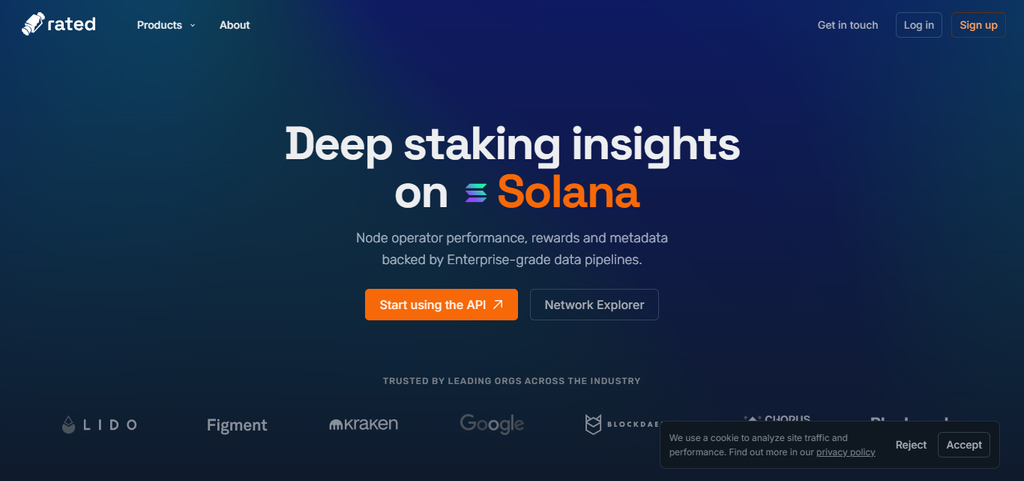
Although Rated is not a primary MEV mitigation consultancy, its validator intelligence allows stakeholders to analyze various performance, infrastructure, operator behavior, and economic elements associated with MEV-enabled validator operations.
Pros & Cons Rated Network
| Pros | Cons |
|---|---|
| Provides detailed validator and staking performance analytics. | Primarily an analytics platform rather than MEV mitigation provider. |
| Helps institutions evaluate validator performance. | Analytics depend on accurate and comprehensive blockchain data. |
| Offers useful infrastructure intelligence for staking decisions. | MEV-specific capabilities are more indirect than Flashbots. |
| Supports data-driven validator selection and monitoring. | Users may need additional tools for active MEV mitigation. |
| Useful for institutional staking research and analysis. | Analytics alone cannot eliminate harmful MEV behavior. |
11. Ultrasound.money
Ultrasound.money focuses more on Ethereum’s supply, issuance, fee burning, and monetary economics rather than direct MEV mitigation. However, it grants access to data that can help analysts study validator economics and MEV research with transaction fee data and on-chain activity, and even the dynamics of the monetary economy of Ethereum.
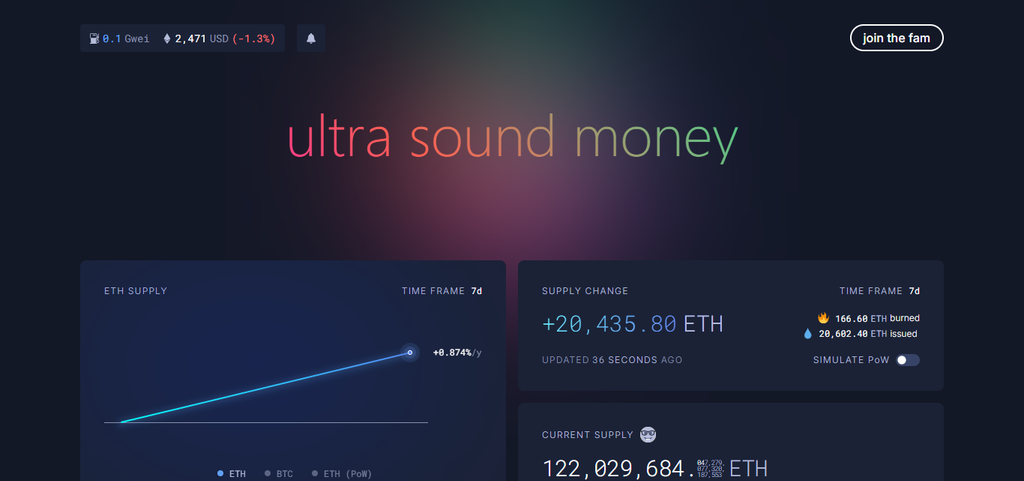
The “ultrasonic money” phrase was popularized in 2020 by a Vitalik Buterin joke about “supersonic money,” to which Justin Drake later added his meme.
The phrase was then popularized by Bankless in 2021. The platform itself offers a wide range of data interfaces on ETH issuance, fee burning, and the post-Merge economy.
Pros & Cons Ultrasound.money
| Pros | Cons |
|---|---|
| Provides accessible Ethereum supply and issuance analytics. | Not a dedicated MEV mitigation consultancy. |
| Helps researchers understand Ethereum’s monetary economics. | MEV information is largely indirect. |
| Useful for analyzing fees and ETH burning. | Limited direct tools for preventing transaction-level MEV. |
| Offers intuitive visualizations of Ethereum economic data. | Primarily Ethereum-focused. |
| Useful educational resource for understanding network economics. | Does not provide customized enterprise MEV consulting services. |
12. Sigma Prime
Sigma Prime provides secure blockchain research and infrastructure consultancy services that leverage its Ethereum knowledge. As MEV systems rely greatly on secure validator infrastructure, Sigma Prime’s services greatly intersect with MEV research.
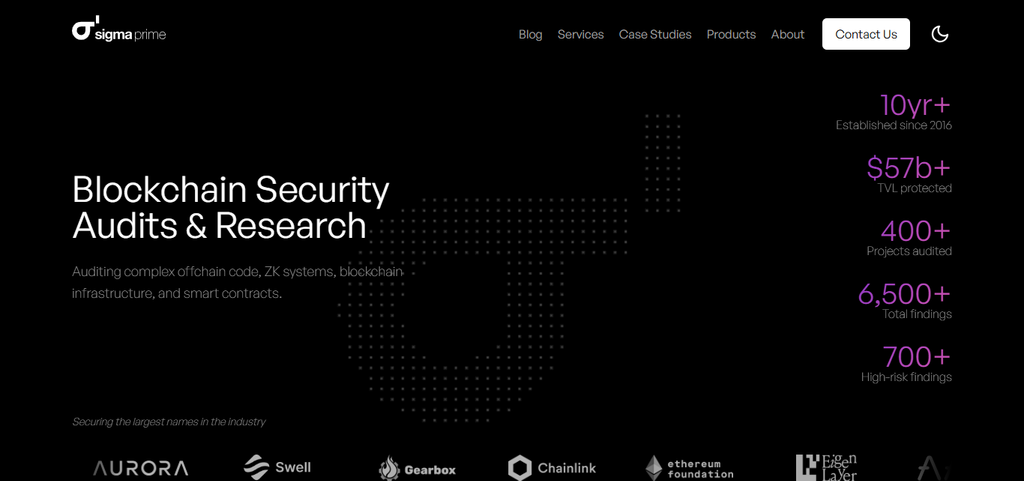
Established in the last days of October 2016 and established afterwards as Ethereum Devcon 2, Sigma Prime focuses on Rust-based Ethereum research and infrastructure as early as 2018.
Sigma Prime continues developing Lighthouse as production infrastructure while delivering security research, audits, and infrastructure on complex blockchain systems.
Pros & Cons Sigma Prime
| Pros | Cons |
|---|---|
| Strong blockchain security and protocol engineering expertise. | Security consulting can be costly for smaller projects. |
| Extensive Ethereum infrastructure experience through Lighthouse. | Primarily security and infrastructure focused rather than MEV-only. |
| Provides sophisticated security auditing and research capabilities. | Highly technical engagements require knowledgeable client teams. |
| Experience with complex blockchain protocol architecture. | Limited public positioning specifically as an MEV consultancy. |
| Strong reputation within the Ethereum infrastructure ecosystem. | Specialized security assessments can require extended engagement timelines. |
Conclusion
In summary, Top MEV Research and Mitigation Consultancies are constructing more secure and fair blockchain ecosystems. Flashbots, Blocknative, Nethermind, Extropy, and Sigma Prime all create valuable research and a variety of tools for security and mitigation.
Clients select vendors based on research and infrastructure needs, complexity of the project and blockchain, risks, and the strategy for mitigating MEV.
FAQ
Mitigation helps protect users from frontrunning, sandwiching, and unfair execution.
Flashbots remains one of the leading organizations researching MEV extensively.
Blocknative provides mempool visibility, transaction monitoring, and MEV infrastructure.
Yes, specialized providers can identify vulnerabilities and recommend mitigation strategies.