

In this article, I will talk about the best wallet intelligence tools for web3 brands. These platforms help businesses analyze wallet behavior, find valuable users, monitor on-chain activity, and understand blockchain audiences.
We’ll compare their key features, supported networks, analytics capabilities, brand use cases, advantages, limitations, and important data considerations to help Web3 teams make informed decisions.
Key Points & Best Wallet Intelligence Tools for Web3 Brands
- Nansen – Best for smart-money labeling, wallet clustering, and behavioral research across 30+ chains.
- Arkham Intelligence – Best free-to-start visual platform for entity resolution and tracking wallet fund flows.
- ChainAware.ai – Best for predictive wallet personas, fraud scoring, auditing, and conversion intelligence.
- Dune Analytics – Best for custom SQL dashboards and community-audited on-chain holder analytics.
- Cookie3 – Best for Web3 marketing attribution and verifying KOL audience quality on-chain.
- Safary – Best for community-led networks combined with on-chain growth and user analytics.
- Formo – Best all-in-one Web3 product analytics stack for tracking DeFi user funnels.
- Spindl – Best for mapping Web3 traffic directly to measurable on-chain conversion events.
- Helika – Best analytics platform for Web3 gaming, player behavior, and wallet intelligence.
- Addressable – Best for connecting Web2 advertising channels with targetable Web3 wallet lists.
- Bubblemaps – Best visual tool for exploring token distributions, wallet clusters, and magic nodes.
- Santiment – Best for behavioral analytics, social activity, and developer metrics across crypto.
- DexCheck AI – Best value for real-time whale tracking, smart-money movements, and DeFi analytics.
- DefiLlama Analytics – Best for tracking protocol TVL, yields, and comparative smart-contract capital flows.
14 Best Wallet Intelligence Tools for Web3 Brands
1. Nansen
Nansen is built for wallet intelligence, with a heavy emphasis on Smart Money detection and individual address profiling. It analyzes wallet balance, transaction history, token flows, DEX activity, PnL, win rates, holdings, and Smart Money tags. These Its wallet-profiling and alerts capabilities are useful for monitoring important activity.
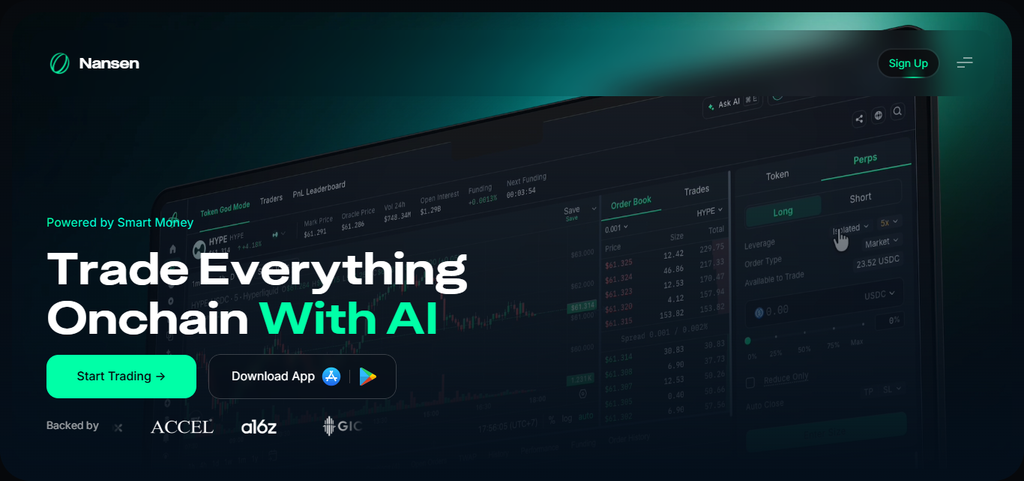
Labels are analytical classifications, not guarantyd real-world identities, so it is important to verify chain-specific feature availability before building workflows around particular datasets. insights for identifying high-value traders
whale tracking, token-holder behavior research, fund flow tracking, and wallet-based audience segment building. Nansen’s API offers cross-chain intelligence for 35+ chains, with some features supported on each chain.
| Pros | Cons |
|---|---|
| Large database of labeled wallets | Expensive for small teams |
| Strong Smart Money and token flow tracking | Free tier is very limited |
| Good multi-chain coverage | Labels can be incomplete or outdated |
| Alerts and portfolio tracking | Geared more to traders than brand marketers |
2. Arkham Intelligence
Arkham Intelligence is about entity identification, wallet attribution, transaction tracing, and visual blockchain investigation. Its platform links wallet addresses to entity labels, portfolio data, transaction histories, counter-parties and interactive transaction graphs. Brands can use it to track whale and institutional movements, monitor competitor or ecosystem wallets, analyze fund flows and set alerts on significant transactions.
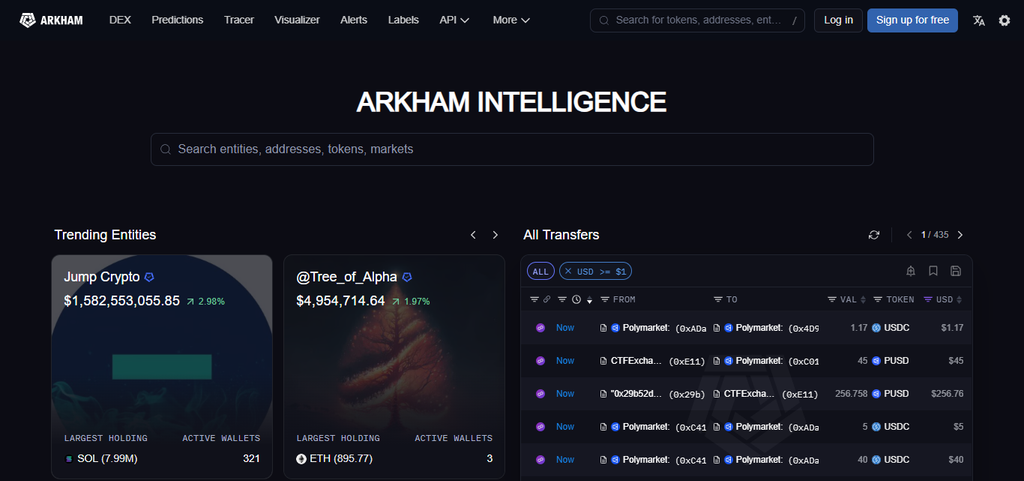
Arkham’s Visualizer allows filtering by date, token, USD value and direction of transaction. Arkham’s explorer can follow funds across multiple chains and intermediary wallets. Custom labels and entity predictions should be used with caution, as user-generated labels can be incorrect and predicted identities are low-confidence classifications.
| Pros | Cons |
|---|---|
| Strong entity and wallet de-anonymization | Labels are not always accurate |
| Visual transaction graphs and alerts | Fewer brand and marketing features |
| Free to use for core features | Some advanced tools are paid or limited |
| Good for tracking funds and whales | Privacy concerns about de-anonymization |
3. ChainAware.ai
ChainAware.ai provides predictive wallet intelligence via behavioral profiling, fraud detection, wallet reputation, segmentation and risk analysis. The data includes transaction patterns, protocol usage, counterparty relationships, wallet age, inflows and outflows, and interactions with potentially risky addresses.
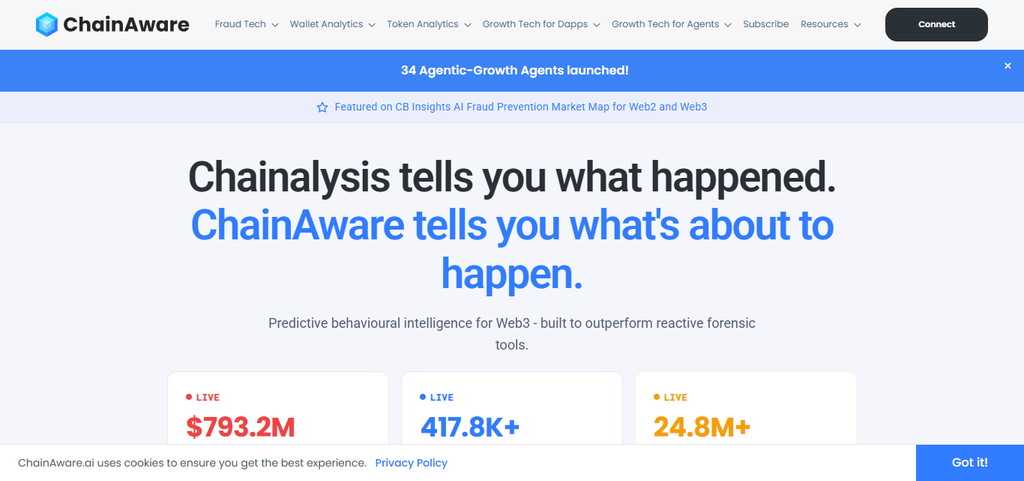
These signals can be used by brands and DeFi protocols for wallet screening, segmentation of audiences, fraud detection, personalized user experiences, and conversion-oriented experiences. The fraud detector supports Ethereum, BNB Smart Chain, Polygon, Base, Solana, TON, Tron and Haqq. Coverage depends on the product and API endpoint. An important limitation is that very new wallets with fewer than about 10-15 transactions may not have enough behavioral history to score reliably.
| Pros | Cons |
|---|---|
| AI-driven wallet scoring and behavior prediction | Newer, with a smaller track record |
| Useful for fraud detection and personalization | Less community validation |
| Helps segment users by intent | Fewer integrations than established tools |
| Supports user targeting for Web3 brands | Accuracy depends on its AI models |
4. Dune Analytics
Dune Analytics is mainly a customizable blockchain data analysis platform that enables brands to use SQL to investigate wallets, transactions, token holders, protocols and user activity. Its DuneSQL engine supports blockchain-specific data types and complex queries, and dashboards convert query results into charts, tables and other visualizations.
Dune currently provides historical data on over 100 chains, providing broad coverage for Web3 teams to perform cross-chain research and reporting. Brands can produce custom wallet reporting, holder dashboards, campaign analysis, and ecosystem monitoring.
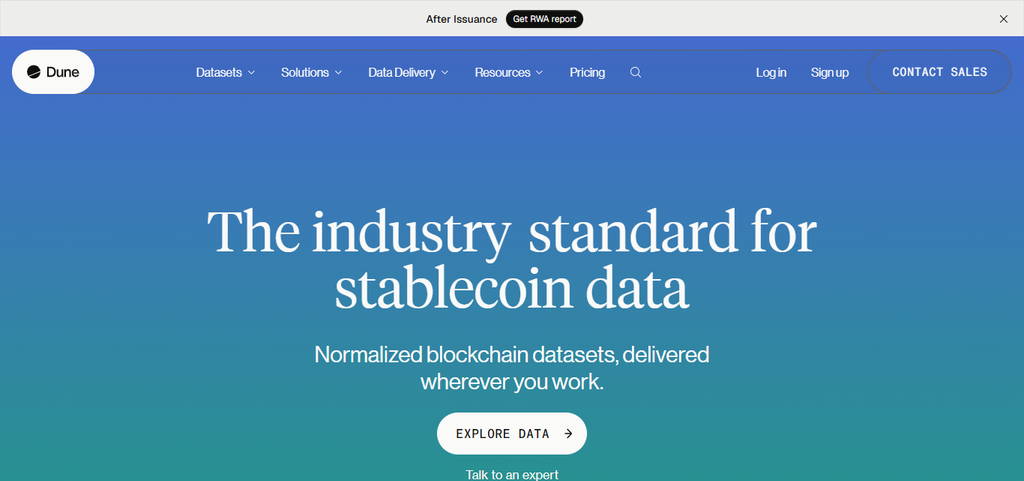
The key takeaway here is that advanced research using Dune requires analytical knowledge and community-built queries (or dashboards) should be validated for their methodology, freshness, and calculation accuracy before being relied on for critical decisions.
| Pros | Cons |
|---|---|
| Highly flexible with custom SQL queries | Requires SQL skills for custom work |
| Huge library of community dashboards | Dashboard quality varies |
| Free tier is available | Not wallet-labeling focused |
| Wide chain and protocol coverage | Heavy queries can be slow or costly |
5. Cookie3
Cookie3 is a Web3 marketing attribution and wallet-level analytics platform that allows brands to link website activity to blockchain activity. It examines visits, wallet connections, transactions, token holdings, smart contract interactions, campaign sources and conversion events. Brands can see which channels are driving wallet connections, NFT mints, token swaps, contract interactions, and other on-chain conversions. For more general wallet analytics,
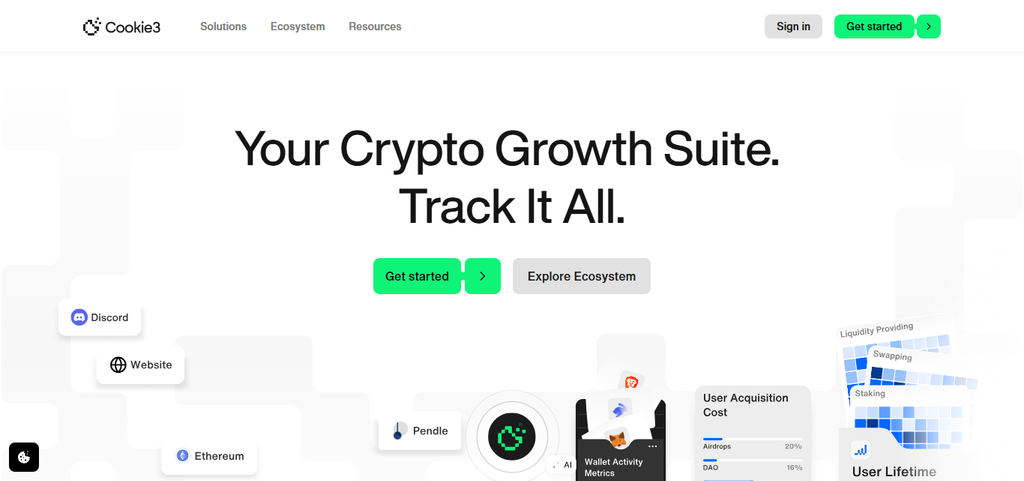
Cookie3 supports EVM networks, TON and Solana. The supported EVM networks are listed in the on-chain conversion-event documentation. Its metrics are visitors, engaged visits, wallets, conversions, conversion value & engagement rates. The important thing to remember is that on-chain attribution does not identify the person behind the wallet but the activity of the wallet with the website visits attached to it.
| Pros | Cons |
|---|---|
| Built for marketing attribution and campaign ROI | Branding and product focus has shifted recently |
| Tracks wallet-level user journeys | Less depth for pure on-chain forensics |
| Includes influencer and social data | Data coverage varies by chain |
| Useful for growth and community teams | Relatively new product |
6. Safary
Safary is a Web3 growth analytics platform that combines on-chain, in-app and social information to help brands understand user behavior and marketing performance. Its wallet intelligence helps teams to identify important wallets, monitor contract interactions, examine wallet sources and create alerts around valuable users.

Rather than simply looking at website traffic, Safary has focused its analytics on finding which marketing channels are driving meaningful on-chain activity. Web3 brands can use this for acquisition tracking, wallet segmentation, retention analysis, campaign measurement and identifying high value users.
A practical consideration is that attribution depends on the quality and breadth of connected marketing and on-chain data. Cross-channel comparisons can become less reliable when campaigns are not measured consistently across channels.
| Pros | Cons |
|---|---|
| Connects social and marketing activity to wallets | Smaller company and ecosystem |
| Good campaign and community tracking | Less suited for deep on-chain research |
| Designed for Web3 growth teams | Pricing is not always transparent |
| Lightweight to set up | Fewer public reviews |
7. Formo
Formo is an analytics and attribution platform for crypto and DeFi apps. It combines product analytics, wallet intelligence, and on-chain attribution. It can link website visits, wallet connections, product events, transactions, token balances, protocol interactions, revenue, retention, and churn into a single, unified user journey.

Brands can build wallet profiles, segment users by portfolio, chain, tokens and behavior and identify high-value wallets such as active users, spenders and whales. Formo says its data covers the major EVM and Solana chains. The primary takeaway is that product analytics relies on implementation and event tracking, and that precise wallet autocapture can rely on integration and framework.
| Pros | Cons |
|---|---|
| Combines web, wallet and onchain data | Newer, with a smaller user base |
| Developer-friendly setup (SDK) | Fewer pre-built labels than Nansen |
| Good funnel and user journey tracking | Needs implementation effort |
| Strong for dApp product teams | Less focus on whale tracking |
8. Spindl
Spindl is a Web3 measurement and attribution platform that connects acquisition sources to on-chain app user behavior. It can evaluate traffic from sources like X, Telegram, referrals, quests, on-chain campaigns and then correlate those sources with wallet activity and conversions.
Brands may utilize Spindl to measure wallet acquisition, measure conversion, track referrals, create audiences, determine if acquired users are generating revenue or remaining active, and measure campaign attribution.
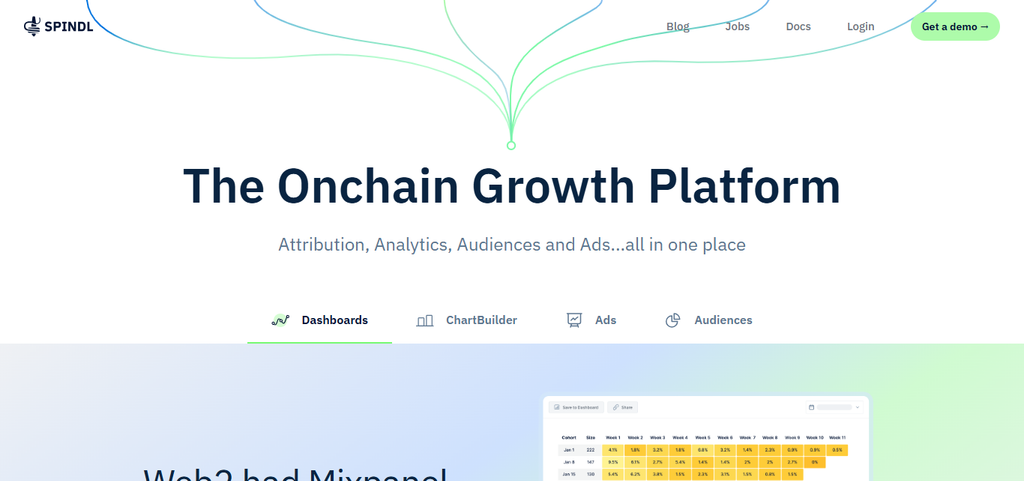
Its platform also allows custom dashboards and audience definitions based on on-chain and off-chain actions. The biggest factor is attribution quality: brands need to have properly implemented tracking and enough campaign data to distinguish meaningful acquisition from basic traffic or wallet connections.
| Pros | Cons |
|---|---|
| Links ad spend to onchain conversions | Product status and ownership may have changed, so verify |
| Strong campaign attribution | Needs integration and tracking setup |
| Built for Web3 advertisers | Narrow focus on marketing |
| Combines onchain and offchain data | Smaller ecosystem than general tools |
9. Helika
Helika focuses on Web3 gaming analytics that tie together game activity with player and blockchain data. Its analytics system tracks events such as player registration, logins, gameplay, gameplay duration and purchases, giving gaming brands visibility into engagement and revenue behavior.
This is useful for player segmentation, retention analysis, acquisition measurement, NFT or asset activity, and how player behavior bridges with Web3 economies. Brands may use these findings to measure game engagement, pinpoint valuable player segments and track monetization.
Helika collects data through SDK integrations and partner integrations. One important point is that the depth of analytics is contingent on the events and data sources that a game actually integrates, so coverage can vary across projects and ecosystems.
| Pros | Cons |
|---|---|
| Specialized for gaming studios | Niche, so less useful outside gaming |
| Player behavior and retention analytics | Requires SDK integration |
| Combines in-game and onchain data | Smaller community |
| Useful for monetization insights | Less general wallet intelligence |
10. Addressable
Addressable links Web2 advertising data with Web3 wallet intelligence, helping brands target and measure wallet-based audiences. Its platform uses on-chain and off-chain activity for audience segmentation, including token ownership, transaction history, chain activity, community behavior and other wallet attributes.
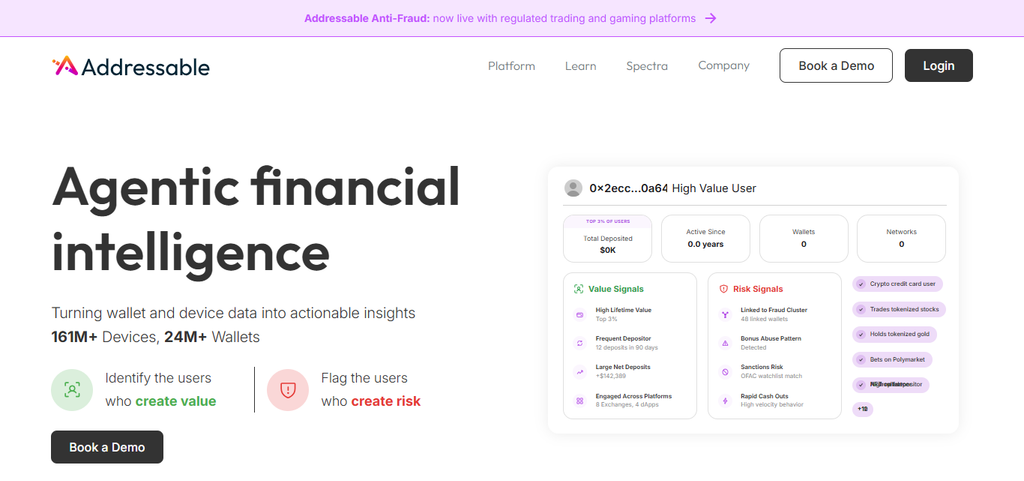
It also enables Web2-to-Web3 attribution, retargeting and cross-channel campaign optimization including X, Reddit and crypto-specific sites. Addressable has more than 23 million matched wallets and audience coverage across multiple blockchains and its platform tracks hundreds of Web2 and Web3 campaign metrics. The main problem is that the matching of wallets to people is still probabilistic or pseudonymous, not a verified identity.
| Pros | Cons |
|---|---|
| Wallet-based audience segmentation | Newer, with limited public information |
| Helps brands target relevant users | Focused on advertising rather than research |
| Links onchain behavior to marketing | Privacy and compliance questions for targeting |
| Good for growth campaigns | Smaller track record |
11. Bubblemaps
Bubblemaps is a visual wallet and token distribution intelligence tool that makes it easier to explore relationships between holders. The maps show major token holders in bubbles, with the size of the bubbles proportional to the holdings and the links as detected wallet relationships.
Clusters may identify sets of wallets that could be controlled by the same entity or exhibit repeat transactional relationships. Bubblemaps can be used by brands to research token-holders, analyze concentration, monitor distribution, investigate treasury and identify coordinated wallet activity.
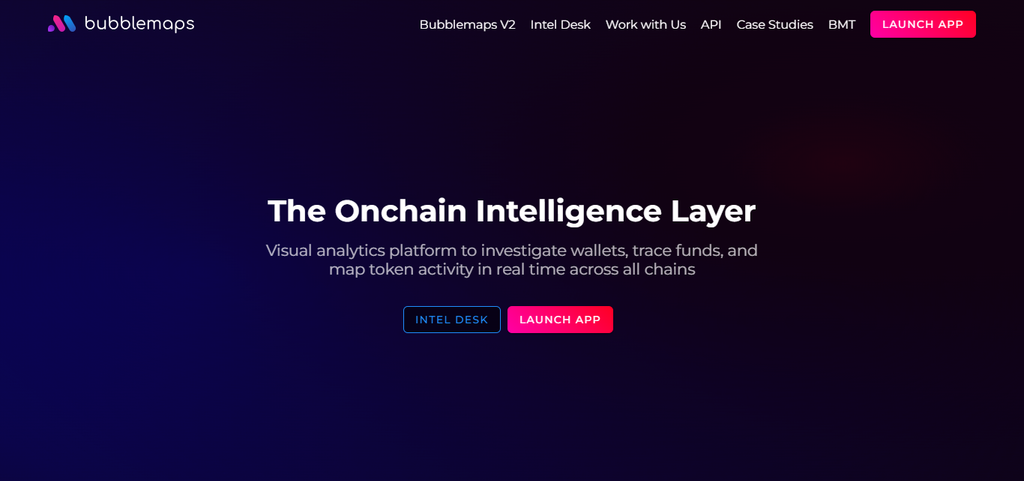
The current platform supports multiple chains including Ethereum, Solana, BNB Chain, Avalanche, Polygon, Base, Arbitrum, etc. The main thing to remember is that visual connections indicate relationships that are worth investigating – not proof of common ownership or intent.
| Pros | Cons |
|---|---|
| Very intuitive visual bubble maps | Narrow use case |
| Quickly reveals holder concentration and insider clusters | Not a full analytics suite |
| Useful for rug-pull and scam checks | Visual clusters can mislead without context |
| Easy for non-technical users | Limited marketing or CRM features |
12. Santiment
Santiment aggregates on-chain, social, market and development data to provide deeper behavioral intelligence around crypto assets and ecosystems. On-chain metrics are active addresses, transaction count and volume, network growth, holder distribution, exchange flows, whale activity and DEX activity. It looks at social volume, sentiment, social dominance and developer activity so that brands can compare blockchain behavior with community attention and development signals.
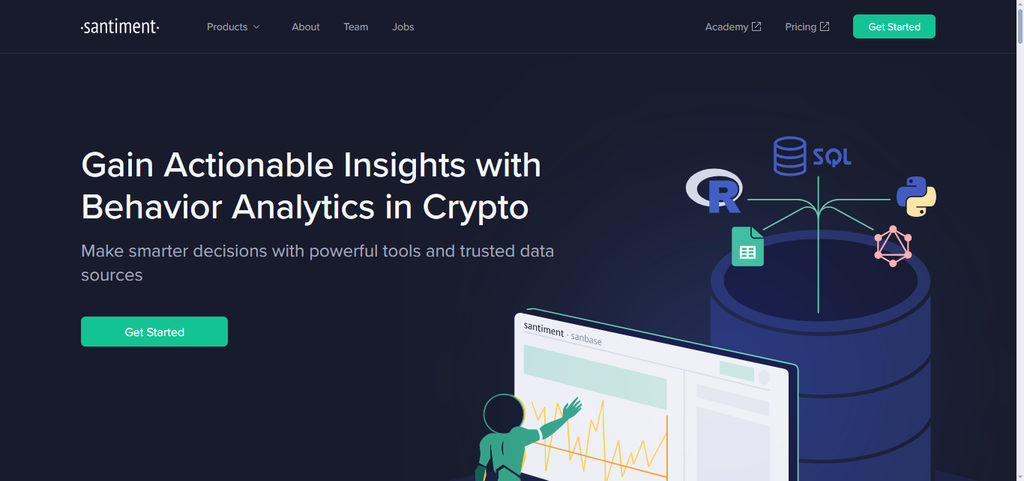
These datasets can be leveraged by Web3 teams for ecosystem monitoring, community research, token-holder analysis and market-intelligence reporting. Reliability of data for development metrics is an important consideration today: In August 2026, Santiment announced that some of the Development Activity metrics based on GitHub data were temporarily unreliable due to a collection issue.
| Pros | Cons |
|---|---|
| Combines on-chain data with social sentiment | Learning curve for the metrics |
| Good for market and crowd behavior signals | Best features need a paid plan |
| Wide range of metrics and alerts | Less wallet-level detail than Nansen |
| Useful for token and community monitoring | More trader-oriented |
13. DexCheck AI
DexCheck AI offers wallet intelligence, Smart Money tracking, whale monitoring, token analytics and comprehensive market data for Web3. Its Wallet Profiler offers labeled wallets, entity tagging, and ENS support; and Smart Money tools track high-performing wallets and capital flows. Brands can use these capabilities for whale monitoring, community research, token holder analysis, competitor tracking, and ecosystem intelligence.

DexCheck also has token and market dashboards, alerts, KOL sentiment analysis, and blockchain data APIs. Its current platform claims to support 26 chains but the network coverage of individual tools may be narrower. The key to remember is that advanced features may necessitate DCK token staking, so brands should check what specific chain and feature coverage is needed for their workflow.
| Pros | Cons |
|---|---|
| Real-time DEX and whale tracking | Newer, with a smaller reputation |
| AI-assisted insights and alerts | Data depth varies by chain |
| Beginner-friendly interface | Less proven for enterprise use |
| Useful for token discovery | Limited brand-marketing features |
14. DefiLlama Analytics
DefiLlama Analytics is a source of complete DeFi intelligence that covers protocols, chains, liquidity, yields, fees, revenue, trading activity, and user activity, not just individual wallet profiling. With its datasets, brands can track TVL, DEX volume, stablecoin liquidity, protocol fees, yields, active addresses, and transaction activity across a multiplicity of ecosystems. Existing chain dashboards offer metrics like number of protocols, TVL, bridged TVL, stablecoin market cap, DEX volume, fees, revenue and active addresses.
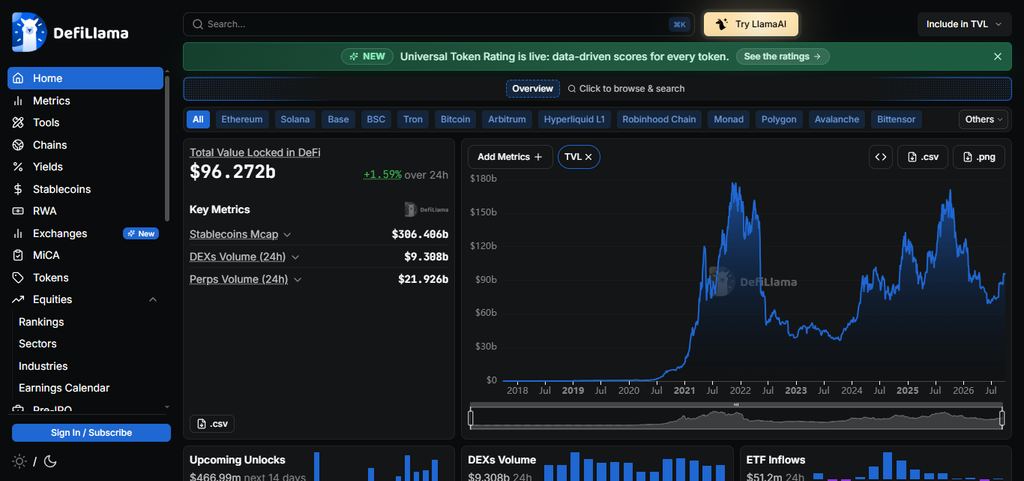
Its tools include custom dashboards, yield watchlists, token liquidity analysis and historical protocol research. It’s useful for ecosystem benchmarking, competitor research, liquidity monitoring and DeFi market analysis for Web3 brands. The main limitation is that methodology is different for each metric and protocol, so teams should review the methodology before comparing datasets.
| Pros | Cons |
|---|---|
| Free, open and widely trusted data | Protocol-level, not wallet-level |
| Very broad chain and protocol coverage | Little user or customer segmentation |
| Transparent methodology | Not built for marketing teams |
| Good for benchmarking competitors | Limited alerts and CRM-style tools |
Conclusion
To summarize Picking the right wallet intelligence tool depends on your Web3 brand’s goals, blockchain coverage needs, analytics needs, and budget. Nansen, Arkham, Dune, Cookie3, Safary, Formo, Spindl and others are experimenting with different approaches to wallet behavior
Attribution, audience analysis and DeFi intelligence. By comparing data quality, integrations, supported networks, and limitations, brands will be able to build improved and more measurable on-chain strategies.
FAQ
They help brands identify valuable wallets, understand user behavior, monitor whale activity, segment audiences, track competitors, and make data-driven marketing and growth decisions.
Nansen is widely used for Smart Money identification, wallet labeling, portfolio analysis, transaction monitoring, and tracking notable wallet activity across supported blockchain networks.
Arkham Intelligence focuses strongly on entity attribution, wallet labeling, transaction tracing, fund-flow analysis, and visualizing relationships between blockchain addresses and entities.
Dune Analytics is suitable for teams wanting customizable SQL queries, blockchain datasets, dashboards, charts, wallet analysis, and tailored on-chain reporting.