

In this article, I will discuss the Best Pendle Finance Rivals for DeFi Yield Trading, highlighting the leading platforms offering yield tokenization, fixed-income opportunities, interest-rate trading, and decentralized lending.
We will explore their core features, key advantages, yield-generation opportunities, and competitive differences to help readers understand the best alternatives to Pendle Finance in the evolving DeFi ecosystem.
How we pick out the best Pendle Finance alternatives for DeFi yield trading
- Technology and Innovation: Explore smart contract technology, automated market makers, tokenization mechanisms, and protocol infrastructure.
- Liquidity and Trading Volume: Examine the liquidity of the market, the level of trading, assets available and efficiency of execution.
- Security and Risk Management: Examine smart contract audits, risk controls, collateral mechanisms, and protocol security measures. 7. User Experience: Assess platform accessibility, interface usability, supported wallets, and transaction efficiency.
- Compatibility with the DeFi Ecosystem: Consider blockchain compatibility, third-party integrations, and connections to other DeFi protocols.
- Competitive Advantage: Discover the unique features of each platform and compare them with Pendle Finance.
Key Points & Best Pendle Finance Rivals for DeFi Yield Trading
| Platform | Explanation |
|---|---|
| Spectra | Enables fixed-yield and variable-yield trading through tokenized interest-bearing assets across DeFi. |
| Exponent Finance | Offers yield tokenization, fixed-rate strategies, and advanced interest-rate trading opportunities. |
| RateX | Provides leveraged yield trading and interest-rate derivatives for DeFi investors. |
| Morpho | Optimizes decentralized lending markets, offering competitive yields through efficient liquidity allocation. |
| Aave V3 | Provides decentralized lending and borrowing with variable interest rates and liquidity markets. |
| Maple Finance | Connects institutional borrowers with lenders through structured, yield-generating decentralized credit markets. |
| IPOR Labs | Develops decentralized interest-rate derivatives, enabling DeFi users to hedge rate exposure. |
| Ondo Finance | Tokenizes real-world assets, providing institutional-grade yield opportunities through blockchain infrastructure. |
| Curve Finance | Facilitates stablecoin swaps and liquidity pools, generating trading fees and yields. |
| EigenLayer | Enables restaking of Ethereum assets, offering additional rewards through shared security services. |
10 Best Pendle Finance Rivals for DeFi Yield Trading
1. Spectra
Spectra is a decentralized protocol for interest rate derivatives that enables users to tokenize and trade yields from interest bearing assets. Fundamentally, it is a protocol that divides yield bearing assets into Principal Tokens (PT) and Yield Tokens (YT) so that investors can separate control of principal and future yield. Spectra enables fixed-rate strategies, variable yield exposure, yield speculation, and liquidity provision via dedicated AMM pools for yield trading.
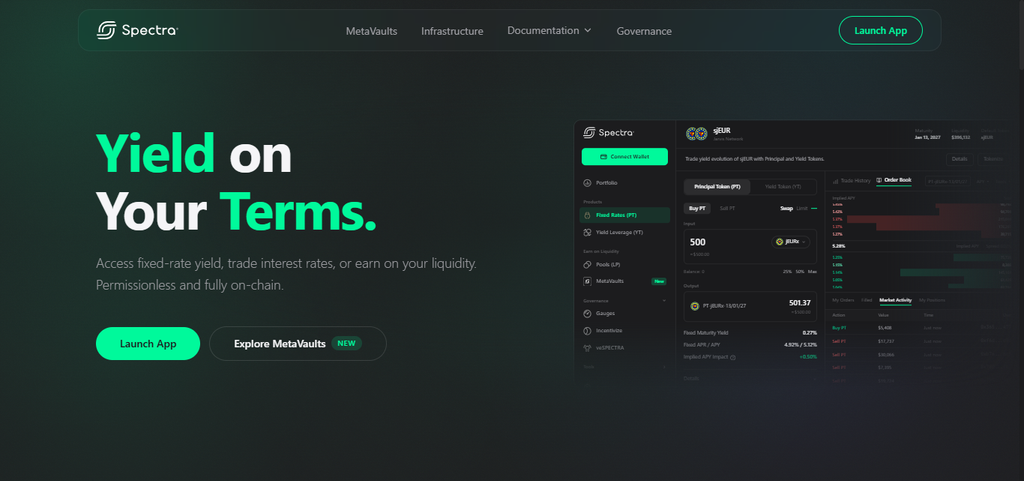
Users can purchase PTs to earn fixed returns or YTs to gain exposure to future yield movements. Its target users are DeFi investors, yield traders, liquidity providers and sophisticated crypto portfolio managers. Spectra competes directly with Pendle in terms of yield-tokenization mechanics, interest rate markets and maturity-based trading opportunities.
Spectra Key Advantages
| Key Advantages | Explanation |
|---|---|
| Yield Tokenization | Separates principal and future yield, enabling independent trading and investment strategies. |
| Fixed-Rate Opportunities | Allows investors to lock predictable yields through Principal Tokens until maturity. |
| Permissionless Markets | Enables users to create yield markets without centralized approval or gatekeepers. |
| Yield Trading AMM | Provides specialized liquidity pools designed for efficient interest-rate and yield trading. |
2. Exponent Finance
Exponent Finance is a yield exchange on Solana that enables investors to earn predictable returns while managing interest-rate exposure. The main purpose is to provide the financial infrastructure to trade fixed and variable yields in the staking, lending and credit markets on Solana.
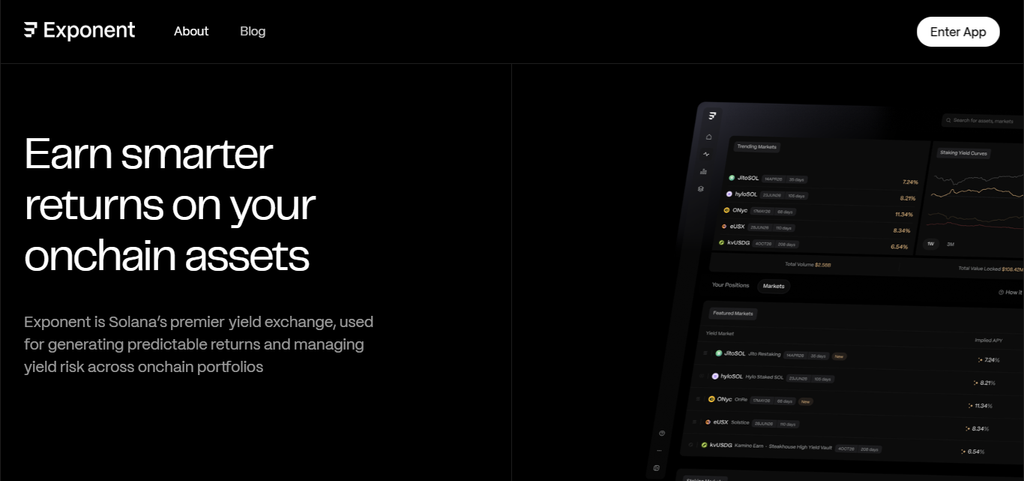
Exponent lets users split yield-bearing assets into Principal Tokens (PT) and Yield Tokens (YT) for yield trading, allowing for fixed rate positions and exposure to changing future yields. It also provides interest rate swaps, liquidity markets and portfolio strategies based on different risk appetites.
Its target users are Solana DeFi investors, professional traders, liquidity providers and asset managers. Pendle’s competitor, Exponent, also tokenizes yields to provide fixed income opportunities and speculate on interest rates.
Exponent Finance Key Advantages
| Key Advantages | Explanation |
|---|---|
| Fixed-Yield Strategies | Enables investors to secure predetermined returns across supported Solana yield markets. |
| Leveraged Yield Exposure | Allows traders to increase exposure to expected changes in underlying yields. |
| Interest-Rate Management | Supports strategies for managing floating-rate exposure and improving return predictability. |
| Risk Tranching | Offers senior and junior investment positions with different protection and risk profiles. |
3. RateX
RateX is a decentralized yield trading protocol that enables users to leverage trade yield bearing crypto assets and spot them. Its main operations are dividing principal and future return through its Standard Token (ST) and Yield Token (YT) system, thus creating room for different investment strategies.
n terms of yield trading, RateX provides leveraged YT positions, fixed-yield strategies, margin trading, and liquidity farming through its specialized automated market maker. Traders can speculate on future yield movements, and liquidity providers earn underlying asset returns and trading-related rewards.
Its intended users are experienced DeFi traders, yield speculators, liquidity providers, and investors that want to use capital-efficient strategies. RateX competes with Pendle via yield tokenization, fixed return opportunities and derivatives-based yield exposure.
RateX Key Advantages
| Key Advantages | Explanation |
|---|---|
| Leveraged Yield Trading | Enables traders to access leveraged positions on future yields of supported assets. |
| Principal-Yield Separation | Separates principal and future yield, creating independent investment opportunities. |
| Fixed-Yield Products | Provides fixed-return strategies for investors seeking more predictable income. |
| Yield Liquidity Farming | Allows liquidity providers to participate in yield markets and earn potential rewards. |
4. Morpho
Morpho is a decentralized, non-custodial lending and borrowing protocol that enables users to access bespoke crypto lending markets. Its main function is to connect lenders and borrowers through overcollateralized markets where users can deposit electronic assets to earn interest or borrow against the collateral they have deposited.
Morpho offers variable-rate lending via Morpho Blue and fixed-rate lending markets via Morpho Midnight for yield generation. Its customizable market infrastructure allows investors and applications to access a variety of lending opportunities and interest rate strategies.
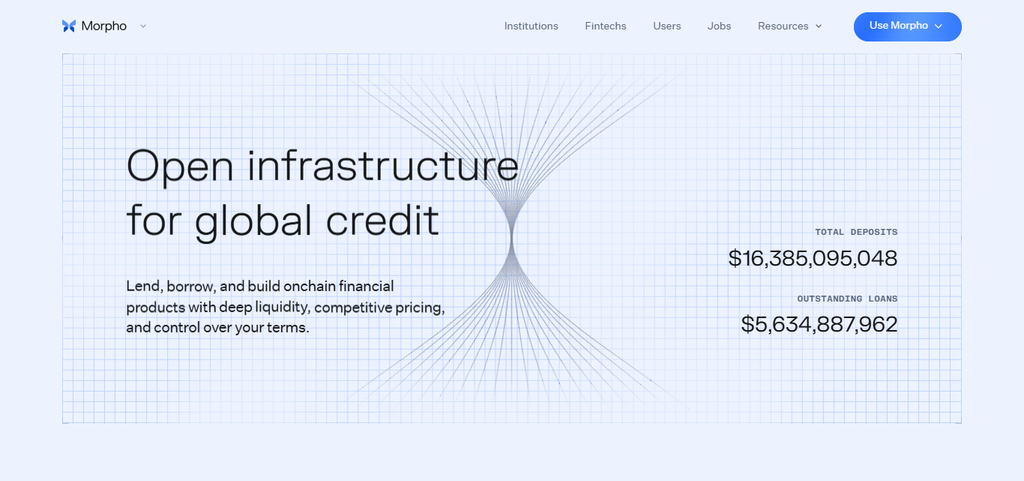
The platform’s target users are DeFi lenders, borrowers, institutional investors, vault curators and asset managers. Morpho is an indirect competitor to Pendle in the sense that its lending markets generate interest-bearing assets that can underpin wider yield-trading strategies.
Morpho Key Advantages
| Key Advantages | Explanation |
|---|---|
| Capital Efficiency | Connects lenders and borrowers through optimized, customizable lending markets. |
| Isolated Markets | Separates market risks, helping contain potential issues within individual lending markets. |
| Fixed and Variable Rates | Supports different interest-rate structures through Morpho Blue and Morpho Midnight. |
| Non-Custodial Lending | Allows users to maintain control of assets through decentralized smart contracts. |
5. Aave V3
Aave V3 is a non-custodial, decentralized lending and borrowing protocol that lets users earn interest on deposited cryptocurrencies. Its primary role is to create liquidity markets where depositors provide assets and borrowers can obtain funds by posting collateral.
Variable interest rates based on supply utilization and borrowing demand to generate yield . Assets supplied generate interest-bearing aTokens that gain yield over time . These interest-bearing tokens can also act as underlying assets for other DeFi yield strategies and integrations.
Target users are passive income investors, crypto borrowers, liquidity providers, developers, and institutional participants. Aave V3 is an indirect Pendle competitor as it generates lending yields that can then be tokenized and traded via specialized protocols.
Aave V3 Key Advantages
| Key Advantages | Explanation |
|---|---|
| Passive Lending Income | Allows depositors to earn interest by supplying supported cryptocurrencies. |
| Capital Efficiency | Efficiency Mode improves borrowing capacity for correlated assets. |
| Multichain Availability | Operates across multiple blockchain networks, expanding access to lending markets. |
| Developer Integration | Provides smart contracts and developer tools for building DeFi applications. |
6. Maple Finance
Maple Finance is a decentralized digital asset lending platform with a focus on institutional credit and income-generating investment opportunities. Its essence is to connect institutional borrowers and capital providers through structured lending markets and professionally managed credit strategies.
Maple generates yield primarily through fixed rate overcollateralized institutional loans, DeFi liquidity providing, and futures basis trading. Through its Syrup products, it provides access to institutional lending strategies through blockchain-based investment products.
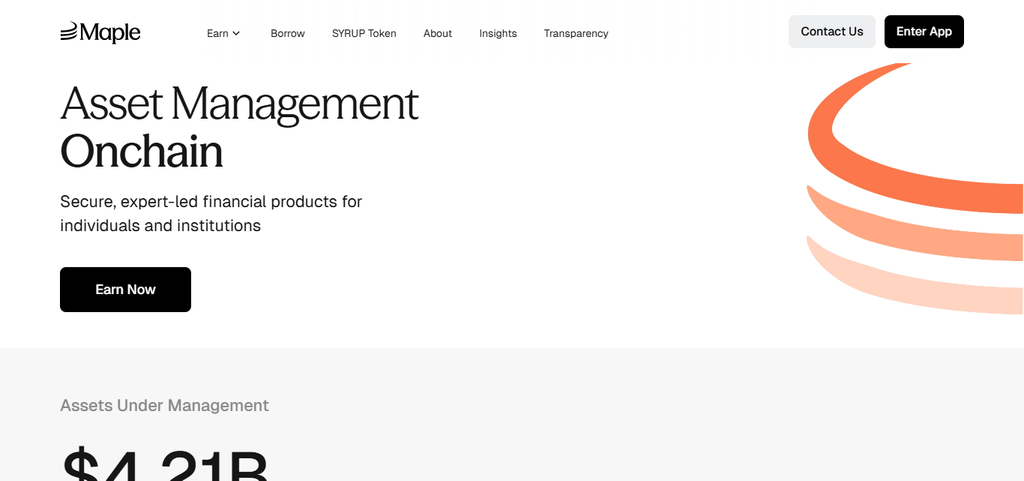
Target users of the platform are institutional investors, crypto lenders, digital asset funds and individual investors seeking credit-based income generation opportunities. Maple is an indirect competitor to Pendle as both offer access to yield-generating financial products, but Maple focuses on institutional credit rather than dedicated yield derivatives and tokenization.
Maple Finance Key Advantages
| Key Advantages | Explanation |
|---|---|
| Institutional Lending | Connects institutional borrowers with capital providers through structured lending markets. |
| Credit-Based Yield | Generates potential returns through institutional credit and lending strategies. |
| Professional Management | Uses specialized managers to oversee lending strategies and borrower relationships. |
| Onchain Investment Access | Provides blockchain-based access to selected institutional investment and income products. |
7. IPOR Labs
IPOR Labs develops decentralized financial infrastructure for DeFi markets focused on interest rate derivatives and risk management solutions. Its main function is to build onchain interest-rate benchmarks, liquidity pools and automated market makers that allow derivative contracts. Yield trading IPOR supports interest-rate swaps, allowing participants to swap exposure to fixed and floating interest rates.
The instruments allow investors to hedge borrowing costs, manage returns on lending and speculate on future movements in interest rates. Liquidity providers can deposit capital into derivative markets and earn a share of the applicable trading fees and contract outcomes.
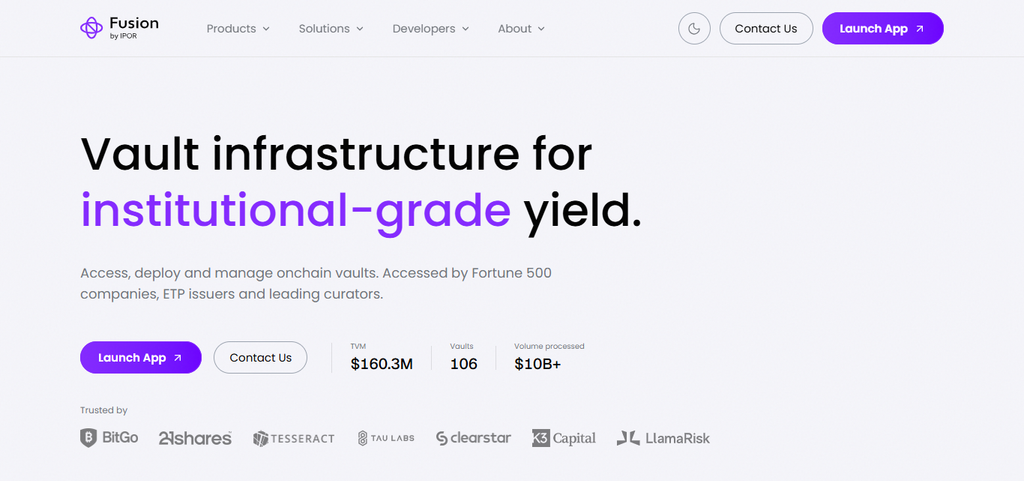
Its target users are professional DeFi traders, institutional investors, borrowers and lenders and liquidity providers. IPOR competes with Pendle with interest rate derivatives and yield risk management.
IPOR Labs Key Advantages
| Key Advantages | Explanation |
|---|---|
| Interest-Rate Derivatives | Enables decentralized trading through fixed and floating interest-rate swap contracts. |
| Yield Risk Management | Helps investors hedge exposure against changing DeFi lending and borrowing rates. |
| Interest-Rate Benchmarks | Provides onchain reference rates for analyzing decentralized interest-rate markets. |
| Liquidity Opportunities | Allows liquidity providers to participate in decentralized interest-rate derivative markets. |
8. Ondo Finance
Ondo Finance is a decentralized finance and real-world asset tokenization platform focused on bringing traditional financial products onto blockchain networks. Its main objective is to convert traditional assets, such as short-term United States Treasury exposure, into blockchain-based investment products. Ondo also has a yield product,
USDY, and an institutional money market product, OUSG, that both offer exposure to returns on short-term Treasuries and institutional money market assets. These products provide eligible investors with access to tokenized financial instruments, facilitated by blockchain-based transfer and redemption infrastructure.

It is targeting institutional investors, eligible retail investors, stablecoin holders and digital asset portfolio managers. Indirect competitor to Pendle, Ondo can provide more opportunities for DeFi integrations and yield-management strategies through its tokenized yield-bearing assets.
Ondo Finance Key Advantages
| Key Advantages | Explanation |
|---|---|
| Real-World Asset Tokenization | Brings traditional financial assets, including Treasury exposure, onto blockchain networks. |
| Yield-Bearing Products | Offers tokenized products designed to provide exposure to traditional asset income. |
| Institutional Accessibility | Connects eligible investors with blockchain-based institutional financial products. |
| DeFi Integration | Creates opportunities to integrate tokenized real-world assets into decentralized financial applications. |
9. Curve Finance
Curve Finance is a decentralized exchange and automated market maker that is primarily designed for efficient trading between similar-priced assets, like stablecoins and tokenized assets. Its main function is to offer deep liquidity pools and low-slippage swaps between the supported blockchain networks.
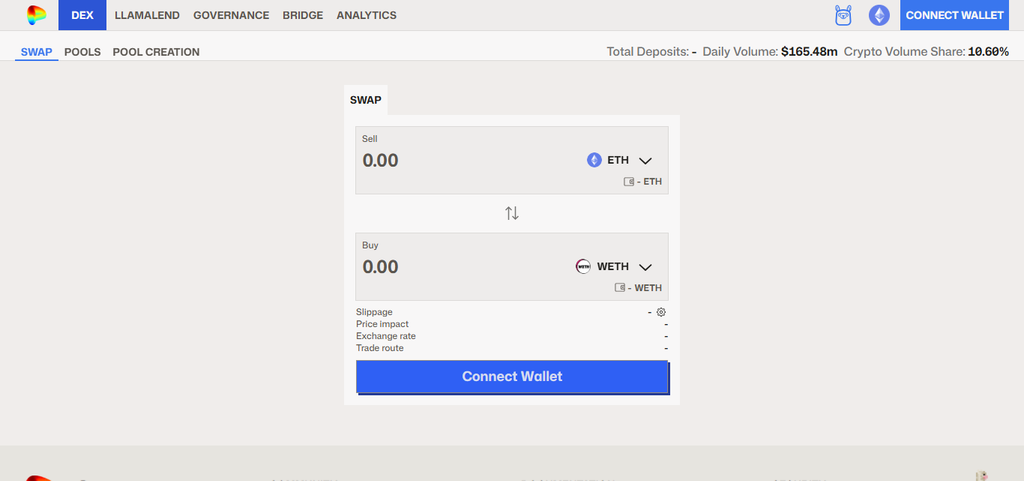
Curve enables liquidity providers to earn trading fees by depositing assets into pools to generate yield, with additional CRV incentives available through liquidity programs that qualify. It also has crvUSD and lending markets in its ecosystem — more opportunities for decentralized borrowing and savings strategies.
Its target users are stablecoin traders, liquidity providers, DeFi investors, yield farmers and protocols that need dependable liquidity infrastructure. Curve is an indirect competitor to Pendle in that its liquidity pools allow for yield-generating assets and wider DeFi trading strategies.
Curve Finance Key Advantages
| Key Advantages | Explanation |
|---|---|
| Low-Slippage Trading | Optimizes swaps between similarly priced assets through specialized automated market makers. |
| Deep Liquidity | Supports liquidity pools designed for efficient stablecoin and pegged-asset trading. |
| Liquidity Provider Rewards | Enables liquidity providers to earn trading fees and eligible additional incentives. |
| Stablecoin Infrastructure | Provides decentralized stablecoin trading and lending infrastructure across supported markets. |
10. EigenLayer
EigenLayer is an Ethereum based restaking protocol that enables users to reuse staked ETH and eligible liquid staking tokens to secure additional blockchain services. Its primary goal is to extend the economic security of Ethereum to Actively Validated Services (AVSs) so that decentralized applications can use shared security infrastructure.
Restakers can delegate assets to operators that support AVSs for yield generation and potentially earn additional rewards on top of underlying staking returns. Opportunities also carry extra risks, including those related to cutting and operators.
Its target users: Ethereum stakers, liquid staking investors, node operators, institutional participants, and blockchain developers. Restaking indirectly competes with Pendle by creating additional yield-bearing assets and reward opportunities that can be used in broader DeFi yield strategies.
EigenLayer Key Advantages
| Key Advantages | Explanation |
|---|---|
| Ethereum Restaking | Allows users to restake eligible assets to support additional blockchain services. |
| Additional Reward Opportunities | Creates potential rewards through participation in Actively Validated Services. |
| Shared Security | Extends Ethereum’s economic security to supported decentralized services and applications. |
| Ecosystem Expansion | Supports developers building decentralized services using Ethereum’s existing staking infrastructure. |
Conclusion
To summarize : Selecting the Best Pendle Finance Alternatives for DeFi Yield Trading depends on your investment goals, risk appetite, and preferred yield strategies.
Spectra, Exponent Finance, and RateX are more yield-trading platforms, while Morpho, Aave, Maple etc. are complementary. Investors should consider features, liquidity, security and potential returns when picking an appropriate DeFi platform.
FAQ
Spectra, Exponent Finance, and RateX support yield tokenization, enabling separate principal and future yield trading.
Spectra offers principal-yield separation, fixed-rate strategies, variable-yield exposure, and specialized decentralized trading markets.
Morpho is an indirect competitor, focusing primarily on decentralized lending, borrowing, and optimized capital allocation.
Pendle, Spectra, Exponent Finance, and RateX offer strategies for accessing fixed-yield opportunities across supported markets.