


This article will cover the Top Cross-Chain Bridges. Cross-Chain Bridges allow for the transfer of assets and data between different blockchains and help establish interoperability, liquidity, and scalability to the Web3 framework.
This article examines major players, such as Layer Zero and Wormhole, and assesses how they are improving the speed, security, and efficiency for users in DeFi on a global scale.
What are cross-Chain bridges?
Cross-chain bridges enable transfers between disparate blockchains of digital assets and data. By allowing users the ability to move tokens, NFTs, and even data across separated ecosystems, these bridges close the the gaps of interoperability.
Transaction processing occurs via security and smart contracts, validators, or liquidity pools. Cross-chain bridges even greater scope of accessibility to the crypto ecosystem while making decentralized applications even better through the improved flexibility of cross-chain bridges.
Key Considerations for Choosing a Secure Cross-Chain Bridge
- Smart Contract and Security Audit Reliability – Look for bridges with smart contracts backed by security audits.
- Blockchain Network Support – Bridges should support the blockchains required for the crypto asset transfer.
- Quick Transfers and Low Fees – Transfers should happen quickly and cost as little as possible.
- Sufficient Liquidity – Bridges should have liquidity to transfer assets without problems.
- Excellent UX – Bridges should have a good design for a better user experience.
- Optimum Decentralization – More decentralization means less control and more security.
- Good Reputation and Security History – Look for trust and a lack of problems in the history of the bridge.
Key Points & Best Cross-Chain Bridges
| Bridge | Explanation |
|---|---|
| LayerZero | LayerZero enables omnichain messaging for interoperability across blockchains securely efficiently |
| Wormhole | Wormhole connects blockchains enabling asset transfers and cross-chain communication protocol |
| Axelar | Axelar provides secure cross-chain communication infrastructure for decentralized applications ecosystems |
| Stargate Finance | Stargate Finance enables instant cross-chain liquidity transfers using unified pools |
| Hop Protocol | Hop Protocol facilitates fast token bridging between Ethereum layer-two networks |
| Synapse Protocol | Synapse Protocol enables cross-chain swaps and generalized interoperability across networks |
| Celer cBridge | Celer cBridge provides low-cost cross-chain transfers across multiple blockchains secure |
| Polygon Bridge | Polygon Bridge connects Ethereum with Polygon for scalable asset movement |
| Connext Network | Connext Network enables trust-minimized cross-chain transfers using secure routing protocol |
| Avalanche Bridge | Avalanche Bridge connects Ethereum and Avalanche for efficient asset transfers |
10 Best Cross-Chain Bridges
1. LayerZero
LayerZero employs a unique novel approach to cross-chain communication, a combination of lightweight messaging and decentralized verification. Unlike traditional models, it does not rely on locked liquidity. LayerZero custody’s assets while sending them via cross-chain communication.
LayerZero reduces bridge exploits and improves scalability with this type of architecture, leading to greater trust and utilization of the bridge.
LayerZero has quickly become one of the most popular infrastructure layers of choice for developers of cross-chain dApps. Recent movements by LayerZero have been about expanding cross-chain compatibility of their services, including the EVM and non-EVM chains.
LayerZero Pros & Cons
| Pros | Cons |
|---|---|
| Extremely fast omnichain messaging system | Complex architecture for beginners |
| No need for wrapped asset model | Still dependent on third-party integrations |
| Strong adoption across DeFi ecosystems | Some components are not fully decentralized yet |
| Highly scalable for multi-chain apps | Limited transparency in some message routing cases |
2. Wormhole
Wormhole enables the transfer of tokens and messages across multiple chains, such as Solana, Ethereum and BNB Chain. Wormhole functions as a decentralized network of validators. Wormhole has expanded from a bridging tool to a complete interoperability layer used by various applications across DeFi, governance and NFT’s.
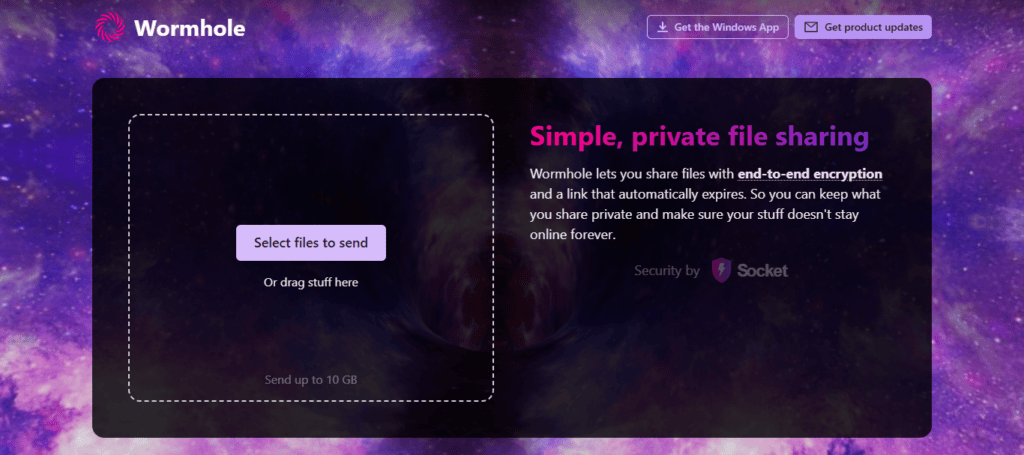
Although Wormhole has previously struggled with security, it has strengthened its network of guardians and implemented better audits. Wormhole’s integration into multiple chains supports developers of cross-chain dApps by providing a liquid platform for the transfer of assets across chains. For these reasons, Wormhole is one of the most popular bridges.
Wormhole Pros & Cons
| Pros | Cons |
|---|---|
| Supports many major blockchains (Solana, Ethereum, etc.) | Past security breaches raised trust concerns |
| Strong ecosystem for NFTs and DeFi | Can be expensive during high network congestion |
| Highly versatile messaging layer | Relies on validator (guardian) network |
| Large developer adoption base | Complex bridging process for beginners |
3. Axelar
Axelar is designed to provide blockchain ecosystems with programmable communication. Developers can now create cross-chain apps that go beyond simply moving assets from blockchain to blockchain. Axelar provides a unique architecture with a validator consensus plus gateways and a universal routing protocol.
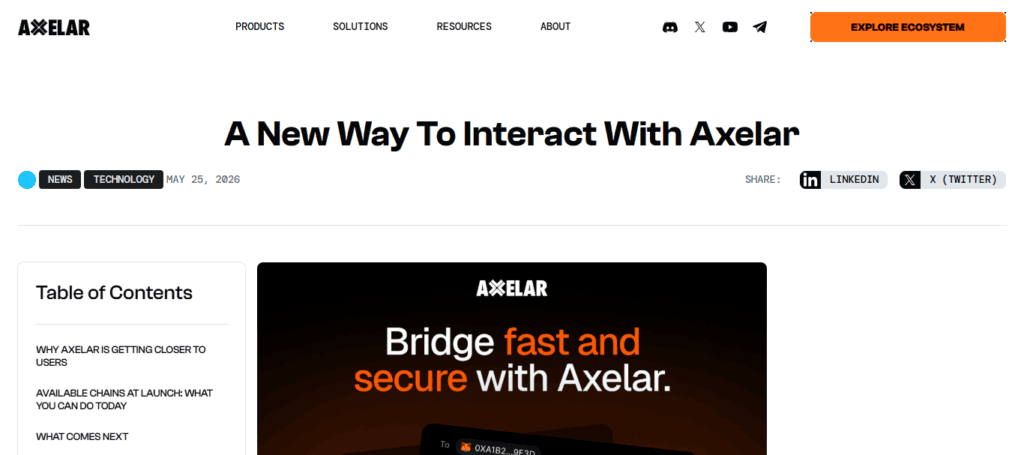
Axelar is the first choice of many enterprises when integrating blockchain systems because of its architecture and the fact that it is a secure and reliable integration. In the latest updates, Axelar is working on cross-chain smart contract execution and interoperability with Cosmos and Ethereum blockchains plus emerging Layer 1 networks.
Axelar Pros & Cons
| Pros | Cons |
|---|---|
| Strong decentralized validator security model | Slower than some liquidity-based bridges |
| Excellent cross-chain smart contract support | Still expanding chain integrations |
| Enterprise-level reliability | Higher complexity for developers |
| Supports generalized messaging, not just tokens | Limited retail-focused UX improvements |
4. Stargate Finance
Stargate Finance is a LayerZero built liquidity transport protocol. Stargate allows for native asset transfers across multiple blockchains without the need for any wrapping of tokens. This sets Stargate apart from many other cross-chain transfer protocols.
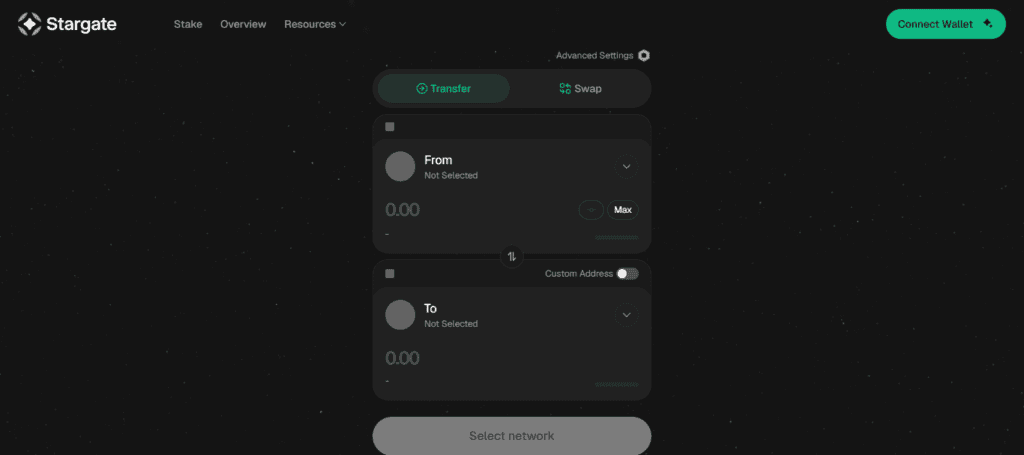
Stargate provides a model of narrow slippage liquidity pooling with magnificent finality. Stargate g Fassest ecosystem of DeFi integrations.
This efficient model has ushered in a less fragmented liquidity ecosystem. Stargate has achieved deeper integrations with additional decentralized exchanges and yield ecosystems in producing a multichain liquidity infrastructure.
Stargate Finance Pros & Cons
| Pros | Cons |
|---|---|
| Instant finality for cross-chain transfers | Dependent on liquidity pool depth |
| Uses unified liquidity pools (no wrapped tokens) | Higher usage fees during volatility |
| Deep integration with DeFi protocols | Limited support for non-EVM chains |
| Very low slippage transfers | Can face liquidity imbalance risks |
5. Hop Protocol
Hop Protocol is a rollup-to-rollup bridging solution focused on Ethereum Layer 2 networks like Arbitrum, Optimism, and Polygon. It facilitates quicker and cheaper token transfers by using bonders to provide liquidity and enable transfers before the final settlement to the destination chain occurs.
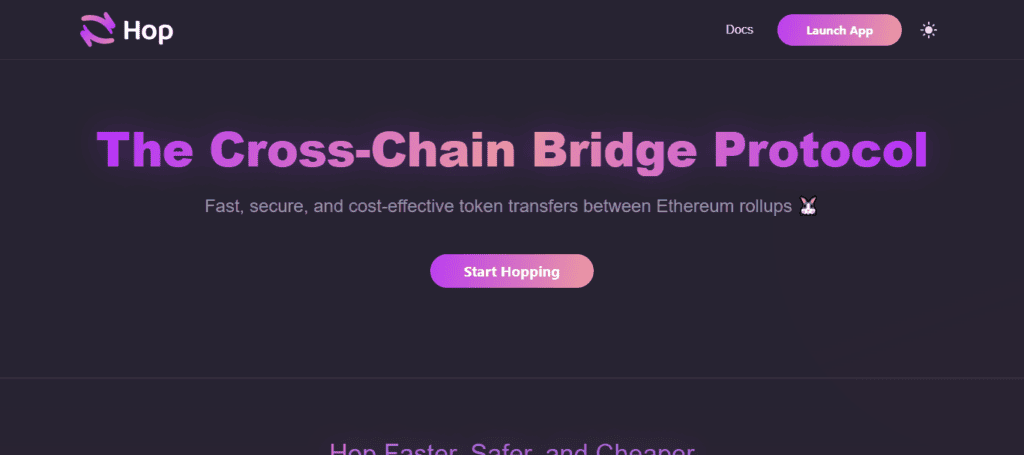
Due to this design, users of Hop Protocol experience much shorter transfer times in comparison to bridging technologies. This Protocol is preferred by DeFi traders moving assets in the Layer 2 Ecosystem.
Current focus for Hop Protocol has been on cost of transfer and increasing the variety of supported tokens. This focus has helped Hop Protocol to maintain dominance in Ethereum scaling interoperability.
Hop Protocol Pros & Cons
| Pros | Cons |
|---|---|
| Very fast Layer 2 to Layer 2 transfers | Mainly focused on Ethereum ecosystem |
| Low transaction fees | Requires liquidity providers (bonders) |
| Strong for DeFi trading strategies | Limited blockchain coverage |
| Reduces waiting time significantly | Not ideal for large cross-chain asset diversity |
6. Synapse Protocol
A versatile bridging protocol, Synapse Protocol enables cross-chain swaps and communications on both EVM and non-EVM blockchains. Synapse Protocol integrates AMM liquidity and cross-chain liquidity to simplify direct network token transfers for users and eliminates the need for wrapping.
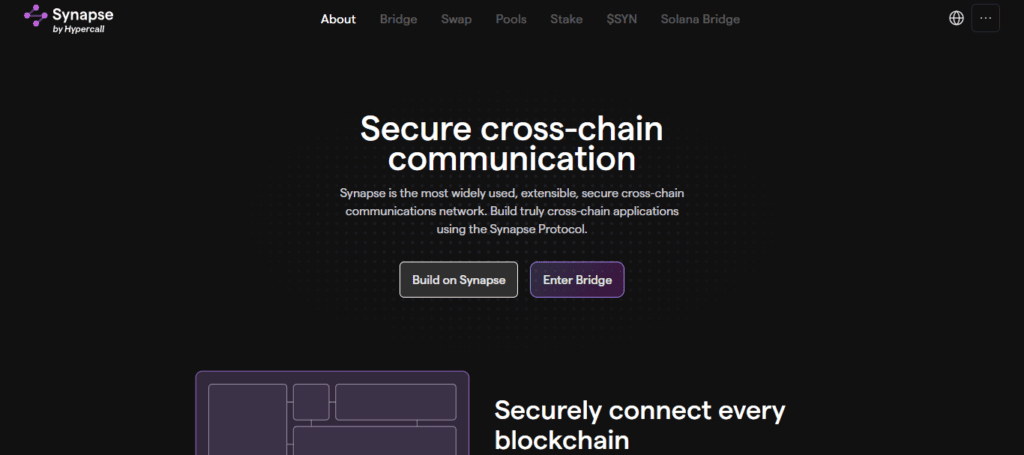
Furthermore, Synapse Protocol is a versatile tool for developers as it allows cross-chain transfer of generalized data. This Protocol places high value on fast operations, liquidity, and decentralized validation.
Synapse Protocol has been recently focusing on providing connectivity to newer Layer 1s to further improve security of its bridging solutions. This focus makes Synapse Protocol a preferred option for both the end user and DeFi protocols needing cross-chain services.
Synapse Protocol Pros & Cons
| Pros | Cons |
|---|---|
| Supports both EVM and non-EVM chains | Interface can feel complex for new users |
| Combines AMM + cross-chain messaging | Liquidity fragmentation risk |
| Fast and flexible asset swaps | Higher slippage on low-volume assets |
| Strong ecosystem adoption | Security depends on bridge liquidity model |
7. Celer cBridge
Celer cBridge is an advanced cross-chain asset bridge by the Celer Network. cBridge supports over 40 blockchains and Layer 2 networks, making it a highly versatile asset bridge. By employing a unique mix of state channel technology and liquidity pools, cBridge is able to offer quick transaction finality with minimized fees.
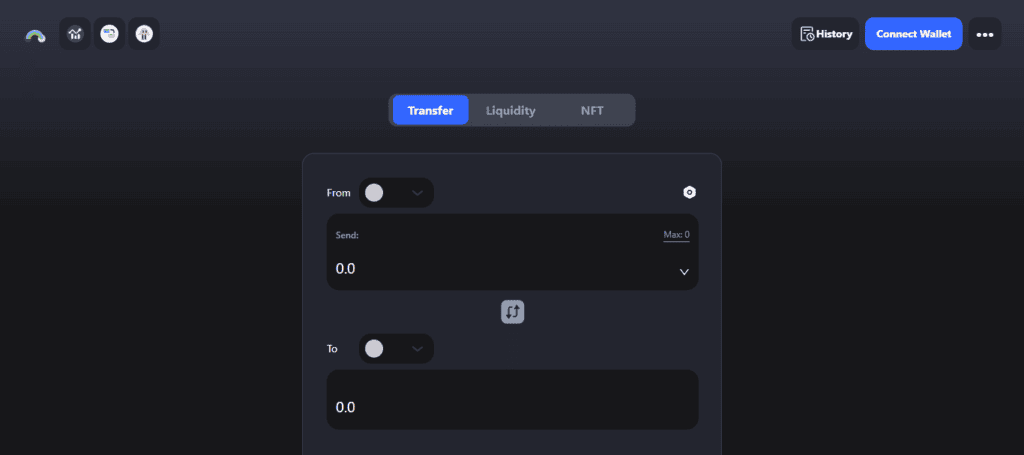
cBridge is most commonly used to transfer assets between ecosystems and is favored for transferring stablecoins and DeFi tokens. cBridge is focused on providing decentralized security of its services through fraud-proof state channels and a validator network.
Recent additions focused on user routed optimization, and support for additional blockchains, have increased cBridge’s value and efficiency, making it one of the most cost-competitive bridge solutions currently available.
Celer cBridge Pros & Cons
| Pros | Cons |
|---|---|
| Supports 40+ blockchains and L2 networks | Occasional network congestion delays |
| Very low fees and high efficiency | UI can be technical for beginners |
| Strong security via state channel tech | Liquidity depends on pool availability |
| Fast transaction finality | Not fully decentralized governance |
8. Polygon Bridge
Polygon Bridge is the primary solution for transferring tokens between Ethereum and Polygon’s Layer 2 network. Combining both Plasma and proof of stake (PoS) processes, Polygon Bridge can optimize either security or speed based on the asset being transferred.
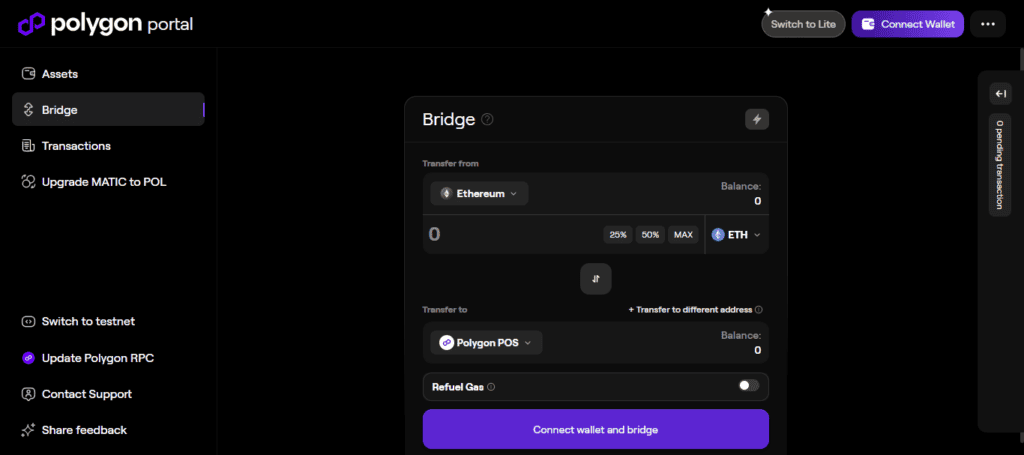
As such, Polygon Bridge is an effective asset transfer solution for developers looking to manage Ethereum gas fees, while simultaneously maximizing transaction throughput. Enhancements to the Polygon ecosystem have focused on faster withdrawal times, improved user experience, and more robust integrations with the Polygon zkEVM.
As the Polygon ecosystem continues to grow and integrate more of its Modular Layer 2 framework, Polygon Bridge will be essential to its multi-chain approach.
Polygon Bridge Pros & Cons
| Pros | Cons |
|---|---|
| Official Ethereum–Polygon connection | Primarily limited to Polygon ecosystem |
| Low gas fees for transfers | Withdrawal times can be slow (PoS mode) |
| Strong NFT and DeFi support | Complex dual bridge system (PoS & Plasma) |
| Highly reliable and widely used | Less flexible for non-Polygon chains |
9. Connext Network
Given that cross-chain protocols are important for the future development of Decentralized Finance, the Connext Network has emerged as a promising offering in this niche. This trust-minimized, cross-chain, data and asset transfer solution focuses on security and has no custodial risks.
Connext offers developers a way to build and integrate complex multichain applications and tools. Thanks to its modular routing and security infrastructure, Connext is becoming a popular choice for cross-chain communication. Developers utilize the Connext framework to build cross-chain governance and DeFi composability applications.
Connext Network Pros & Cons
| Pros | Cons |
|---|---|
| Trust-minimized architecture | Smaller liquidity compared to major bridges |
| Strong security focus | Limited mainstream adoption |
| Good for cross-chain dApps | Fewer supported chains than competitors |
| No custodial risk model | Can be slower for large transfers |
10. Avalanche Bridge
As its name implies, the Ethereum to Avalanche Bridge connects the Ethereum and Avalanche networks. Fast and easy asset transfers are made possible thanks to the consortium-based validation model. Like many of the cross-chain bridges
Avalanche Bridge supports the transfer of ERC-20 tokens, and has improved the speed and cost of moving assets into the Avalanche network. With its focus on the user experience, its recent updates have reduced transfer wait times. This makes the Bridge a critical component for the expansion of Avalanche’s DeFi and gaming ecosystems.
Avalanche Bridge Pros & Cons
| Pros | Cons |
|---|---|
| High security consortium-based model | Limited to Ethereum–Avalanche ecosystem |
| Fast and efficient transfers | Not suitable for multi-chain diversity |
| Low-cost bridging experience | Requires Avalanche ecosystem usage |
| Strong DeFi + gaming integration | Centralized validator elements exist |
The Future of Cross-Chain Bridge Technology
- Expanded blockchain interoperability – More cross-chain bridges will mean more connections between multiple networks and the ability to transfer assets easily across more of the decentralized ecosystem.
- Enhanced security protocols – Future cross-chain bridges will have new security measures that will include more thorough audits and improved validation systems.
- Zero-knowledge proof bridges – Cross-chain bridges will have increased privacy and security using ZK technology that allows proof of transfer across chains without revealing any of the transaction data.
- Expanded cross-chain adoption by enterprises – More enterprises and financial institutions will use cross-chain bridges to integrate multiple blockchains and manage digital assets.
Conclusion
In conclusion, LayerZero, Wormhole, Axelar, Stargate Finance, Hop Protocol, Synapse, Celer cBridge, Polygon Bridge, Connext, and Avalanche Bridge are among the best cross-chain bridges, serving critical functions in connecting disparate blockchain ecosystems.
They achieve this through the combination of speed, security, and low cost. The continued growth of Web3 relies on all of these bridges as they increase liquidity and interoperability while maximizing scalability. The end result is more effective decentralized finance and multi-chain applications readily available to all global customers.
FAQ
Cross-chain bridges are protocols that enable assets, tokens, and data to move between different blockchain networks securely and efficiently without relying on a central exchange.
Popular top bridges include LayerZero, Wormhole, Axelar, Stargate Finance, and Celer cBridge, known for speed, security, and multi-chain compatibility.
Most modern bridges are secure, but risks still exist due to smart contract bugs, liquidity issues, or validator exploits. Always use audited platforms.
LayerZero focuses on omnichain messaging instead of traditional asset locking, making it more scalable and reducing dependency on wrapped tokens.
Stargate Finance and Hop Protocol are among the fastest because they use liquidity pools and Layer 2 optimizations for near-instant transfers.