
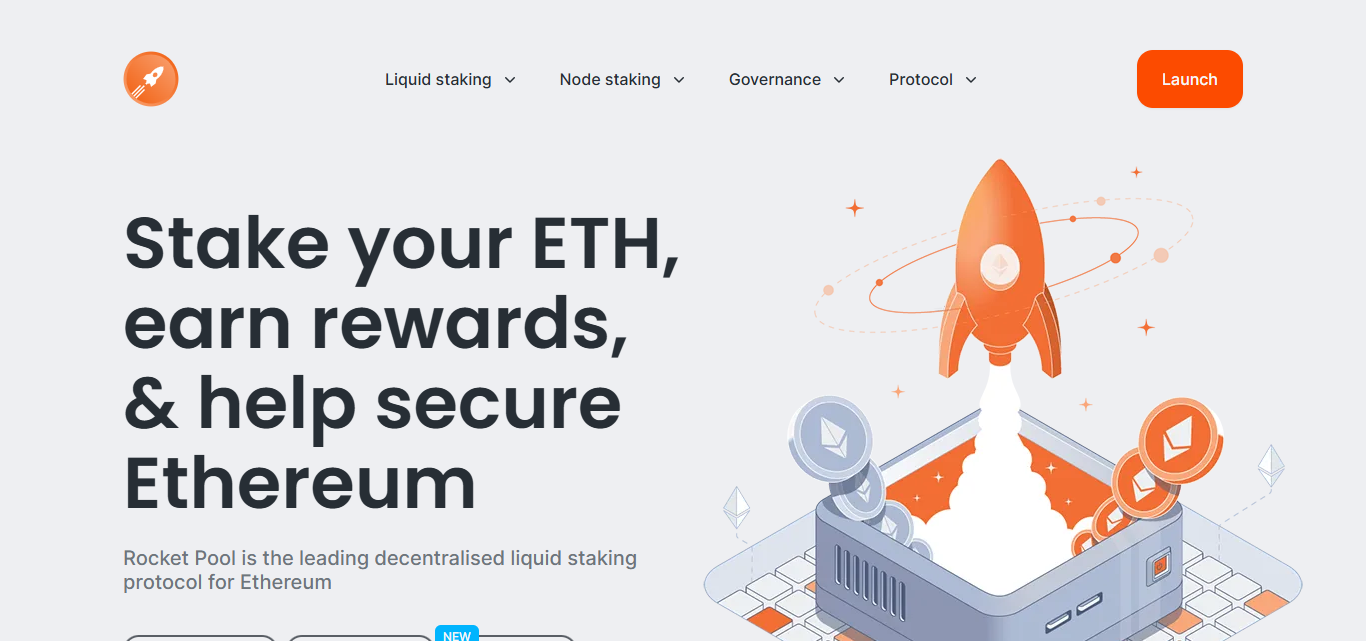

The top platforms that provide liquid staking, validator infrastructure, and decentralized node services will be examined in this article on Top Rocket Pool Competitors for Decentralized Nodes.
In order to compare each platform with Rocket Pool and determine whether alternatives present worthwhile potential for blockchain staking and node operators, you will learn about their primary services, staking requirements, rewards, and fees.
Key Points & Top Rocket Pool Competitors for Decentralized Nodes
| Competitor | Explanation |
|---|---|
| Lido Finance | Offers liquid staking, allowing Ethereum holders to earn rewards while maintaining liquidity. |
| SSV Network | Provides distributed validator technology, improving Ethereum staking security, decentralization, and reliability. |
| Marinade Finance | Enables liquid staking on Solana, offering flexible staking rewards and decentralized delegation. |
| Stake DAO | Provides DeFi staking strategies, helping users optimize yields across multiple blockchain networks. |
| Meta Pool | Offers liquid staking solutions, enabling users to earn rewards while maintaining liquidity. |
| Allnodes | Provides non-custodial node hosting, simplifying validator operations across multiple blockchain networks. |
| Everstake | Operates institutional-grade staking infrastructure, supporting secure validators across numerous blockchain ecosystems. |
| P2P.org | Delivers professional staking infrastructure, helping institutions and individuals participate in decentralized networks. |
| Stakefish | Runs blockchain validators, providing secure staking services across leading proof-of-stake networks. |
| Chorus One | Operates institutional staking infrastructure, supporting decentralized networks through reliable validator services. |
10 Top Rocket Pool Competitors for Decentralized Nodes
1. Lido Finance
The biggest liquid staking mechanism and a major rival to Rocket Pool is Lido Finance. There is no minimum staking requirement, so anyone can deposit any amount of ETH and receive stETH. Node operators can join permissionlessly through the Community Staking Module with a nominal bond, or they can be approved by the DAO.
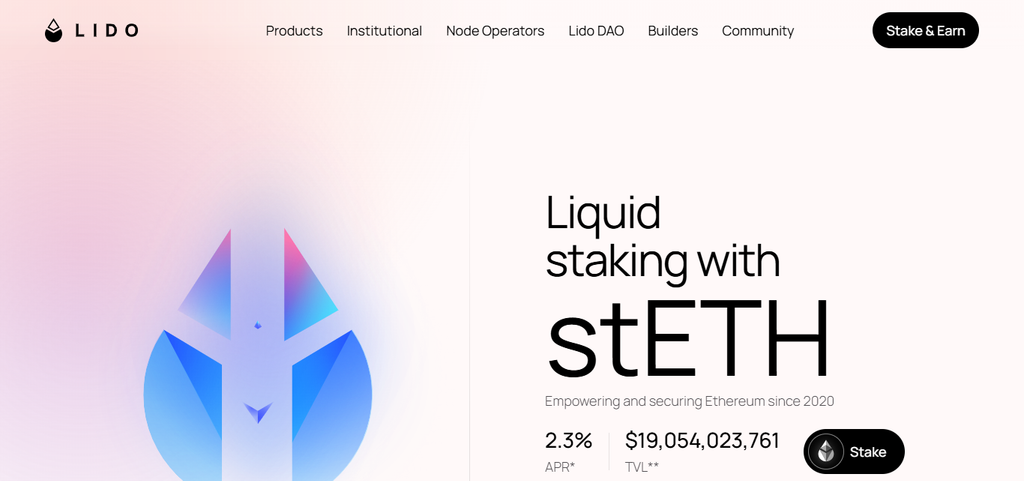
Rewards and fees: Lido charges a 10% fee on staking rewards, which is divided between the DAO treasury and node operators. As a result, stakers retain around 90% of the benefits, with no deposit fees. Core services Although its market share raises decentralization issues, Lido provides liquid staking through stETH and wstETH, Simple DVT, and stVaults. These services are integrated throughout DeFi and managed by the LDO token.
Lido Finance Rewards & Fees
- Through consensus and execution-layer operations, one can earn Ethereum staking incentives.
- Fees are divided between the Lido DAO treasury and independent node operators.
- 10% of generated staking payouts are subject to a protocol charge
Staking APR fluctuates based on Ethereum network conditions and validator performance
2. SSV Network
SSV Network both supports and rivals Rocket Pool since it is a distributed validator technology (DVT) layer as opposed to a staking pool. Requirements for staking: anyone can register as an operator without authorization, and stakers must have the normal 32 ETH per validator, distributed among a cluster of at least four operators, plus SSV tokens to cover fees.
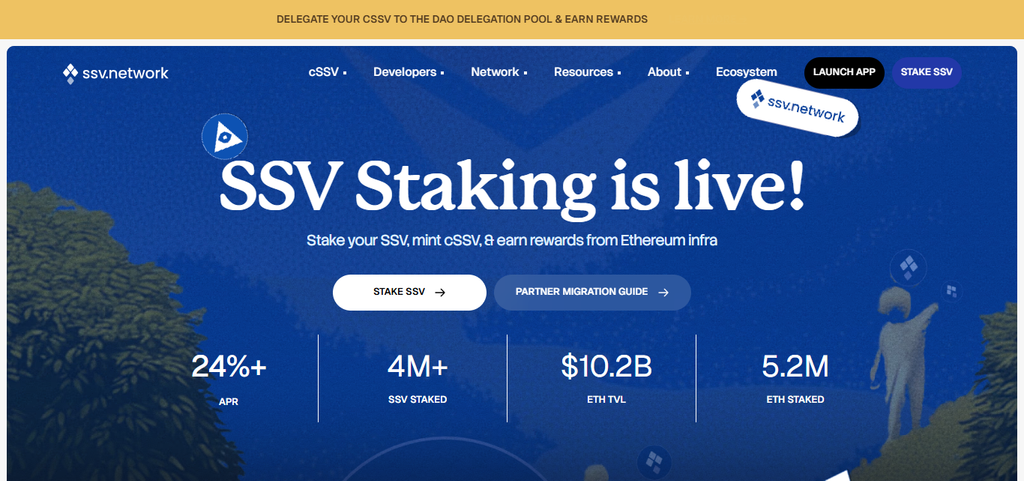
Fees and rewards: operator fees determined by the market and a modest network fee are paid in SSV tokens; validators receive standard Ethereum rewards sent straight to the staker, with no cut taken by SSV. Core services: SSV improves uptime and security by offering fault-tolerant validators, an open operator marketplace, and infrastructure utilized by Lido and other protocols.
SSV Network Rewards & Fees
- Network fees produced by validator clusters are used to compensate SSV stakeholders.
- The distribution of rewards to eligible cSSV holders is proportionate.
- Infrastructure services for distributed validators are provided by operators at a price.Cluster activity, operator fees, and network participation all affect actual earnings
3. Marinade Finance
Similar to Rocket Pool on Ethereum, Marinade Finance is the top liquid staking system on Solana. Since users deposit SOL and earn mSOL without operating any hardware, there is no significant minimum for staking requirements. Validators are eligible based on performance, commission, and decentralization criteria. incentives and fees Instant unstaking has a minor variable fee
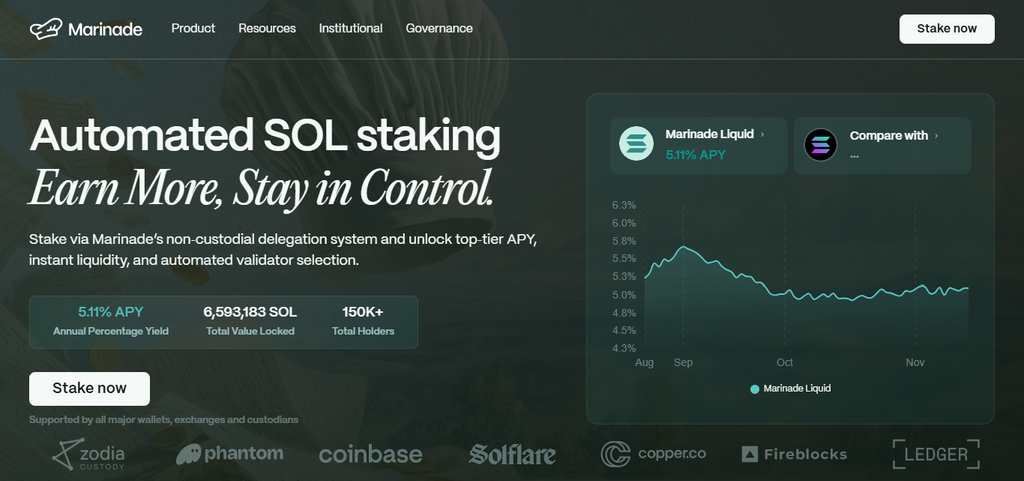
Marinade charges a protocol fee on incentives, which has typically been roughly 6% and varies by product. Users see their yield as a rising mSOL exchange rate. Core services Marinade provides native staking, mSOL liquid staking, and validator delegation techniques like Marinade Select, which are extensively utilized across Solana DeFi and controlled by the MNDE token.
Marinade Finance Rewards & Fees
- The rising value of mSOL is a reflection of liquid staking payouts.
- Staking payouts are generated by Solana’s assigned SOL validators.
- The pricing structures for native and liquid staking differ.
- The validator’s performance, the state of the Solana network, and any applicable fees determine the rewards.
4. Stake DAO
Since Stake DAO is a DeFi yield-optimization platform, Rocket Pool’s competition for decentralized staking capital is minimal. Staking requirements: Since users deposit tokens like CRV, BAL, or LP tokens into strategies using a regular wallet, neither validator hardware nor 32 ETH are required.
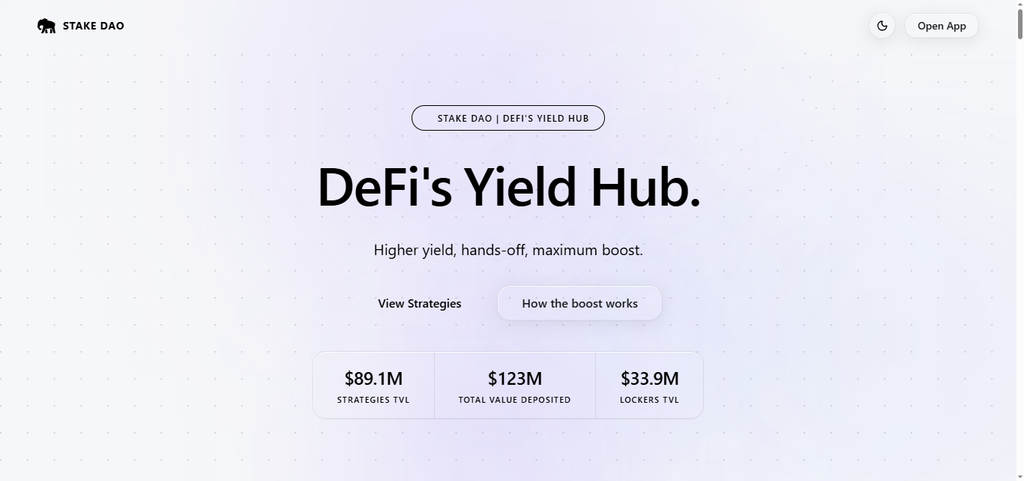
Rewards and costs: Although rates vary per strategy, the platform aggregates enhanced rewards and levies performance fees on returns, which are typically about 15% and divided among the treasury, governance-token lockers, and incentives.
Core services Stake DAO offers vote-incentive tools, liquid lockers like sdCRV, and boosted yield vaults that are controlled by the SDT token. Returns are unpredictable and subject to strategy and smart-contract risk.
Stake DAO Rewards & Fees
- Produces payouts using DeFi protocols and supported staking mechanisms.
- Opportunities for governance and liquidity might provide users with further incentives.
Individual vault strategies determine management and performance fees. - The performance of the underlying protocol and the state of the market affect actual returns.
5. Meta Pool
Similar to Rocket Pool’s pooled approach on a smaller scale, Meta Pool is a multichain liquid staking technology that offers mpETH on Ethereum and a long-standing presence on NEAR. Requirements for staking: Since there is no minimum, users can stake modest amounts using gas tokens and a suitable wallet while expert validators are screened for security and performance.
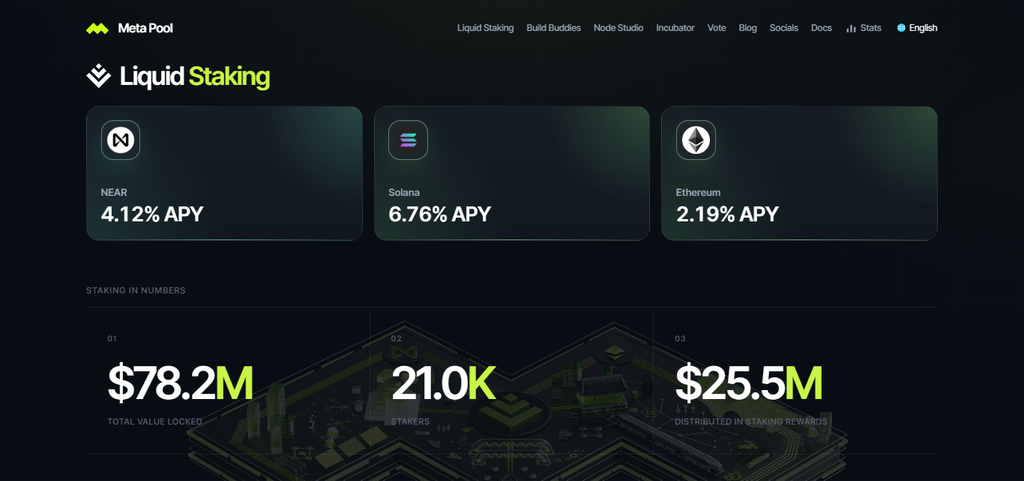
Incentives and costs Stakers earn the remaining amount as mpETH increases, sometimes with additional incentives, after Meta Pool levies a protocol fee on rewards, which is typically 10% on Ethereum but varies by network and product. Its core services include DAO governance, multichain support, liquid staking, and a liquidity pool for quicker unstaking.
Meta Pool Rewards & Fees
- Offers staking incentives via networks of blockchain validators that are supported.Liquid staking tokens allow users to earn network-based profits.
The supported blockchain determines the unstaking and transaction costs.
Additional profits are contingent upon network incentives, liquidity, and validator performance.
6. Allnodes
By eliminating the technical burden of executing validators, Allnodes is a non-custodial node hosting platform that rivals Rocket Pool. Requirements for staking: a dedicated Ethereum validator requires 32 ETH, although pooled products like Staking Plus allow far less deposits, and each of the more than 90 supported networks has its own minimum.
Costs and rewards Depending on the chain and plan, costs can range from single digits to low double digits and are often a commission for pooled staking or a subscription for dedicated nodes. Rewards are distributed to the user’s personal address. Core services DVT on supported chains, node hosting, validator management, monitoring, API and RPC access, and a single dashboard are all offered by Allnodes.
Every node Rewards & Fees
- Using approved proof-of-stake blockchain validators, it produces staking incentives.
- Rewards are based on validator performance and network-specific staking rates.
- Infrastructure for nodes and validators is charged separate hosting fees.
- The cost of hosting varies according on the chosen service plans and blockchain requirements.
7. Everstake
With a professional operator model, Everstake is a well-known non-custodial staking provider and a long-standing substitute for Rocket Pool. Minimums for staking vary according on the network; on Ethereum, users can run a specialized validator with 32 ETH or join the pool with a modest amount, whereas chains like Solana and Cosmos only need their minimum delegation.
Rewards and fees Everstake automatically deducts a commission on rewards, often between 5% and 10%, depending on the chain and product. Other than network expenses, there are no deposit fees. Core services include staking pools, institutional solutions, wallet integrations, analytics, MEV-Boost and DVT support on Ethereum, and validator infrastructure on more than 70 networks.
Everstake Rewards & Fees
- Produces staking payouts via blockchain validators run by experts.Based on the supported blockchain and staking product, service commissions are charged.
- There is a 10% protocol fee for Ethereum liquid staking via Lido.
- The network APR, validator performance, and relevant commissions determine the actual rewards
8. P2P.org
For larger, business-oriented stakers, P2P.org is a non-custodial, institutional-grade staking solution that rivals Rocket Pool. Requirements for staking: each supported network has its own thresholds, and the conventional Ethereum method uses a dedicated 32 ETH validator.
Smaller deposits are permitted with vault and liquid products. Rewards and fees: P2P.org charges a commission on rewards, usually between 5% and 10% for basic items and frequently negotiated for institutions.
Rewards are sent to the client’s address, and additional fees may apply for vault or restaking products. Its core services include validator hosting, restaking, DVT via SSV, API-based staking for wallets and exchanges, and on-chain vaults with an emphasis on performance and security.
P2P.org Rewards & Fees
- Using institutional-grade validator infrastructure, staking incentives are generated.
- 5% is the fee for regular Ethereum staking services.
Ethereum SSV staking services are subject to a 7% fee. - Instead of using deposited principal, fees are computed against staking
9. Stakefish
Although its product line has evolved over time, Stakefish was an early professional validator provider and a rival to Rocket Pool. Requirements for staking: its Ethereum service has historically required 32 ETH per validator; users maintain control over their withdrawal credentials while Stakefish manages the infrastructure; other networks have different minimums.
Payouts and fees: In the past, it has imposed a commission of about 10% on Ethereum payouts, with the remaining amount going straight to the staker; nevertheless, the terms as of right now should be confirmed on its official website. Core services Stakefish provides dashboards, validator hosting, monitoring, slashing-protection techniques, and APIs for institutions, wallets, and exchanges.
Stakefish Rewards & Fees
- Through expert blockchain validator procedures, one can earn staking rewards.
- Provides a 0% protocol commission for Ethereum staking.
A separate 50% commission is charged by its MEV smoothing pool. - Network rewards, validator performance, and specific services all affect total profits.
10. Chorus One
Instead of focusing on individual node operators, Chorus One is an institutional staking solution that competes with Rocket Pool for large holders. Staking requirements: Ethereum supports numerous networks, including Solana, Cosmos chains, and Polkadot, each with its own minimum, and requires 32 ETH per validator, typically in significant quantities, with some pooled or vault products at lower thresholds.
Rewards and fees Clients earn MEV rewards on Ethereum through MEV-Boost in addition to a commission that is established per network and client, often between 5% and 10% and frequently negotiated.
Core services Supported by security audits and multi-region node distribution, Chorus One offers validator infrastructure, staking-as-a-service, API integrations, MEV optimization, institutional reporting, and custody linkages.
The First Chorus Rewards & Fees
- Provides commissions tailored to the network for both individual and institutional staking services.
Consensus, execution-layer, and MEV-related earnings are examples of rewards. - Through validators on several blockchain networks, staking incentives are generated.
- The performance of the validator, network circumstances, and service fees all affect actual returns.
Conclusion
To sum up, the Top Rocket Pool Competitors for Decentralized Nodes provide a variety of options for blockchain architecture, validator management, and liquid staking. Depending on staking requirements, payouts, and fees, platforms such as Lido
SSV Network, Marinade, and Allnodes offer distinct benefits. To determine the best staking solution, evaluate each alternative’s decentralization characteristics, supported networks, security, and price.
FAQ
Lido offers liquid staking, while Rocket Pool emphasizes decentralized node operators.
SSV Network improves validator decentralization through distributed validator technology and operator infrastructure.
Yes, Marinade distributes Solana staking across multiple independent network validators.
Allnodes offers blockchain node hosting, validator infrastructure, monitoring, and management services.