


The Top Crypto Off-Ramp APIs for Web3 Developers will be covered in this post, along with an examination of the top sites that assist apps in converting cryptocurrency into fiat money.
To assist developers in selecting appropriate solutions for creating safe, effective, and user-friendly Web3 payment experiences, we will compare their supported assets, blockchain networks, nation coverage, fees, withdrawal limitations, payout mechanisms, and API integration capabilities.
Key Points & Top Crypto Off-Ramp APIs for Web3 Developers
- MoonPay – Enables users to convert cryptocurrencies into fiat currencies through integrated payment solutions.
- Ramp Network – Provides crypto-to-fiat conversion infrastructure for seamless withdrawals within Web3 applications.
- Transak – Offers developer-friendly APIs for converting digital assets into local currencies worldwide.
- Onramper – Aggregates multiple fiat-to-crypto providers, helping developers optimize payment experiences across supported markets.
- Crossmint – Provides APIs for wallet infrastructure, payments, and crypto transactions within Web3 applications.
- Alchemy Pay – Connects cryptocurrency ecosystems with traditional payment methods through global fiat conversion services.
- Mercuryo – Supports cryptocurrency purchases and sales through integrated payment APIs and compliance-focused infrastructure.
- Unlimit Crypto – Offers crypto payment infrastructure supporting digital asset transactions and fiat conversion for businesses.
- Revolut Ramp – Connects supported applications with Revolut-powered cryptocurrency purchasing and selling experiences through integrations.
- Striga – Provides crypto banking APIs supporting digital asset transactions, fiat services, and card infrastructure.
10 Top Crypto Off-Ramp APIs for Web3 Developers
1. MoonPay
MoonPay offers crypto-selling services that enable users to withdraw money using approved payout methods after converting qualified digital assets into fiat. Depending on partner access and area availability, developers can incorporate its sale flow into wallet and Web3 experiences.
The transaction and the available sell configuration determine whether assets and networks are supported. Depending on the area, payout methods include PayPal, MoonPay Balance, Visa or Mastercard payouts, and authorized bank transfers.

Before showing charges, developers should obtain up-to-date quotations because fees, minimums, maximums, and settlement times differ depending on the asset, payment method, and country. Use the most recent official documents to confirm eligibility.
MoonPay — Pros & Cons
| Pros | Cons |
|---|---|
| Supports crypto selling and fiat cash-out through eligible payout methods. | Availability varies by country, asset, and payout method. |
| Offers integration options for embedding crypto-selling experiences into applications. | Fees and exchange rates can make smaller withdrawals relatively expensive. |
| Supports card payouts in numerous eligible markets. | Identity verification and payment-provider restrictions may affect eligibility. |
| Provides an established payment experience for mainstream users. | Settlement times depend on the selected payout route. |
2. Ramp Network
Ramp Network provides an off-ramp integration that enables compatible Web3 apps to link cash payouts with cryptocurrency sales. Through its widget or approved integration techniques, developers can activate the off-ramp flow and use the API to get qualified assets.
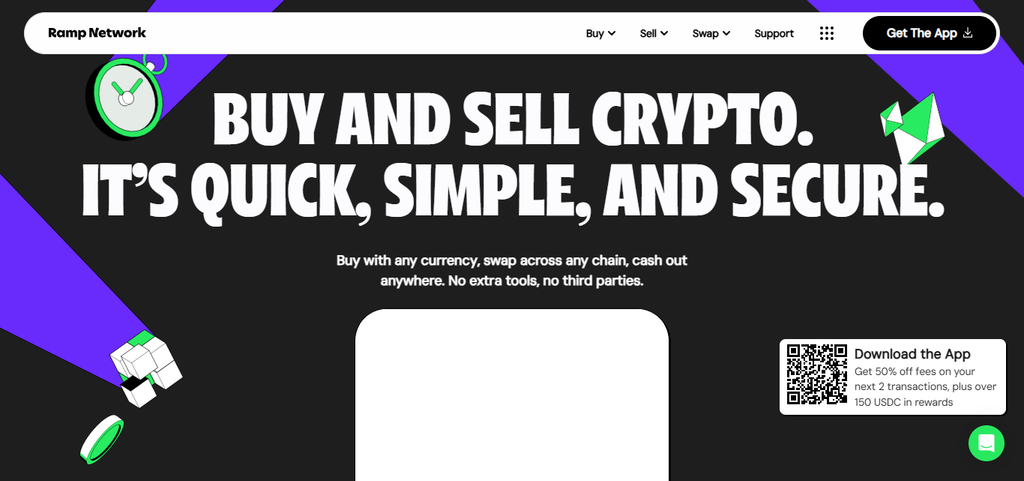
A token that can be bought might not always be able to be sold because supported tokens and blockchains differ by nation. Bank transfers and approved card alternatives are among the payout ways; settlement times and availability vary by location. The current payout schedule and real-time API replies should be compared to fees and transaction limits. Valid API credentials and an enabled feature could be necessary for production access.
Ramp Network — Pros & Cons
| Pros | Cons |
|---|---|
| Provides dedicated off-ramp integration documentation and configuration options. | Production access requires the off-ramp feature to be enabled. |
| Supports multiple crypto assets and blockchain networks for selling. | Supported assets vary by country and region. |
| Offers bank transfers and selected card payout methods. | Settlement times and fees differ across payout methods. |
| Provides quote endpoints to check eligible transaction options. | Developers must handle API errors, eligibility, and rate limits. |
3. Transak
Developers can incorporate Transak’s payment infrastructure into wallets, decentralized apps, and other Web3 products. Verify that Transak’s sell flow is available for the target market, asset, and integration type when assessing it for off-ramping. The current service configuration determines which cryptocurrencies, blockchain networks, and fiat currencies are supported.
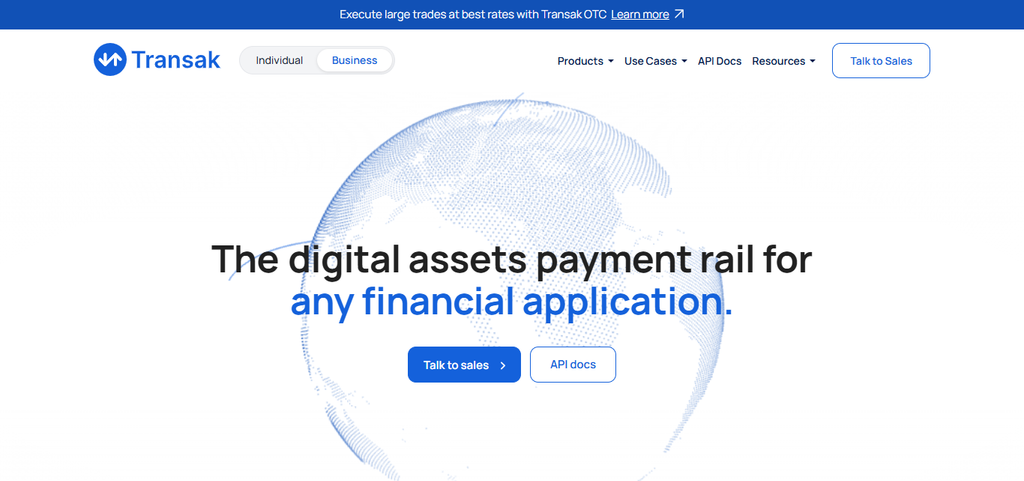
Before offering users bank withdrawals or other payment choices, country eligibility and payout possibilities should be confirmed. Limits and settlement times differ for each transaction, and transaction costs can include provider fees, network fees, and payment-related expenses. For precise costs and availability, developers should refer to Transak’s current API documentation and live quotes.
Transak — Pros & Cons
| Pros | Cons |
|---|---|
| Offers developer integrations for crypto transactions and Web3 applications. | Off-ramp availability depends on the product and market. |
| Publishes country-coverage information and supported payment options. | Not every asset or network supports selling. |
| Supports withdrawal options in eligible markets. | Verification requirements can add friction to onboarding. |
| Can help integrate crypto conversion without building payment infrastructure from scratch. | Fees, transaction limits, and settlement times vary by region. |
4. Onramper
Onramper is most recognized for its uniform integration of several fiat-to-crypto providers. When contemplating an off-ramp use case, developers should first confirm that the particular product and partner configuration enable the necessary selling capability.
The services made possible by the integration determine provider coverage, supported assets, blockchain networks, fiat currencies, and qualifying nations. It is not a given that having access to several buy providers equates to having access to several withdrawal providers.
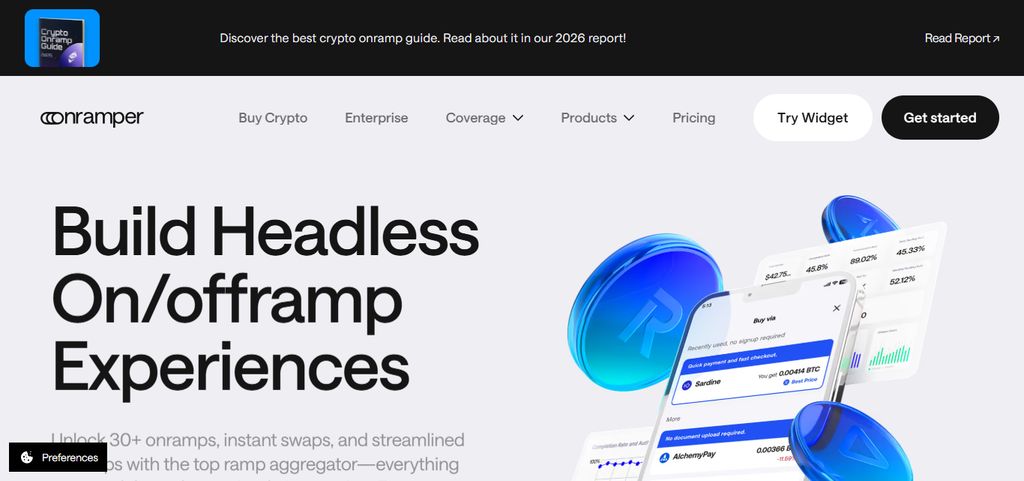
Verify fees, payout methods, minimums, and maximums with the appropriate provider. Applications that need bank withdrawals, international coverage, and reliable transaction experiences should pay particular attention to this verification.
Onramper — Pros & Cons
| Pros | Cons |
|---|---|
| Aggregation model can simplify access to multiple payment providers. | Off-ramp capabilities must be confirmed for the specific integration. |
| Can reduce the need to integrate multiple providers separately. | Coverage depends on available partners and supported markets. |
| May help developers compare available payment routes. | Provider availability and transaction pricing can change. |
| Useful for applications seeking a unified payment integration. | Not every integrated provider necessarily supports crypto selling. |
5. Crossmint
In order to include wallet and payment features into Web3 apps, Crossmint provides developer infrastructure. However, before using Crossmint as a direct crypto-to-fiat off-ramp API, developers should confirm the precise Crossmint product. Verify whether selling cryptocurrency, the necessary blockchain networks, and payouts to bank accounts or other locations are supported by the planned integration.
The relevant product and partner agreements determine which countries and assets are supported. Universal off-ramp coverage cannot be established by publicly accessible wallets or payment methods alone.
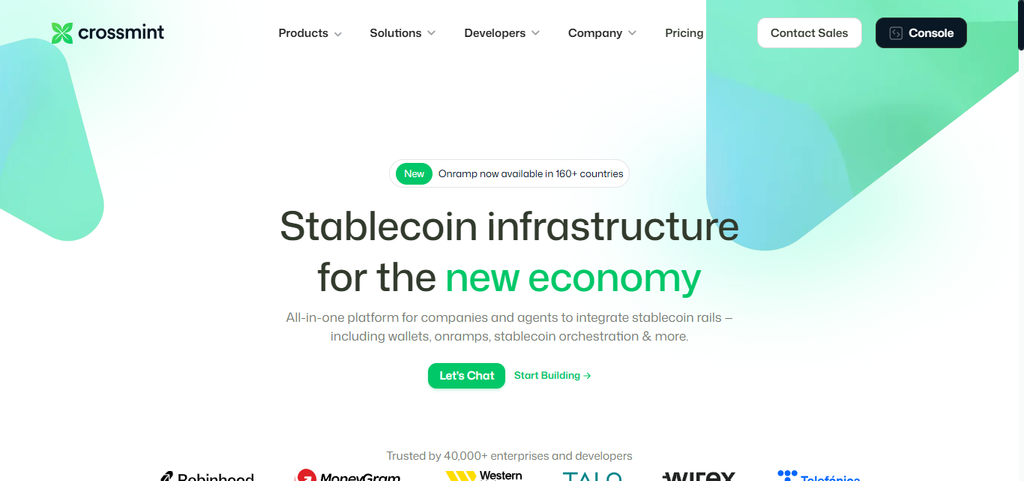
Verify transaction fees, minimum and maximum amounts, settlement periods, supported payout currencies, and regional limitations prior to deployment. Inaccurate feature comparisons and improper supplier selection are avoided as a result.
Crossmint — Pros & Cons
| Pros | Cons |
|---|---|
| Provides developer infrastructure for wallets and Web3 payment experiences. | General wallet features do not automatically establish off-ramp support. |
| Offers APIs designed to simplify Web3 application integration. | Direct crypto-to-fiat payout capabilities require product-level verification. |
| Can be relevant for NFT and digital-asset applications. | Supported assets and payment methods depend on the product. |
| May help reduce the complexity of wallet-related development. | Fees, payout limits, and country coverage need confirmation for the intended service. |
6. Alchemy Pay
Alchemy Pay provides businesses with integration options that links bitcoin services with conventional payment infrastructure. When evaluating it for off-ramping, Web3 developers should make sure that their target audiences have access to fiat payout and cryptocurrency selling.
Fiat currencies, blockchain networks, and supported assets vary depending on the particular service and local setup. Instead of assuming a country’s coverage based on its worldwide payment footprint, it should be verified against the current eligibility conditions.
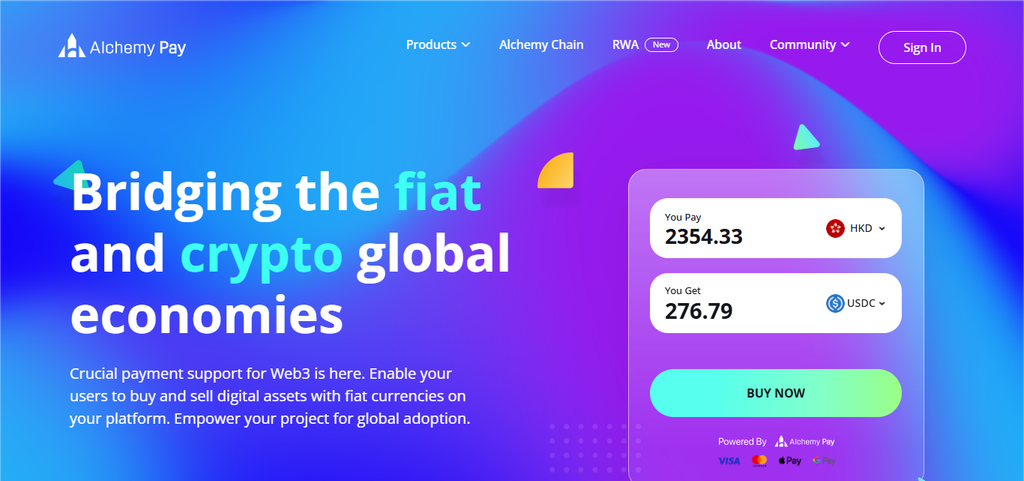
Depending on the country and payment type, there may be differences in fees, transaction limitations, settlement delays, and bank or card payout options. Before choosing Alchemy Pay for a production withdrawal flow, developers should obtain the pertinent API documentation and pricing information.
Alchemy Pay — Pros & Cons
| Pros | Cons |
|---|---|
| Connects crypto payment experiences with traditional payment infrastructure. | Off-ramp availability must be verified for the chosen integration. |
| Offers payment solutions designed for businesses and digital platforms. | Supported assets and fiat currencies may vary by market. |
| Can be relevant for Web3 applications needing fiat connectivity. | Pricing and transaction limits may depend on commercial agreements. |
| Provides an option for businesses evaluating integrated crypto payments. | Developers should confirm payout methods and settlement timelines before deployment. |
7. Mercuryo
Developers can assess Mercuryo’s bitcoin payment infrastructure for wallet and digital asset applications. Verify that the specific API or partner integration allows for fiat withdrawal and cryptocurrency selling before using it as an off-ramp.
Depending on the service, supported assets, blockchain networks, fiat money, and nations may vary. Each target market’s available payout options should be confirmed, especially if users need card payouts or direct bank withdrawals.

The quantity of the transaction, the mode of payment, the exchange rate, and any applicable network fees can all affect fees. Confirmation is also needed for settlement times, minimums, and maximums. Before providing precise cost or availability, review the most recent developer documentation and get a live quote.
Mercuryo — Pros & Cons
| Pros | Cons |
|---|---|
| Provides crypto payment infrastructure for digital-asset applications. | Selling functionality varies by product and regional availability. |
| Can be evaluated for integration into wallets and Web3 platforms. | Not every supported asset may be available for off-ramping. |
| May simplify access to crypto-related payment services. | Verification requirements can affect the user experience. |
| Offers an alternative for developers comparing payment providers. | Fees, withdrawal limits, and settlement times require current confirmation. |
8. Unlimit Crypto
Businesses investigating links between digital assets and conventional financial services can use Unlimit Crypto as a cryptocurrency payment option. Instead of presuming that general crypto-payment capability includes off-ramping, developers should verify the exact product scope and if it allows direct crypto-to-fiat conversion and withdrawals.
The contracted service and business eligibility determine which tokens, blockchain networks, fiat currencies, and nations are supported. Verify with the provider the bank-transfer choices, payout currencies, settlement times, and transaction restrictions.

Fees may change based on the commercial agreement, transaction volume, and mode of payment. To ascertain whether the service satisfies the application’s withdrawal criteria, obtain up-to-date API documentation, supported-market details, compliance requirements, and a comprehensive pricing schedule before to integration.
Unlimit Crypto — Pros & Cons
| Pros | Cons |
|---|---|
| Offers crypto payment infrastructure for business use cases. | Exact crypto-to-fiat withdrawal capabilities must be verified. |
| May suit businesses exploring integrated digital-asset payment services. | Availability depends on the selected product and business eligibility. |
| Can be considered alongside other payment infrastructure providers. | Fees and limits may depend on the commercial agreement. |
| Provides another potential option for fintech and Web3 integrations. | Supported networks and payout methods require confirmation before implementation. |
9. Revolut Ramp
Revolut Ramp offers a specified Crypto Ramp API that authorized partners can use to guide users to Revolut Ramp’s cryptocurrency buying and selling platform. Developers can verify eligibility prior to starting a sale by using its sell configuration, which reveals supported nations, fiat currencies, cryptocurrency assets, payout methods, and transaction limitations.
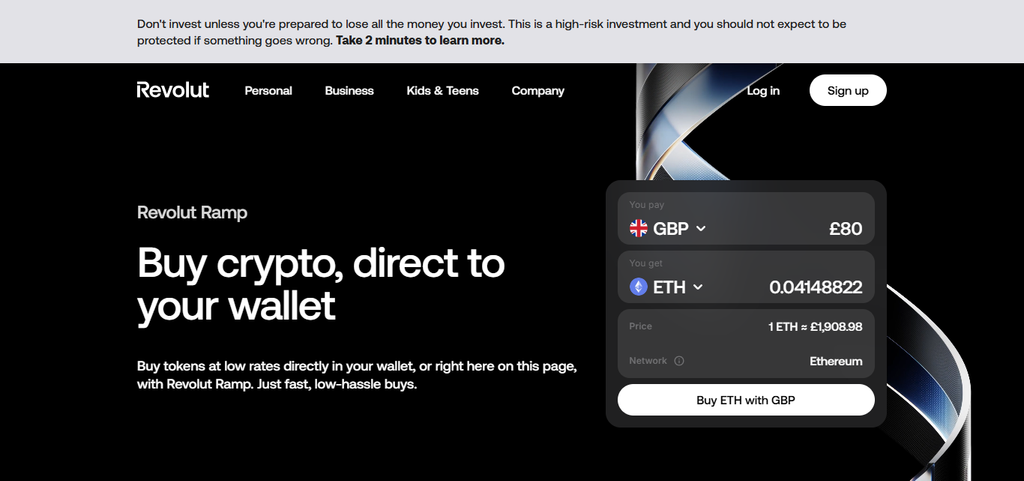
Applications can reveal expenses before rerouting customers by using the sell-quote endpoint, which returns anticipated fiat proceeds and fees. The returned configuration determines the precise assets, networks, and payment methods.
Webhooks and order-status endpoints allow developers to monitor order progress as well. Credentials for the partner API are necessary, and each target market’s current availability should be confirmed.
Revolut Ramp — Pros & Cons
| Pros | Cons |
|---|---|
| Provides a documented Crypto Ramp API with selling functionality. | Access may require partner approval and API credentials. |
| Offers sell quotes that help developers display estimated proceeds and fees. | Supported assets and countries depend on the current configuration. |
| Provides order-status and webhook capabilities for transaction tracking. | Payout options and limits vary by supported market. |
| Helps applications connect users to a crypto-selling experience. | Developers must handle eligibility checks and transaction-status updates. |
10. Striga
Striga offers companies developing cryptocurrency-related products API-based financial infrastructure. Developers who are thinking about using Striga as an off-ramp workflow should make sure that their specific conversion and fiat-payout needs are supported by the current offering. Countries, blockchain networks, fiat currencies, and supported cryptocurrency assets all rely on the services and business agreements that are offered.
Don’t expect that features for banking, cards, or cryptocurrency accounts will always have a direct withdrawal API for all assets. Determine the possible payout destinations, fees, minimum and maximum transaction amounts, settlement schedules, and relevant compliance requirements prior to implementation. To ascertain whether Striga satisfies the operational requirements of the application, obtain up-to-date technical documents and information about market eligibility.
Striga — Pros & Cons
| Pros | Cons |
|---|---|
| Provides API-based financial infrastructure for crypto-related businesses. | Direct off-ramp functionality must be confirmed for the intended service. |
| May suit fintech applications needing integrated financial infrastructure. | Access and features can depend on business onboarding. |
| Can be evaluated for crypto and fiat service integrations. | Supported countries and assets depend on the product configuration. |
| Offers an alternative for businesses comparing crypto infrastructure providers. | Fees, payout limits, and settlement times require direct confirmation. |
Conclusion
In conclusion, the requirements of your application, target markets, and user needs all play a role in selecting the best crypto off-ramp API.
Different payout methods, supported assets, and integration options are offered by MoonPay, Ramp Network, Transak, and other suppliers. Compare costs, withdrawal caps, nation coverage, security, and compliance requirements before making a choice.
Web3 developers may create dependable, effective, and user-friendly crypto-to-fiat payment experiences by carefully considering these characteristics.
FAQ
Popular options to evaluate include MoonPay, Ramp Network, Transak, Onramper, Crossmint, Alchemy Pay, Mercuryo, Unlimit Crypto, Revolut Ramp, and Striga.
These APIs connect crypto transactions with conversion services and payout providers, allowing users to receive eligible fiat funds.
Supported assets vary by provider and may include Bitcoin, Ethereum, stablecoins, and other selected cryptocurrencies across compatible networks.
Fees depend on the provider, transaction amount, exchange rate, network costs, payment method, and applicable regional charges.