

In this article, I’m going to talk about the Best Direct Wallet Connectivity Cards like Oobit. I’m going to focus on cards that connect crypto wallets to daily payments.
I will examine their wallet connectivity, self-custody options, supported cryptocurrencies, payment networks, methods of spending, fees, availability, and transaction limits to help users find the most appropriate crypto card for easy, safe, and flexible spending of digital currencies.
Key Points & Best Direct Wallet Connectivity Cards like Oobit
| Card | Explanation |
|---|---|
| MetaMask Card | Lets users spend crypto directly from their MetaMask wallet with card payments. |
| Gnosis Pay | Connects self-custodial wallets with Visa payments while keeping users’ crypto ownership. |
| Ether.fi Cash | Combines wallet-based crypto spending with borrowing and everyday card payment functionality. |
| Tangem Pay | Enables direct spending from Tangem wallets through convenient crypto-linked card payments. |
| Oppi Wallet | Provides wallet-connected payments designed for simple everyday cryptocurrency spending and transfers. |
| Bleap | Offers self-custodial wallet spending with seamless crypto-to-fiat card payment functionality globally. |
| COCA Card | Links non-custodial crypto wallets with card payments and instant transaction capabilities. |
| Bybit Card | Allows users to spend supported crypto assets directly through Bybit’s card. |
| WhiteBIT Nova Card | Connects WhiteBIT balances with everyday card payments and convenient cryptocurrency spending. |
| Wirex Card | Combines crypto wallet balances with traditional card payments across supported currencies worldwide. |
10 Best Direct Wallet Connectivity Cards like Oobit
1. MetaMask Card
The MetaMask Card integrates directly with the MetaMask wallet allowing users to spend supported crypto and keep custody until payment. It’s self-custodial, meaning that MetaMask doesn’t hold the user’s tokens. It supports mUSD, wETH, EURe, GBPe, USDC and USDT on Linea, Solana, Base and Monad.
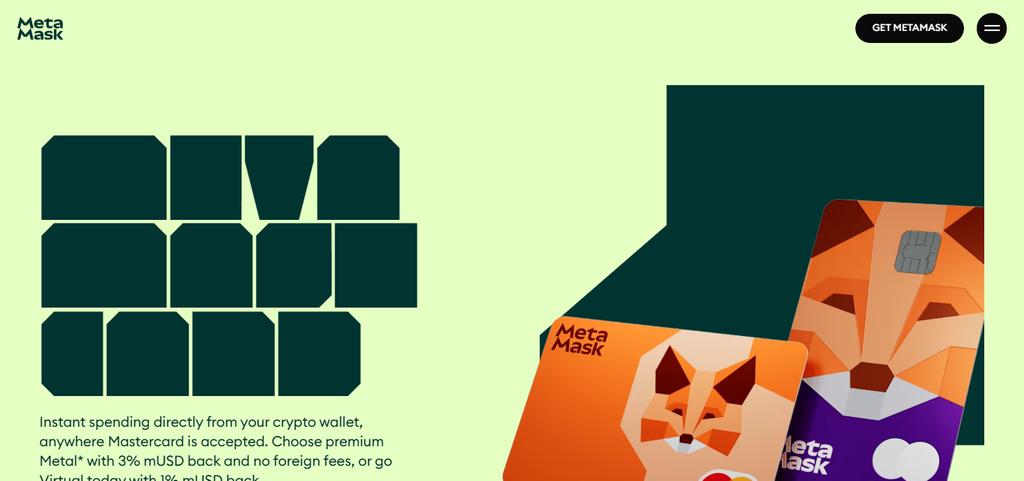
The card runs on the Mastercard network, automatically converting eligible crypto to local fiat at the point of purchase. The free tier has no annual fee, Metal costs $199/year. Some crypto conversions have fees, including 0.875% for other cryptocurrencies. Availability varies by supported country. Standard transaction limits of $10,000 per transaction and $15,000 per day.
Below are 4 distinct features for each card, presented in separate tables. I’ve kept the points focused on features relevant to direct-wallet connectivity, crypto spending, self-custody, payments, and user benefits.
MetaMask Card Feature
| Feature | Explanation |
|---|---|
| Direct Wallet Spending | Spend supported crypto directly from your MetaMask wallet without traditional exchange transfers. |
| Self-Custody | Users retain control of their crypto until the moment they make payments. |
| Mastercard Acceptance | Works wherever Mastercard is accepted, including online and physical merchants globally. |
| Crypto Cashback | Virtual cards earn 1% mUSD back, while Metal earns enhanced rewards. |
2. Gnosis Pay
Gnosis Pay is built around the idea of paying directly from a self-custodial wallet. It allows you to connect a Gnosis Safe wallet to a Visa debit card, without the need for traditional pre-funding. Users are in charge of their funds. Supported stablecoins are EURe, GBPe and USDCe.
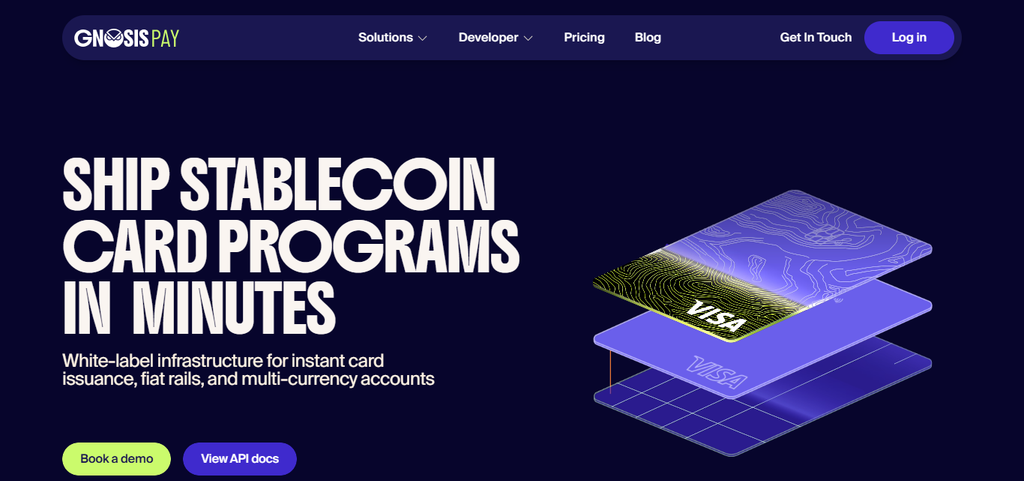
When a purchase is made, the required amount of the stable coin is deducted from the linked Safe and payments are performed with Visa. Gnosis Pay does not charge any fees on card transactions or extra FX fees currently, but blockchain transactions can incur gas costs.
The card was available in selected countries in Europe and Latin America. An important update for 2026 is that Gnosis Pay has announced its consumer card will stop working on December 20, 2026, so it is not a good long-term recommendation
Gnosis Pay Feature
| Feature | Explanation |
|---|---|
| Self-Custodial Payments | Spend stablecoins directly from a Safe wallet without transferring funds to custodial accounts. |
| No Preloading | Payments can be made directly from the connected wallet balance. |
| Visa Network | Connects onchain assets with Visa payment infrastructure for everyday merchant spending. |
| Onchain Settlement | Transactions provide fast blockchain settlement while maintaining user control over funds. |
3. Ether.fi Cash
Ether.fi Cash is a non-custodial account with card spending, where eligible assets in your Vault are used to make purchases with Direct Pay mode. Users will own their funds and USDC and LiquidUSD are the two main assets that can be spent directly from the card for now.
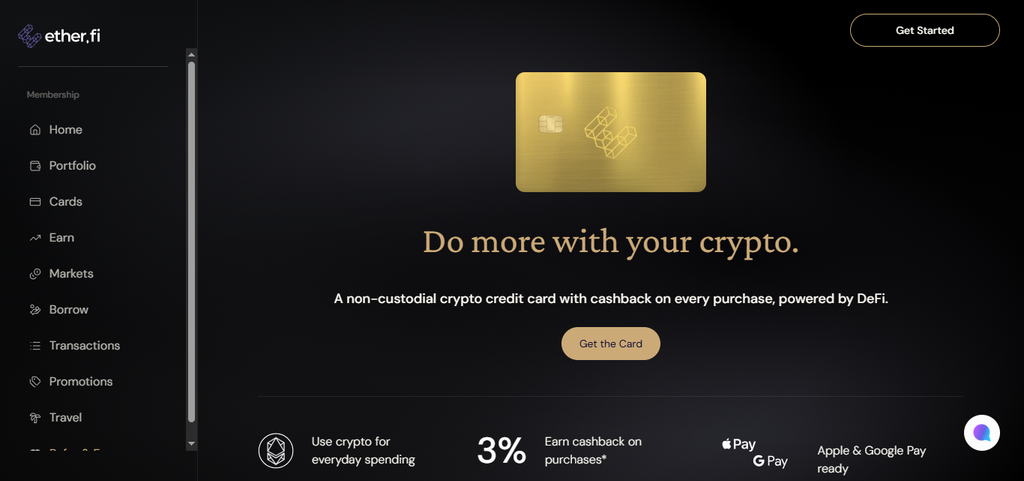
The Cash card is powered by Visa and converts eligible crypto to the payment currency required at checkout. Ether.fi offers both virtual and physical cards, depending on country availability and successful verification.
Core members have a default card limit of $5,000 per day, and a total Vault daily limit of $10,000. FX transactions will be priced at the prevailing FX rate plus a possible margin and ATM withdrawals are capped at $1,000 per transaction and $5,000 within 24 hours.
Ether.fi Cash Feature
| Feature | Explanation |
|---|---|
| Direct Pay Mode | Eligible USDC and LiquidUSD balances can fund purchases directly from the Vault. |
| Visa Card | Works anywhere Visa cards are accepted, including everyday retail and travel purchases. |
| Credit Functionality | Users can choose between direct crypto spending and borrowing against eligible collateral. |
| Cashback Benefits | Membership tiers provide cashback and additional travel-related benefits for eligible spending. |
4. Tangem Pay
Tangem Pay introduces payment functionality directly into the Tangem Wallet app, and the main Tangem Wallet remains non-custodial. Users fund the separate Tangem Pay account with USDC. In the described payment flow, currently, USDC based on Polygon is supported.
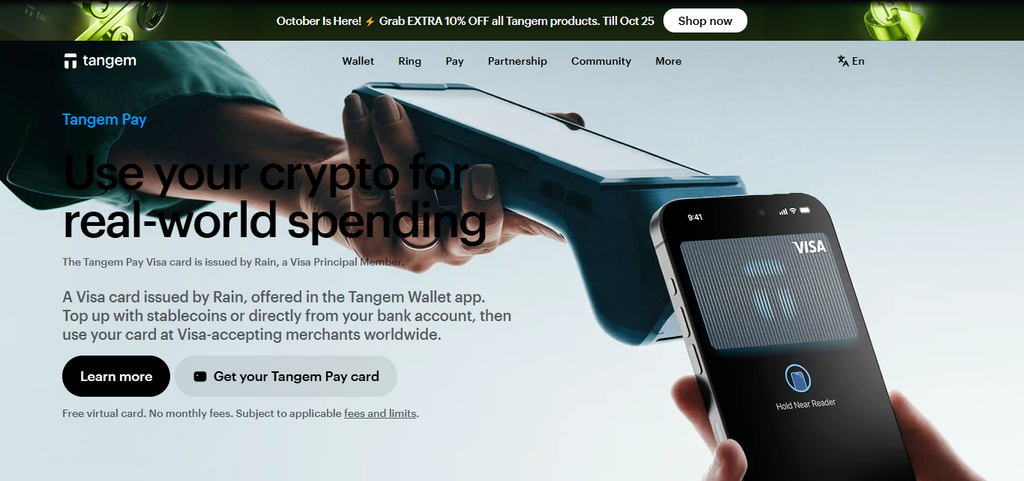
The card is on Visa and can be used online and in-store, as well as via Apple Pay or Google Pay. The merchant gets fiat and the equivalent USDC is removed from the payment account. The Basic virtual card comes with no monthly fee and a $10,000 daily spending limit, while higher tiers raise limits to $50,000 or $100,000 daily. Available in US and select countries in LATAM, APAC, MEA and Africa, subject to eligibility and KYC.
Tangem Pay Feature
| Feature | Explanation |
|---|---|
| Wallet Integration | Tangem Pay is built directly into the Tangem Wallet mobile application. |
| Stablecoin Spending | Users can fund payments with eligible USDC or USDT balances. |
| Visa Payments | Virtual and physical Visa cards work online, in-store, and contactlessly. |
| Separate Payment Account | Tangem Pay operates separately from the main self-custodial Tangem Wallet. |
5. Oppi Wallet
Oppi Wallet is a self-custodial wallet with a virtual crypto card so you can keep your private keys on your device until you want to load spending funds. Supported assets include Bitcoin, Ethereum, USDT, USDC and other cryptocurrencies, and multi-chain support across Ethereum, Polygon, Solana, TRON and BNB Smart Chain .
According to the current card data available for Oppi, its virtual card is on the Mastercard network and its physical card is on the Visa network.
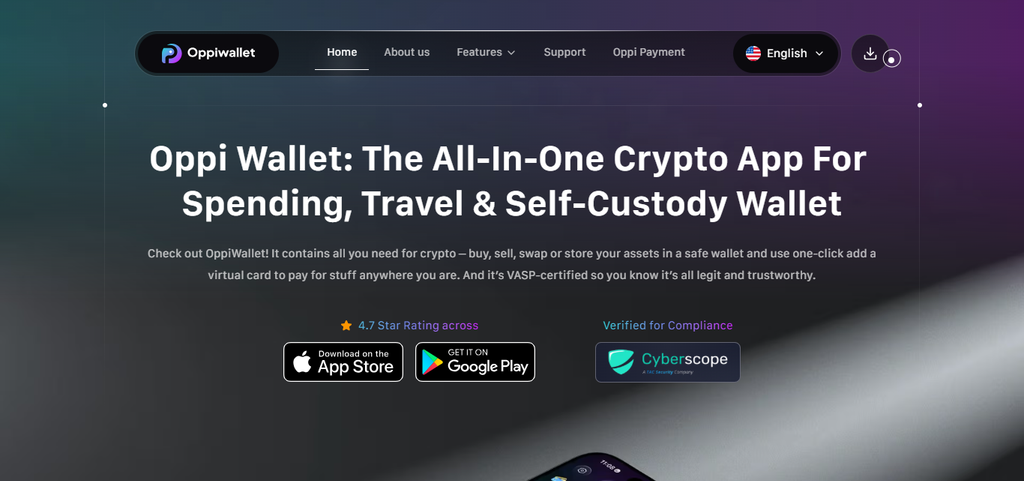
Users top up the card with the amount they want to spend, crypto is automatically converted into spendable balance. The virtual card has a $10 activation fee ($5 returned to the balance) and no monthly fees. Oppi says it is available in over 210 countries, but some regions may have restrictions.
Oppi Wallet Feature
| Feature | Explanation |
|---|---|
| Self-Custody | Private keys remain on the user’s device while spending through the card. |
| Multi-Crypto Spending | Supports assets including Bitcoin, Ethereum, USDT, USDC, and other cryptocurrencies. |
| Mastercard Network | The virtual card works at Mastercard merchants across more than 210 countries. |
| Apple & Google Pay | Users can add the virtual card to supported mobile payment wallets. |
6. Bleap
Bleap is a non-custodial fintech that enables users to link a wallet and spend it daily through its card. According to the platform, funds remain in the user’s connected wallet and Bleap handles the fiat-to-crypto conversion when needed.
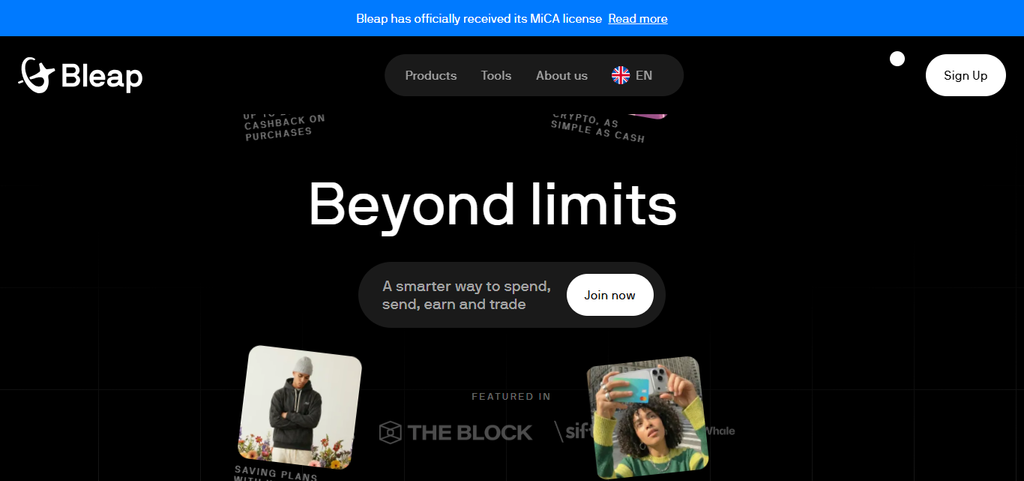
It’s Mastercard-enabled card can be used for purchases anywhere in the world, subject to regional availability and eligibility. Bleap does not currently charge card issuance, monthly, usage or exchange fees on its current EEA terms but Mastercard, network, FX, merchant, ATM fees and taxes may still apply.
The limits for card payments are €10,000 per transaction, €15,000 per day and €30,000 per month. You can make up to three ATM withdrawals per month with a maximum withdrawal limit of €400/month.
Bleap Feature
| Feature | Explanation |
|---|---|
| Non-Custodial Wallet | Users maintain control of their connected wallet and funds rather than transferring custody. |
| Direct Wallet Connection | Users can connect external wallets and manage balances through one dashboard. |
| Mastercard Spending | Bleap provides debit-card spending for everyday purchases through Mastercard infrastructure. |
| Fee-Free Conversion | Bleap states that wallet funding, conversion, and spending can be completed without fees. |
7. COCA Card
COCA is a non-custodial MPC wallet + card that makes it easy to spend crypto and stablecoins. COCA’s wallet architecture allows users to retain control of their assets, and the platform supports multiple cryptocurrencies and blockchain networks.
The card is powered by Visa’s payment infrastructure and enables users to spend stablecoins at partner merchants, with the crypto conversion taking place in the background. COCA has virtual and physical cards, supports Apple Pay and Google Pay, and says it’s available in dozens of countries (subject to KYC and regional eligibility).
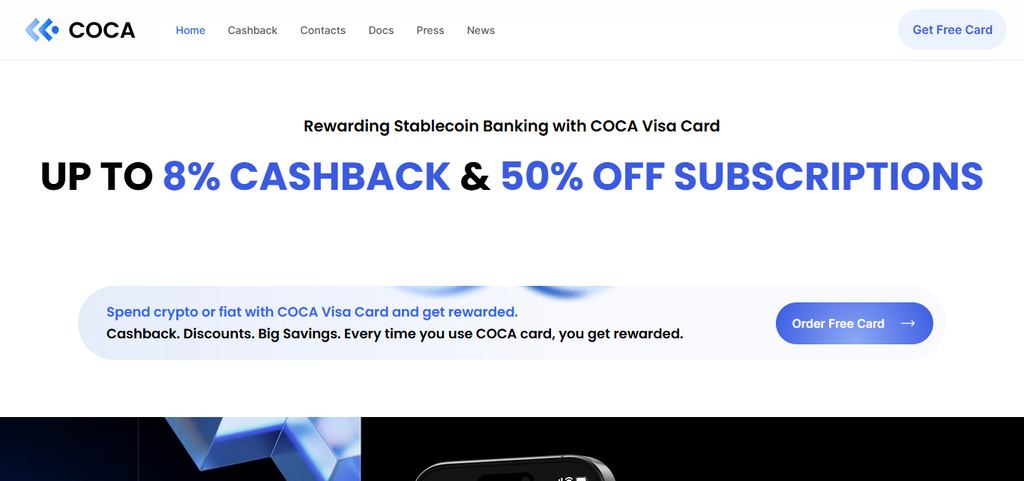
The current product info shows no maintenance fees and free ATM withdrawals up to $250 per month. Third-party card info states transaction limits are around $5,000 per transaction and $10,000 daily.
COCA Card Feature
| Feature | Explanation |
|---|---|
| MPC Self-Custody | COCA combines MPC technology with a non-custodial wallet and card infrastructure. |
| Multi-Chain Support | Supports stablecoins across multiple networks, including Ethereum, Polygon, Arbitrum, and Base. |
| Crypto Card Spending | Users can spend eligible stablecoins through their virtual or physical COCA Card. |
| Cashback Rewards | Eligible card purchases can earn cryptocurrency cashback under applicable promotional terms. |
8. Bybit Card
It’s worth noting that Bybit Card is not a direct self-custodial card as it’s primarily tied to the user’s Bybit Funding Account and not an external self-custodial wallet. Supported fiat or crypto held on Bybit can be spent by users with crypto automatically converted to fiat if needed.
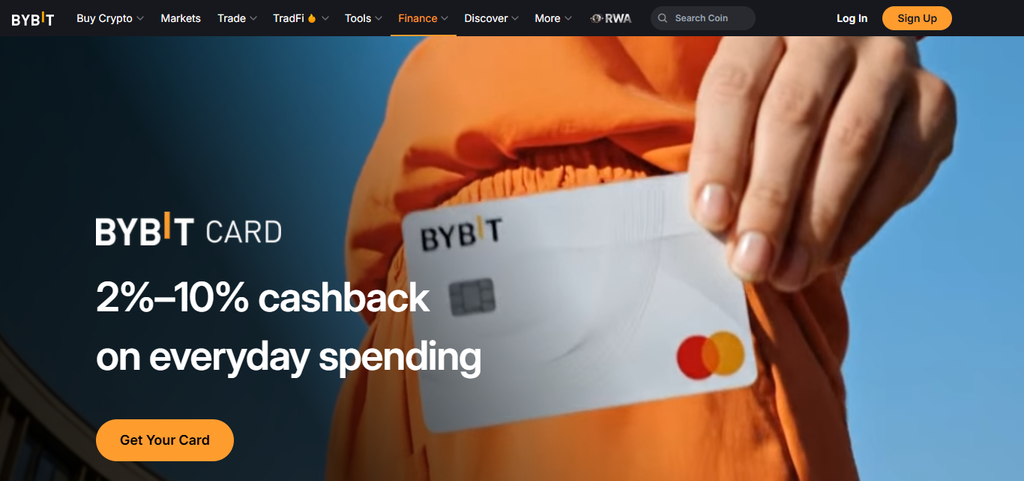
Regional programs determine the payment network and availability of the card, with online and physical options available in supported markets. ATM fees may apply separately. As an example, the crypto conversion fee is currently 0.9% for crypto funded purchases as documented for Bybit.
Asia-Pacific cards have spending limits ranging from $10,000 per day and $50,000 per month for Tier 1 to $100,000 per day and $350,000 per month for Tier 3
Bybit Card Feature
| Feature | Explanation |
|---|---|
| Crypto & Fiat Spending | Users can pay using available fiat balances or supported cryptocurrencies. |
| Automatic Crypto Conversion | Crypto is automatically liquidated when insufficient fiat is available for payment. |
| Virtual & Physical Cards | Bybit provides virtual cards for online payments and physical cards for retail spending. |
| Loyalty Rewards | Cardholders can earn rewards or cashback based on applicable spending and tier requirements. |
9. WhiteBIT Nova Card
WhiteBIT Nova is a Visa debit card that is connected to the user’s WhiteBIT exchange balance, but not a self-custodial external wallet. Users can spend supported crypto directly from their WhiteBIT balance without having to manually convert it to fiat before purchases.
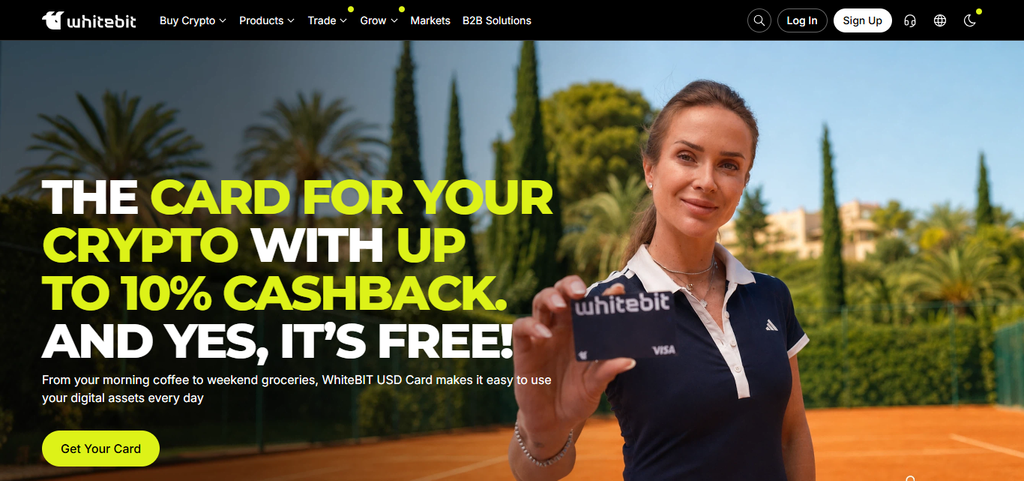
Merchant acceptance is through the Visa network, and both virtual and physical cards are available with support for Apple Pay and Google Pay. Currently, there are no monthly or inactivity fees at WhiteBIT.
Transaction fees may be up to 1%. Physical-card ATM withdrawals cost €3 in the EEA and €3 + 2.2% outside the EEA. Limits on spending are €10,000 per day and €25,000 per month, while ATM withdrawals using the physical card are limited to €1,000 per day and €3,000 per month.
WhiteBIT Nova Card Feature
| Feature | Explanation |
|---|---|
| Exchange-Balance Spending | Crypto can be spent directly from the user’s available WhiteBIT exchange balance. |
| Visa Card | Nova operates on Visa and supports everyday purchases across eligible locations. |
| Virtual & Physical | Users can choose between instant virtual cards and physical cards with ATM functionality. |
| Cashback Categories | Eligible purchases can earn crypto cashback across supported merchant categories. |
10. Wirex Card
Wirex Card allows you to spend crypto and stablecoins via the Wirex platform, but it’s important not to confuse this with the newer non-custodial wallet infrastructure of Wirex Pay. The standard Wirex Card allows you to spend cash, stablecoins and cryptocurrencies through either Visa or Mastercard depending on the card program, and comes with both virtual and physical options.
Crypto is converted for card transactions not crypto for merchants to accept. Wirex claims to have no annual or foreign-exchange fees, and ATM withdrawals are fee-free in regions before they charge 2%. Card issuance is normally free, but delivery costs can be charged. Wirex Pay/BaaS is the more relevant model for users wanting direct self-custody similar to Oobit, as it can link cards directly to self-custodial wallets
Wirex Card Feature
| Feature | Explanation |
|---|---|
| Crypto-Linked Payments | Wirex connects crypto balances with traditional card payments and automatic conversion. |
| Visa & Mastercard | Depending on the product and region, Wirex supports Visa and Mastercard cards. |
| Global Spending | Cards can be used online, in stores, and at ATMs across supported countries. |
| Cashback Rewards | Eligible purchases can earn cashback, with advertised rewards reaching up to 8%. |
Conclusion
Conclusion Best direct wallet connectivity cards like Oobit are making it easier to spend crypto by bridging the gap between digital currencies and day-to-day payments. Self-custody, available cryptocurrencies, fees, availability, payment networks, and spending limits vary by card.
Check wallet compatibility, security, transaction costs, and regional availability when choosing one. Ultimately, the right card for you will depend on your wallet preference, assets, spending habits and priorities.
FAQ
MetaMask Card, Tangem Pay, Bleap, COCA Card, and Ether.fi Cash.
MetaMask Card and Tangem Pay provide strong wallet-connected payment functionality.
MetaMask Card, Gnosis Pay, Bleap, and Tangem Pay support self-custody.
MetaMask Card connects directly with supported MetaMask wallet assets for spending.