


In this article, I will examine The Rise of AI-to-AI On-Chain Micropayments, which allows autonomous AI agents to directly pay each other using digital currencies.
Due to blockchain technology, smart contracts, and crypto, these micropayments allow machines to trade resources, services, and data in a secure
Efficient, and instantaneous manner, fostering a completely automated decentralized digital economy.
Overview
The landscape of technology is ever-evolving, and now it is no longer the case that artificial intelligence (AI) is simply a tool for humans.
It is becoming integrated into autonomous economic activity. A particularly interesting development is the potential for AI-to-AI on-chain micropayments, whereby AI agents can directly pay each other using cryptocurrency.
This innovation is set to transform digital commerce, reconceptualize the autonomy of machines, and impact the economic ecosystem as a whole.
What Are AI-to-AI On-Chain Micropayments?
AI agents can transfer digital money to each other and complete transactions without needing human intervention.
This payment type is completely different from traditional payments because there is no human initiation for payment.
For example, a cloud computing self-learning algorithm is able to charge another AI while providing the service.
There are three main elements that support this type of payment: digital currency, blockchain, and AI.

While AI is able to assess services, evaluate their worth, and autonomously negotiate prices, blockchain enables a decentralized ecosystem that is secure, transparent, and unchangeable during a transaction.
Finally, digital currency acts as an instantaneous and low-cost means of transaction. This means that AI agents are able to autonomously negotiate prices with each other in real-time.
How Do These Micropayments Work?
AI agents are able to determine the value of services or resources and assess the value before making payments via negotiation and blockchain. Smart contracts handle the payments and execution under certain conditions.
This guarantees security, transparency and no interference. With the combination of AI and the unchangeable nature of blockchain
Machines are able to engage in efficient and reliable transactions and create the ability to conduct transactions in real-time without any interference from a human or a middleman.
Why is Blockchain Used?
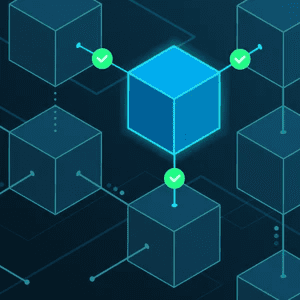
Blockchain fosters the trust layer that enables autonomous agents to transact with each other. This technology provides the following benefits:
- Transparency: Every transaction is recorded.
- Security: Fraud is prevented through cryptographic security.
- Programmability: Blockchain’s smart contracts can automate business processes.
- Interoperability: AI systems can become autonomous and interact with each other without a central intermediary.
Use Cases
| Use Case | Description | Example |
|---|---|---|
| Data Sharing | AI pays for access to datasets | A self-driving car AI buys traffic updates |
| Compute Power | Renting GPU cycles | A chatbot pays a vision AI for image rendering |
| IoT Networks | Devices transact autonomously | Smart meters pay for electricity in real time |
| Content Creation | AI collaborates on media | A text AI pays a music AI for background tracks |
| Supply Chain | Autonomous logistics | Warehouse AI pays drone AI for delivery |
The Mechanics of On-Chain Transactions
On-chain micropayments are made directly on a blockchain with each transaction rested on the blockchain’s open and permanent ledger for every user.
Micropayments made off-chain are traditional payment systems where transactions are either pooled, or processed by a third party/ intermediary.
On-chain transaction micropayments are traceable and irreversible for any sort of adjustment.

Payment systems, in the case of micropayments, consider a transaction perhaps even only a fraction of a cent, as a problem.
Conventional systems of payment would consider this sort of transaction impractical. This problem has been addressed by blockchain platforms.
With the use of Layer-2 scaling, such as roll ups and payment channels, AI agents are able to initiate and manage an immense number of microtransactions
Only settling the final balance. This provides efficient economic transactions between agent autonomously in real time.
Benefits of AI-to-AI Micropayments
Efficiency: AI agents can complete transactions without human participation, eliminating waiting periods, increasing speed, and allowing for machine-to-machine commerce with little to no human supervision.
Scalability: AI agents can conduct an unlimited number of transactions without speed limitation or traditional system constraints with complex digital ecosystems or networks in a single instance.
Cost Reduction: AI-to-AI transactions eliminate intermediaries, reduce administrative costs, and make even the smallest payments operationally cost-effective, resulting in lower overall transactional costs.
New Business Models: With Autonomous micropayments, AI services can be monetized without subscriptions, creating new pay-per-use models and allowing machines to trade data, computations, or resources.
Challenges Ahead

Despite the promise, several hurdles remain:
- Transaction costs3: Even small fees can add up at scale.
- Regulation: Who is legally responsible for autonomous payments?
- Security: Malicious AI agents could exploit vulnerabilities.
- Standardization: No universally accepted protocols for AI-to-AI commerce.
Future Outlook
AI-to-AI micropayments will create machine economies in which countless devices and agents transact seamlessly. Picture this future:
- Vehicles automated in paying tolls.
- AI assistants automatically buying upgraded data streams.
- Robots real-time negotiating service charges.
Micropayments will be faster, cheaper, and widely available as blockchain scalability improves (including but not limited to Layer-2 solutions, zero-knowledge proofs, and cross-chain interoperability).
Pros And Cons
| Feature | Pros | Cons |
|---|---|---|
| Efficiency | Transactions occur instantly without human delays; enables continuous, automated machine-to-machine operations. | Full autonomy increases dependency on AI; errors in AI decision-making can propagate quickly. |
| Scalability | Supports millions of simultaneous micro-interactions, allowing large-scale ecosystems to operate smoothly. | High transaction volumes may still strain blockchain networks; requires advanced Layer-2 solutions. |
| Cost Reduction | Eliminates intermediaries and associated fees, making tiny payments economically feasible; reduces operational overhead. | Initial setup of AI and blockchain infrastructure can be expensive; maintenance costs persist. |
| New Business Models | Enables pay-per-use services, subscription-free ecosystems, and AI-driven marketplaces for innovative revenue streams. | Regulatory uncertainty and legal issues may hinder adoption; market readiness is still evolving. |
| Transparency & Security | Blockchain ensures immutable, verifiable transactions; reduces risk of fraud or tampering. | Vulnerabilities remain in AI code or smart contracts; attacks could exploit logic flaws. |
| Autonomy | AI agents make decisions independently, reducing human oversight and speeding up economic interactions. | Lack of human intervention can lead to unanticipated outcomes; accountability issues arise in case of mistakes. |
Conclsuion
To summarize, The emergence of on-chain micropayments for AI-to-AI transactions represents the first steps toward fully self-governing digital economies.
The combination of autonomous decision-making by AI, the safety of blockchain technology, and the speed of transactions via cryptocurrency, creates a potential for machines to engage in fully autonomous transactions.
Even though there are challenges, such as regulation and security, the potential for machines to engage in fully autonomous transactions will transform
How commerce, resource sharing, and innovative business models will function in the future, as automation continues to progress.
FAQ
Tiny automated payments between AI agents without human intervention.
They serve as instant, low-cost payment mediums.
Cloud computing, IoT devices, autonomous vehicles, and AI marketplaces.
Efficiency, scalability, cost reduction, and new business models.