


In this article, I will help the readers understand the Best Stock Brokers in USA, which will help in making an informed decision when choosing a broker.
Making the right decision when choosing a broker is critical to your success in trading, regardless of whether you are a novice or a seasoned trader.
We will examine which brokers are likely to best suit your trading objectives and strategies by looking at their fees, platforms, tools, investment alternatives, and other specific characteristics.
What Is the Best Stock Broker In The USA?
The best stock broker for you will depend on your trading style, financial goals, and preferences for brokerage platform features.
As a beginner, you may appreciate a user-friendly platform, educational tools, and low cost trades. On the other hand, active or pro traders may prefer global market access, advanced research tools, and algorithmic trading.
Factors like brokerage account types, mobile app, customer support, and regulation may also affect your choice. Ultimately, the best brokerage is the one that fits your trading style and your personal preferences.
Key Points & Best Stock Brokers In USA
Interactive Brokers: Advanced trading tools, global market access, and lowest commissions for professional investors worldwide.
eToro: Social trading platform enabling copy trading, crypto access, and commission‑free stock investing.
Webull: Mobile‑first broker offering commission‑free trading, advanced charts, and extended hours access.
Robinhood: Popular for commission‑free trades, fractional shares, and beginner‑friendly mobile investing experience.
Charles Schwab: Full‑service broker with $0 commissions, research tools, retirement accounts, and financial planning support.
Fidelity Investments: Trusted broker offering zero‑fee index funds, retirement planning, and strong research resources.
Zacks Trade: Best for active traders needing research tools, low margin rates, and international market access.
Moomoo: AI‑powered insights, commission‑free trading, and advanced analytics for beginner and professional investors.
SoFi Invest: User‑friendly platform with automated investing, IPO access, and financial education resources.
Alpaca Trading: API‑driven broker ideal for algorithmic traders, offering commission‑free stock and ETF trading
10 Best Stock Brokers In USA
1. Interactive Brokers
Interactive Brokers (IBKR) has become one of the most powerful brokers for serious traders because of its global market accessibility and top-tier trading options.
They also offer some of the most cost-effective margin rates which include dollars per margin and direct access to stocks, options, and even forex and bonds, making them a great option for international trading customers.
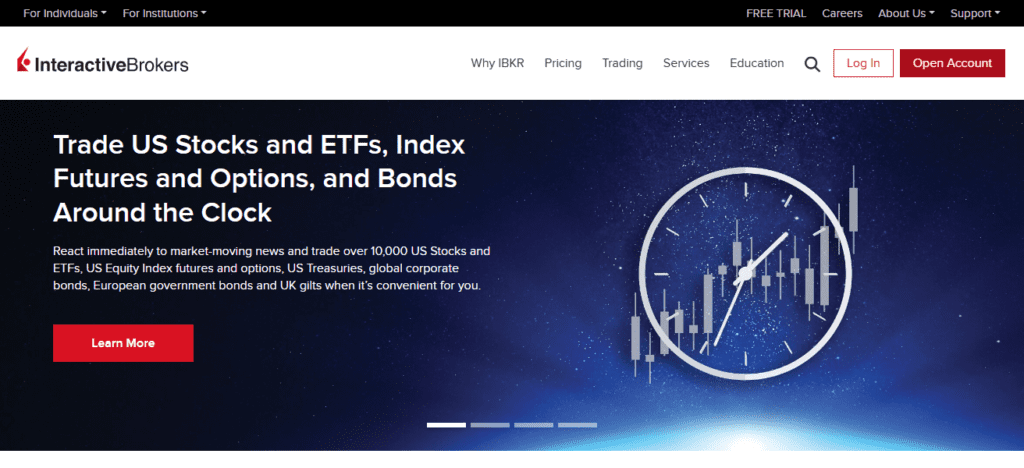
They also offer a wide range of options for algorithmic trading and other upper-tier order executions making them a great option for high volume traders.
The user interface is certainly more advanced than the average trading platform, but most seasoned traders will appreciate the UI and cost savings.
| Pros | Cons |
|---|---|
| Access to 90+ global markets including stocks, options, futures, forex, and bonds. | Complex interface; steep learning curve for beginners. |
| Extremely low margin rates and professional-grade trading tools. | Inactivity fees may apply for smaller accounts. |
| Supports algorithmic trading and institutional-style order execution. | Some advanced features may overwhelm casual traders. |
| Advanced risk management and portfolio analysis tools. | Customer support can be slower for smaller retail accounts. |
2. eToro
Blending investing and social trading, eToro lets customers track and replicate the trades of leading investors, an enticing option for novice and social traders alike.
eToro US customers pay zero commission on trades involving US stocks and ETFs, lowering the cost of trading for retail investors.
eToro’s international reach has led to the firm attracting customers from all around the world and going public.
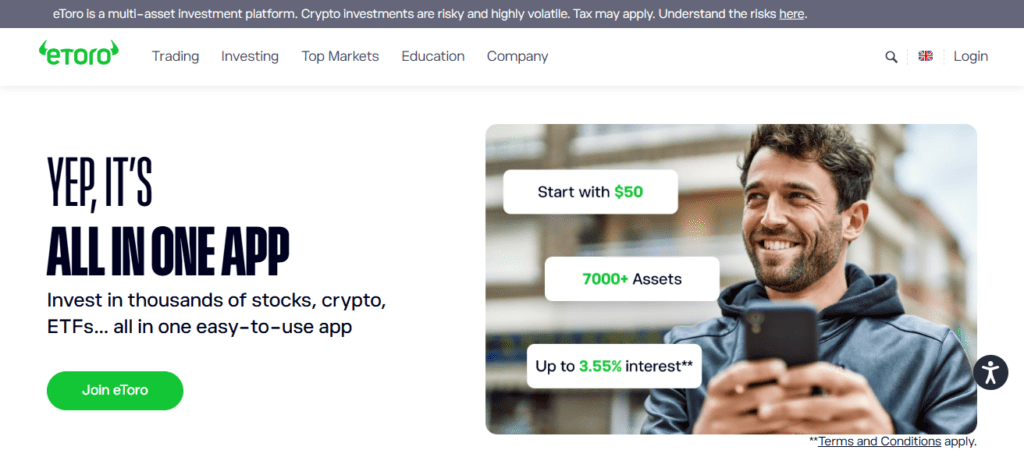
When its stock debuted on the NYSE, it attracted considerable market interest, leading to its stock price increasing significantly.
eToro has also incorporated traditional brokerage features, social media, and cryptocurrency into its app, allowing users to manage diversified portfolios from one platform.
| Pros | Cons |
|---|---|
| Innovative social trading and copy trading features. | Limited to US stocks and ETFs for US clients. |
| $0 commission on US stocks and ETFs. | Limited advanced trading tools compared to professional platforms. |
| Global platform with diverse investment options including crypto. | Withdrawal and inactivity fees exist. |
| Beginner-friendly app with integrated social feeds. | Spreads for crypto trading can be higher than specialized platforms. |
3. Webull
Webull is a zero-commission broker that appeals to novice and intermediate traders. It has a suite of analytical tools that includes 54 technical indicators and 13 charting tools, plus watchlist features that are not always available on other free platforms.
Active traders value functionality that is usually found at more expensive brokerages. Webull has a desktop interface and mobile app that allows for extended hours trading and customizable layouts.
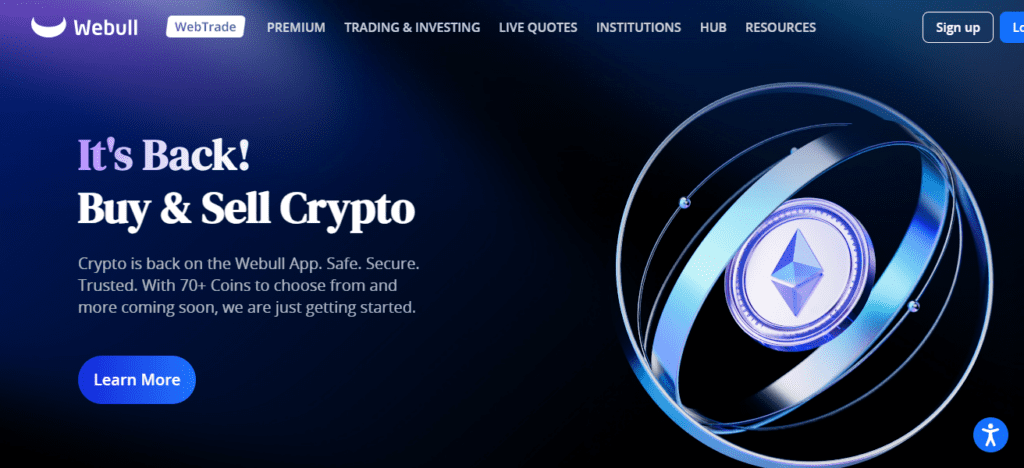
Advanced traders often commend the platform for 24/7 customer support and an active community for strategy discussions.
| Pros | Cons |
|---|---|
| Zero commissions on stocks, ETFs, and options. | Not ideal for beginners who prefer simple interfaces. |
| Robust charting tools with 54 technical indicators and 13 charting tools. | Limited mutual fund and bond options. |
| Extended hours trading and customizable layouts. | Customer service is mostly digital; limited in-person support. |
| Active community and learning resources. | No advisory or managed account services. |
4. Robinhood
Robinhood was the first broker to make commission-free trading available to the public for stocks, ETFs, options, and more recently, futures and index options on its desktop platform.
Millions of users are drawn to the platform for its clean and easy to use mobile application, especially younger retail investors.
Robinhood’s mobile application is known for its fast order execution, and users are able to trade options and futures for free.
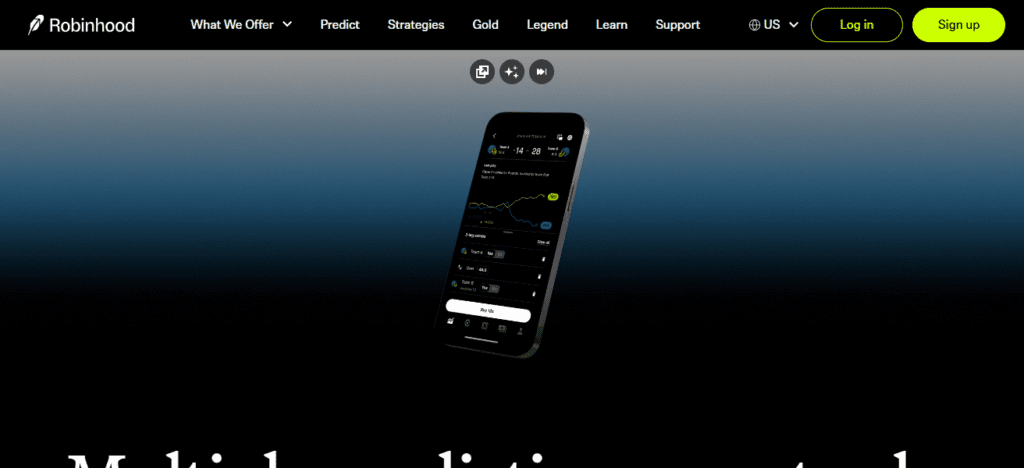
Over the years, Robinhood has continued to add to its suite of products to include Robinhood Social, a feature that allows users to view and trade on others’ strategies.
As Robinhood continues to grow and add services, the platform has become one of the most recognized brokers available to retail investors.
| Pros | Cons |
|---|---|
| Commission-free trading for stocks, ETFs, options, and futures. | Limited research tools compared to established brokers. |
| Simple, mobile-first interface. | Past controversies regarding outages and order execution. |
| Social features like Robinhood Social. | Customer service is mostly online; limited human support. |
| Fractional shares and easy account setup. | Less suitable for advanced traders needing analytics. |
5. Charles Schwab
Charles Schwab has long been a notable US investing professional, providing powerful tools for both newbies and pros.
They also combine strong research resources with customer-friendly service and a multitude of platforms which inclu.de advanced desktop and mobile apps.
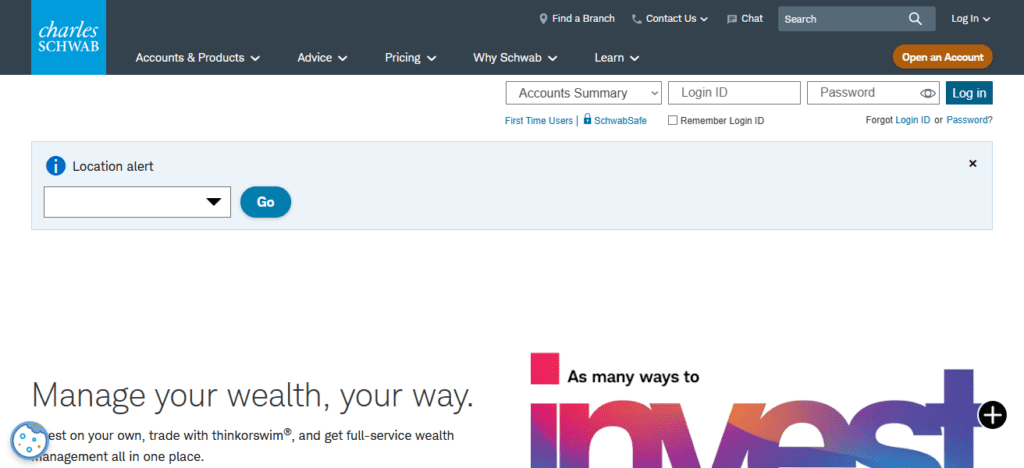
Schwab also has a strong variety of customer support and investing services, including all types of funds, bonds, retirement planning, and advisory services.
Their reputation makes them a good choice for investors who want good service and a variety of options without losing cost-efficiency.
| Pros | Cons |
|---|---|
| $0 online commissions for stocks and ETFs. | Desktop platform may feel complex for new traders. |
| Extensive research resources and educational materials. | Some fees for premium services or broker-assisted trades. |
| Wide range of investment products including mutual funds and bonds. | International trading options are more limited. |
| Excellent customer service and financial stability. | Advanced tools may be underutilized by beginners. |
6. Fidelity Investments
Fidelity Investments offers great customer service, a great research team, and offers a lot of different products that include US and international stock, ETFs, mutual funds, retirement accounts, and other products.
It also offers $0 a commission for online stock trading, and competitive pricing for stock options. For long and short term trading, Fidelity offers great tools, insights, and data by way of their trading platforms, such as Active Trader Pro.
Fidelity also earns the trust of their clients and keeps good financial stability. Fidelity is also rated as one of the best online brokers.
| Pros | Cons |
|---|---|
| $0 commissions for US stock and ETF trades. | Platform can feel overwhelming to casual investors. |
| Strong research, analytical tools, and educational resources. | Some mutual funds carry higher minimums. |
| Robust platform for both long-term and active traders. | Options trading can be complex for beginners. |
| High financial stability and investor protection. | Mobile app slightly less intuitive than competitors like Robinhood. |
7. Zacks Trade
Zack’s Trade caters to active traders that appreciate low cost and good research. Stock and ETF trade for about $1 per order and their margin rates are better than bigger firms.
They use the Zacks Rank system for margin trading which gives traders research based on quant models tied to analysis from the system which is well recognized.
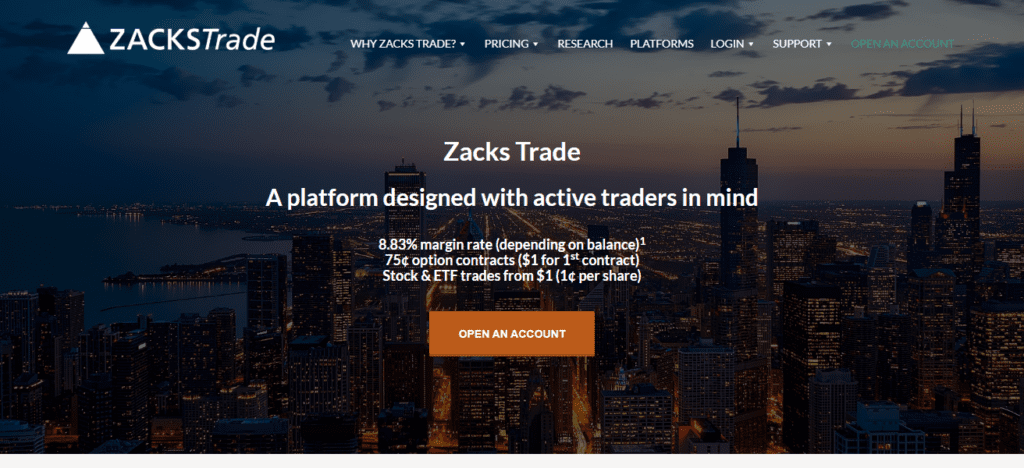
Zacks Trade Pro is their top notch trading platform which includes customizable layouts, a variety of order types, and real time alerts.
These features are of great value to seasoned traders. The combination of cost and quality research trading tools provides great value to active traders.
| Pros | Cons |
|---|---|
| Low trading fees (~$1 per trade) and competitive margin rates. | Interface is not beginner-friendly. |
| Access to the Zacks Rank system for quantitative research insights. | Limited customer service channels. |
| Advanced order types, customizable layouts, and real-time alerts. | Smaller user base; less social or community support. |
| Ideal for active traders seeking research-driven strategies. | Not suitable for casual or long-term investors. |
8. Moomoo
Moomoo has entered the market providing commission free stock trades and analytics and eductional tools that are competitive with the more estqblished brokers.
These tools are particulary atrractive to new and intermediate investors. The platform focuses on data visualization with tools such as stock screeners and AI generated insights that are not available on other free trading apps.
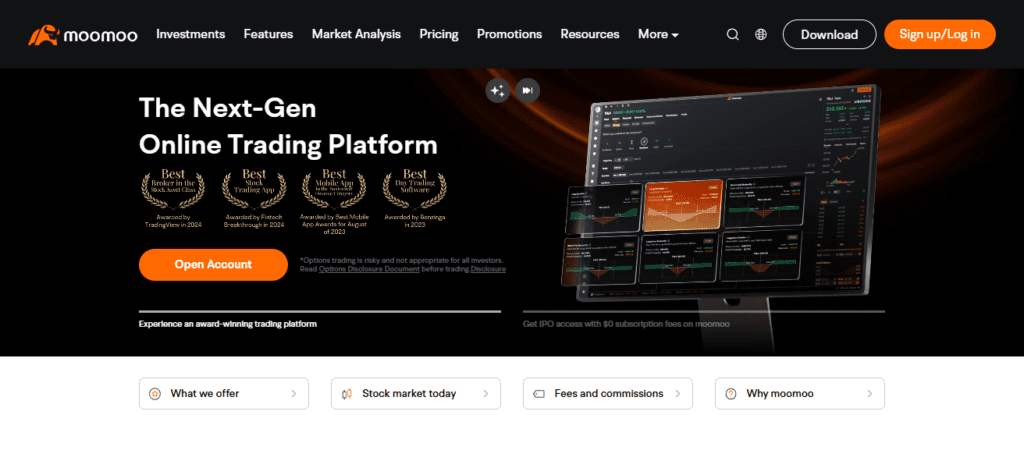
Their promotions, such as providing free stocks to those who open new trading accounts, has attracted attention from retail traders.
The platform has a support for US stock markets and a nice, simple to use platform that is a perfect for those traders that want to trade stocks and want to have the educational trading tools at no additional cost.
| Pros | Cons |
|---|---|
| Zero-commission trades on US stocks and ETFs. | Limited global market access. |
| AI-powered insights and data visualization tools. | Relatively new platform; less tested than legacy brokers. |
| Free stocks and promotions for new users. | Some advanced tools may require learning time. |
| Strong educational content and intuitive mobile app. | Customer support can be slow for complex issues. |
9. SoFi Invest
SoFi Invest stands out from its competitors due to its unique blend of traditional brokerage services with modern tech innovations.
It has features like commission free trading, fractional shares, investments paired with personal finance tools, and integrated investing.
It has also recently added new features to its options trading, coupled with educational resources, to help investors learn inexpensive new techniques.
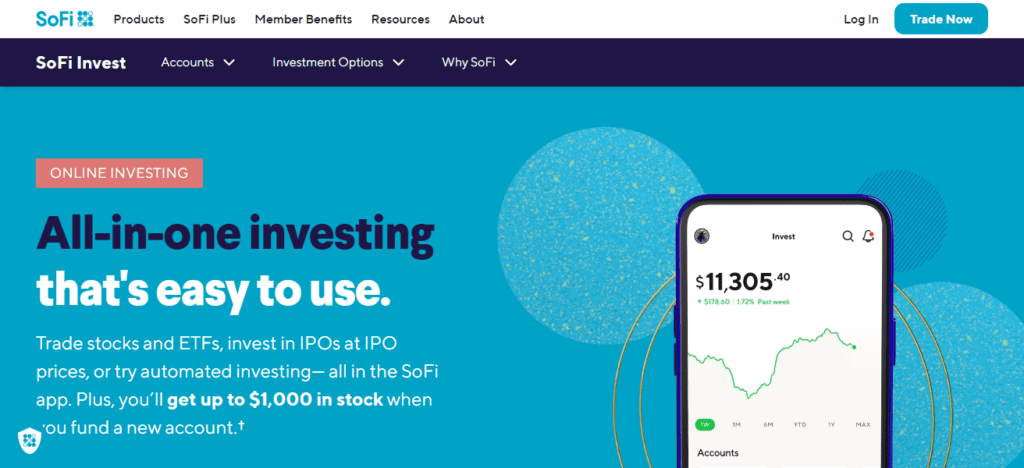
It also has the ability to help customers with self-directed investing and automated portfolios. The unified experience also comes from SoFi’s other services like lending, savings, and banking.
SoFi’s educational resources with user-friendly characteristics encourages new investors to try its financial management services.
| Pros | Cons |
|---|---|
| $0 commission trades and fractional shares. | Limited advanced research tools compared to IBKR or Schwab. |
| Integrated ecosystem with banking, lending, and investing. | Fewer trading instruments; limited futures and options features. |
| Offers both self-directed and automated portfolios. | Small selection of international investments. |
| Beginner-friendly interface with educational content. | Less suitable for active, high-volume traders. |
10. Alpaca Trading
Alpaca Trading is unique in that it is a developer‑first, API‑driven stock broker that enables programmers and quant investors to automate their trading strategies using simple REST APIs.
Furthermore, Alpaca supports commission-free trading in thousands of U.S.-listed stocks and ETFs, and also allows for paper trading to test strategies in a risk-free environment. Alpaca Securities LLC clients also get coverage under SIPC.
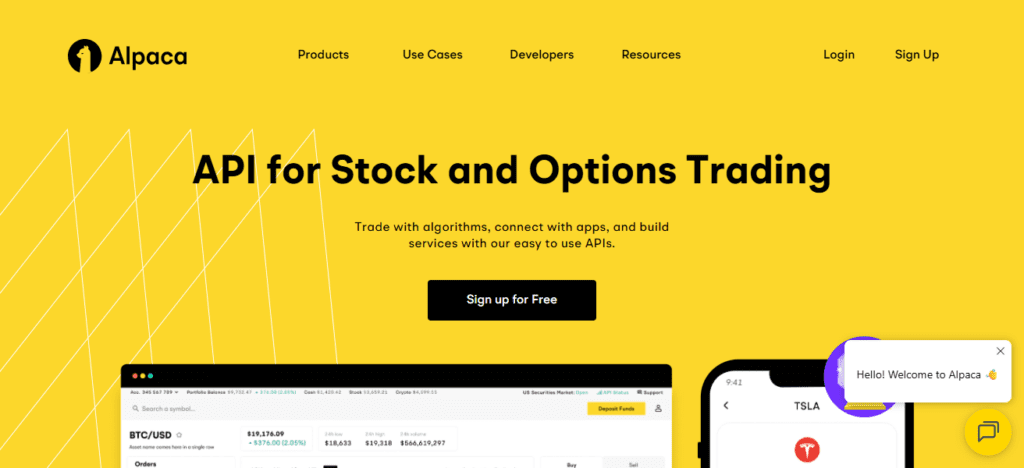
Customers also get access to the platform’s scalable API infrastructure, and this is particularly valued by fintech developers and trading firms as they get to build their custom tools or automated systems.
This emphasis on automation also makes Alpaca very attractive for algorithmic trading and tech‑savvy investors.
| Pros | Cons |
|---|---|
| API-first platform enabling automated trading strategies. | Geared mainly toward developers and tech-savvy traders. |
| Commission-free trading on US stocks and ETFs. | No in-person or traditional customer support. |
| Supports paper trading and fractional shares. | Limited research and educational resources. |
| Scalable infrastructure for quantitative trading. | Not ideal for casual or long-term investors. |
How To Choose Best Stock Brokers in USA
Commissions and Fees Amount – Analyze Account upkeep, transaction charges, and undisclosed fees to lessen total expense.
Trading Platform – Make sure the software is simple, quick, and accommodates graphs and alerts.
Options Available for Investment – Determine offerings of stocks, mutual funds, bonds, ETFs, options, and crypto for varied investing.
Research and Tools – Determine if the broker provides educational materials, market analyses, and stock screening tools.
Customer Support – Support staff’s availability and reliability is a must to assist with trading and tech problems.
Types of Accounts – Confirm if the broker provides standard, retirement, margin, and fractional accounts.
Regulation and Safety – Safety and regulation must be checked with the SEC and SIPC for insurance.
Mobile App Offered – A good trading app must be user-friendly, fast, and should provide portfolio check.
Promotions and Bonuses – Certain brokerages provide incentives like free stock and monetary bonuses for referrals.
Advanced Features – If applicable, think about tools, margin trading, and access to APIs and extended hours.
Cocnlsuion
In cocnlsuion Beginning your journey to discover which stock broker is the best in the USA is dependent on the features you are looking for, your trading strategies, and your level of experience.
Novice traders utilize and appreciate the simple design of SoFi and eToro, whereas seasoned traders on the other end of the spectrum may appreciate the research and international access traders are offered with Interactive and Zacks trade.
Finding a broker that aligns with your investment strategies and goals is the result of comparing fees, tools, customer support, and varying types of accounts.
FAQ
Robinhood, Webull, SoFi, and eToro provide commission-free stock and ETF trades.
Yes, choose FINRA/SEC-regulated brokers with SIPC insurance for protection.
eToro, SoFi, and Moomoo offer user-friendly platforms and educational resources.
Interactive Brokers and Zacks Trade provide professional tools and global market access.